
How to Prepare Pipes for Winter in KC
A Kansas City cold snap can turn a small plumbing weakness into a burst pipe overnight. Knowing how to prepare pipes for winter before temperatures fall below freezing gives you time to protect your home, rental, or commercial property from water damage, emergency repairs, and downtime.
The goal is simple: keep water lines warm enough to avoid freezing, stop cold air from reaching vulnerable plumbing, and make sure you can shut off water quickly if a problem develops. A few preventive steps now can save thousands of dollars in cleanup and repair costs later.
Start With the Pipes Most Likely to Freeze
Not every pipe needs the same level of protection. Focus first on plumbing located outside your heated living or work space. That includes pipes in crawl spaces, attics, unfinished basements, garages, exterior walls, utility rooms, and cabinets under sinks on outside-facing walls.
Outdoor hose bibs and irrigation lines are especially exposed. So are water supply lines near foundation vents, garage doors, and poorly insulated wall openings. In older Kansas City homes, pipes may run through areas with little insulation or have been altered during renovations. Those lines deserve a close inspection before the first hard freeze.
Walk the property and look for warning signs: exposed metal or plastic pipe, missing insulation, drafty access doors, wet spots, corrosion, slow drips, or a pipe that feels unusually cold. A small drip does not mean a line is safe. It can signal a worn fitting that may fail when frozen water expands inside the pipe.
Shut Down and Drain Outdoor Plumbing
Disconnect every garden hose from exterior faucets. Leaving a hose attached can trap water against the faucet and allow freezing to travel back into the supply line inside the wall. Drain the hose, store it indoors if possible, and make sure the spigot is fully closed.
If your home has interior shutoff valves for outdoor faucets, close them before winter. Then open the exterior faucet to drain remaining water from the line. Some frost-free hose bibs do not require this step under normal conditions, but they can still freeze or leak if a hose remains connected or if the faucet was installed incorrectly.
Sprinkler systems need separate attention. Shut off the irrigation water supply and have the system professionally blown out when required. Draining alone may leave water trapped in low spots, valves, or backflow devices. Frozen irrigation components can create expensive repairs before spring arrives.
Insulate Exposed Water Lines
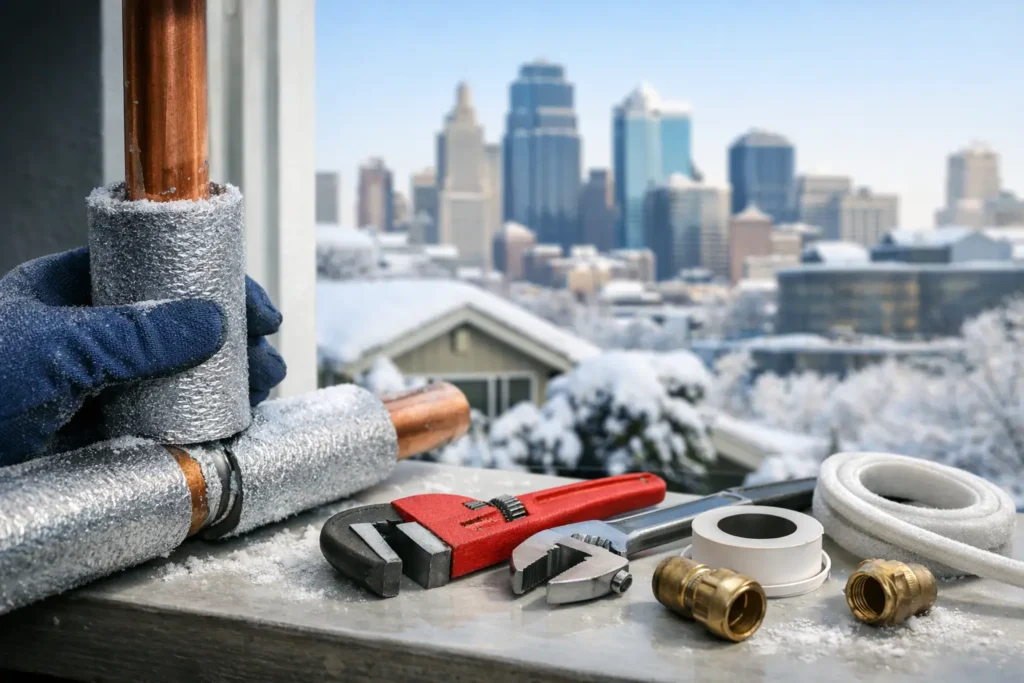
Pipe insulation is one of the most effective ways to prepare pipes for winter. Foam pipe sleeves are affordable, easy to install, and useful for exposed hot and cold water lines. Choose insulation that matches the pipe diameter, cover the full length of exposed pipe, and secure seams so cold air cannot reach gaps.
Pay close attention to elbows, valves, fittings, and short sections near exterior walls. These are easy to miss and often become the first point of failure. For pipes in very cold or drafty areas, insulation may need to be paired with approved heat cable or heat tape.

Heat tape is not a universal fix. It must be rated for the pipe material, installed according to the manufacturer’s instructions, and checked regularly for wear. Never overlap heat tape unless its instructions specifically allow it, and do not use damaged cords or improvised electrical connections. If you are unsure whether heat cable is appropriate, have a licensed plumbing professional assess the area.
Stop Cold Air Before It Reaches the Plumbing
Insulating the pipe helps, but blocking drafts is often what makes the difference during a severe freeze. Seal openings around pipes where they pass through exterior walls, floors, or foundations. Use suitable materials for the size and location of the opening, and avoid sealing areas that need ventilation for combustion appliances or equipment.
Close crawl-space vents if your property’s design and local conditions call for it, repair broken foundation vents, and weather-strip doors leading to unheated spaces. In garages, keep the overhead door closed as much as possible, particularly if water lines run through an adjacent wall or ceiling.
Open cabinet doors under kitchen and bathroom sinks during extreme cold so warm indoor air can circulate around supply lines. This is especially helpful for sinks against exterior walls. Remove household chemicals and cleaners first if children or pets have access to the area.
Keep Indoor Temperatures Steady
Do not set the thermostat too low just because you are away for a weekend or trying to reduce heating costs. Keep the property at 55 degrees Fahrenheit or warmer, even if it will be vacant. A sudden Kansas City temperature drop can freeze plumbing quickly in a poorly insulated area.
For rental homes, vacant units, offices, and seasonal properties, someone should check the building after major cold events. A functioning furnace does not guarantee every room is warm enough. Closed interior doors, blocked vents, failed space heaters, and thermostat issues can leave isolated areas cold while the rest of the building feels normal.
Avoid relying on portable space heaters as your primary pipe-protection plan. They can create fire risk and may stop working if power is interrupted. Permanent insulation, draft control, and proper heating are safer long-term solutions.
Know When to Let a Faucet Drip
During a hard freeze, a slow, steady drip from a faucet can help reduce freezing risk in vulnerable lines. Moving water is less likely to freeze than standing water, and opening both hot and cold sides can protect separate supply lines.
This is a short-term measure, not a substitute for insulation or repairs. It also depends on your plumbing layout. If the pipe serving that faucet is deep inside a heated wall, dripping may add little benefit. If the faucet is on an exposed exterior wall, it can be worthwhile during the coldest overnight conditions.
Use a small trickle, not a full stream. Check the sink drain first, especially in older properties, because a clogged drain can turn a protective drip into an overflow problem.

Locate and Test Your Main Water Shutoff Valve
Every property owner, manager, and maintenance lead should know exactly where the main water shutoff valve is located. In many homes, it is near the water meter, in a basement, utility room, crawl space, or mechanical area. Commercial buildings may have multiple shutoffs for different sections or fixtures.
Turn the valve carefully to confirm it operates, then return it to the open position if there is no leak or emergency. If the valve is seized, heavily corroded, or difficult to access, schedule service before winter. A shutoff valve that fails when a pipe bursts can turn a contained repair into major property damage.
It also helps to identify shutoff valves for washing machines, water heaters, toilets, and exterior faucets. Being able to isolate one fixture can keep the rest of the property in service while repairs are made.
Watch for Early Signs of a Freeze
Act fast if water pressure suddenly drops, only a trickle comes from a faucet, a toilet will not refill normally, or you see frost on a visible pipe. A frozen pipe has not necessarily burst yet. Turn on the affected faucet, keep the building warm, and open nearby cabinet doors to allow heat into the area.
Do not use an open flame, propane torch, or other high-heat source to thaw plumbing. Excessive heat can damage pipe materials, ignite surrounding materials, or cause a pressurized pipe to rupture. Hair dryers and carefully used warm air may help with a clearly accessible, minor freeze, but hidden or fully frozen lines need professional attention.
If you find a burst pipe or active leak, shut off the water supply immediately. Move valuables away from the area if it is safe to do so, contain dripping water with buckets or towels, and call for emergency plumbing service. Fast action limits damage to flooring, drywall, insulation, inventory, and electrical systems.
Get Ahead of Winter Repairs
Winter preparation is the right time to address aging pipes, recurring leaks, weak outdoor faucets, failing shutoff valves, and poorly insulated plumbing routes. Waiting until a freeze exposes the issue usually means fewer options and a more urgent repair.
Kansas City Plumbers Today can inspect vulnerable plumbing, repair leaks, replace worn valves, protect exposed lines, and respond 24/7 if freezing temperatures create an emergency. Transparent pricing and prompt service help homeowners and property managers make the repair decision before a small risk becomes a major disruption.
A protected plumbing system is one less thing to worry about when the forecast turns bitter. Take care of exposed lines, drafts, outdoor connections, and shutoff access now, then you can face the next freeze with a clear plan instead of a flooded floor.