
How to Shut Off Water Main to Prevent Damage
A pipe can release dozens of gallons in minutes, soaking drywall, flooring, insulation, and anything stored nearby. Knowing how to shut off water main service before a plumber arrives can turn a major flood into a manageable repair. Every homeowner, landlord, and property manager should know where this valve is and how it works before an emergency puts them under pressure.
How to Shut Off Water Main Service Quickly
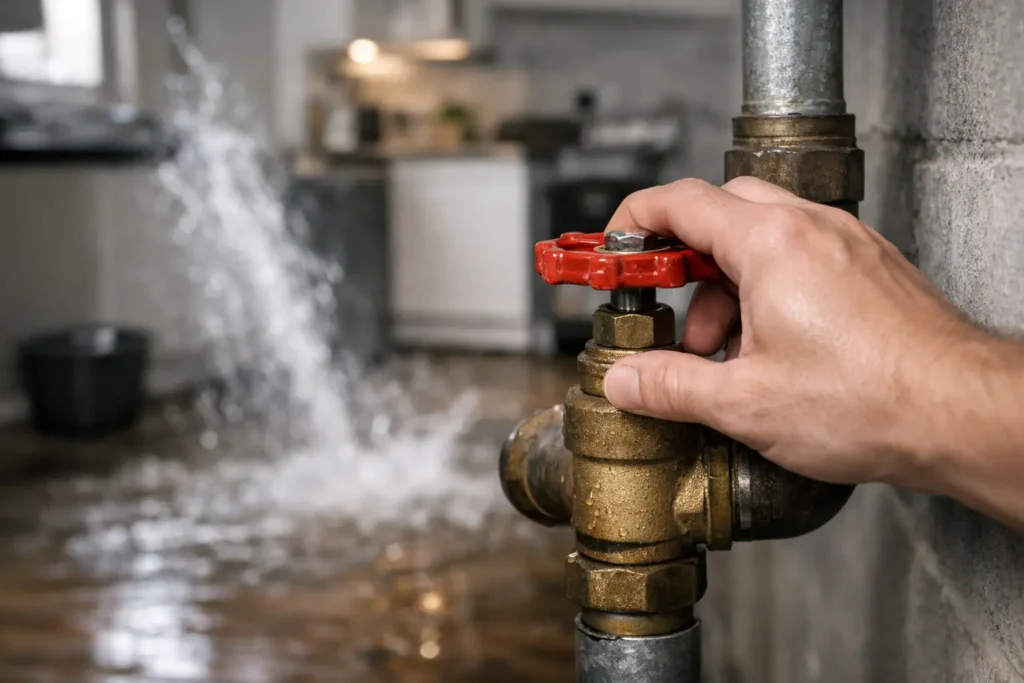
When water is actively leaking, do not spend time searching for the source first. Go straight to the main shutoff valve. This valve stops the incoming water supply to the building, preventing more water from feeding a burst pipe, failed fixture, broken appliance hose, or major leak.
Most homes have one of two types of main shutoff valves. A gate valve has a round handle that turns several times. Turn it clockwise until it stops, but do not force it if the valve is old or corroded. A ball valve has a straight lever handle. Turn the lever one-quarter turn so it sits perpendicular to the pipe. When the handle crosses the pipe instead of running alongside it, the water is off.
After closing the valve, open a cold-water faucet at the lowest point in the building, such as a basement sink or first-floor utility sink. This releases pressure from the plumbing lines and lets remaining water drain. If a pipe has burst, keep clear of standing water near electrical outlets, appliances, or the electrical panel.
If the valve will not turn, leaks when you touch it, or fails to stop the flow, call for emergency plumbing service right away. A stuck shutoff valve is not the time to apply extra force and risk breaking the pipe or valve body.
Where Is the Main Water Shutoff Valve?
In Kansas City-area homes, the interior main shutoff is often located where the water service line enters the structure. Look in the basement, crawl space, utility room, mechanical room, garage, or near the water heater. In slab homes, it may be inside a utility closet, near the laundry area, or behind an access panel.
The valve is usually installed near the water meter, but not always. Follow the largest cold-water pipe entering the home from the outside. It may be copper, PEX, galvanized steel, or plastic. The first accessible shutoff valve on that incoming line is commonly the main water shutoff.
Commercial properties can be different. Restaurants, offices, retail spaces, and multifamily buildings may have shutoff valves in a mechanical room, meter room, basement, exterior utility enclosure, or separate service closet. Larger buildings can also have multiple valves for different wings, tenant spaces, irrigation systems, and fire protection equipment. Do not shut off or tamper with a fire sprinkler supply line.
If you manage a rental or commercial property, label the main valve clearly and make sure responsible staff know its location. During a burst-pipe emergency, a few minutes of confusion can create thousands of dollars in water damage.
The Outdoor Meter Shutoff
There may also be a shutoff at the water meter near the street or property line. This is typically inside a meter box, below ground, and may require a meter key or specialized tool. In many areas, part of the meter assembly belongs to the water utility, so it is best to use the indoor shutoff whenever possible.

Use the exterior shutoff only if the interior valve is inaccessible, damaged, or not stopping the water. Do not force a meter valve, pry at utility equipment, or damage the meter. If you cannot safely turn it, contact your water provider or a licensed plumber for help.
What to Do After You Turn the Water Off
Stopping the water is the first priority, but your next actions matter too. Move quickly, stay calm, and focus on preventing added damage.
- Turn off electricity to the affected area only if you can do so without stepping in water or reaching near wet electrical equipment.
- Shut off the water heater if the home’s water supply will remain off for more than a short time. For a gas unit, set the gas control to vacation or off according to the manufacturer instructions. For an electric unit, switch off its breaker first.
- Remove rugs, boxes, furniture, and valuables from wet areas. Start drying floors and surfaces with towels, fans, or a wet-dry vacuum if it is safe.
- Take photos of the leak source and damaged areas for your records, landlord, or insurance claim.
- Call a plumbing professional to identify the failure and make the repair before restoring service.
Do not turn the water back on just to “see if it stopped.” A cracked fitting, frozen pipe, failed supply line, or hidden pipe break can begin leaking again immediately. The system should be inspected and repaired first.
When a Fixture Shutoff Is Enough
Not every plumbing problem requires shutting off water to the entire building. Toilets, sinks, dishwashers, washing machines, refrigerators, and some water heaters usually have local shutoff valves. If a toilet supply line is leaking, for example, you can often turn the small valve behind the toilet clockwise to stop water only to that fixture.
Using a fixture shutoff keeps water available elsewhere in the home, which is convenient. The trade-off is that these small valves often fail after years of sitting untouched. If the local valve does not close completely, or if the leak is coming from a wall, ceiling, floor, or unknown location, shut off the main water supply instead.
A major leak can travel far from its source. Water dripping through a ceiling may have started from a bathroom, kitchen line, or appliance connection above it. When you cannot identify the source quickly, turning off the main is the safer move.
Common Emergencies That Require Main Shutoff
A burst pipe is the obvious example, especially during freezing Kansas City weather. But the water main should also be shut off for a rapidly leaking water heater, a broken washing machine hose, a failed ice maker line, a cracked toilet tank, or a pipe that has been hit during remodeling.
Sewer backups are different. Turning off the water supply can help prevent additional wastewater from entering a blocked drain or sewer line, but it will not clear the blockage. Stop using sinks, toilets, showers, dishwashers, and washing machines, then call for drain or sewer service. If sewage is backing up into the building, keep people and pets away from the affected area until it can be cleaned and repaired safely.
If you smell gas, hear hissing near a gas line, or suspect a gas leak, do not focus on the water valve. Leave the building, avoid switches and open flames, and contact emergency services or the gas utility from a safe location.
Test Your Water Shutoff Before There Is a Leak
The worst time to discover a seized main valve is at 2 a.m. with water coming through the ceiling. Locate your valve now, clear away storage around it, and make sure every adult in the household knows how to reach it.

Test it carefully once or twice a year. Turn the valve off, open a faucet to confirm the water flow stops, then turn the valve back on slowly. Watch for drips around the valve stem, handle, and connected pipes. A valve that is hard to operate, does not fully close, or begins leaking should be replaced before it becomes an emergency.
For older properties, upgrading to a quality ball valve is often worthwhile. Ball valves are generally easier to operate and more dependable than older gate valves, though the right repair depends on the pipe material, valve location, and condition of the incoming water line.
Get Fast Help When the Shutoff Is Not Enough
Turning off the water protects the property, but it does not fix the cause. A trained plumber can locate hidden leaks, repair failed pipes and fittings, replace damaged shutoff valves, assess water damage risks, and restore service safely. For larger leaks, sewer issues, or water damage affecting multiple areas, fast diagnosis matters.
Kansas City Plumbers Today provides 24/7 emergency plumbing support for homeowners, property managers, and businesses facing active leaks, burst pipes, failed valves, and other urgent plumbing problems. Clear pricing and a complete repair plan help you make the next decision without guesswork.
Find your main shutoff today, make sure it works, and keep the area around it accessible. When water starts going where it should not, that small bit of preparation gives you a critical head start.
Contact