
Whole Home Repiping Cost and Factors to Consider
A recurring leak behind a wall is stressful. A second leak, weak water pressure, rusty water, or pipes that freeze every winter can turn a repair call into a bigger decision: is it time to replace the plumbing throughout the house? Whole home repiping cost depends on far more than the number of bathrooms. Your pipe material, the home’s layout, wall access, local permit requirements, and restoration needs all affect the final price.
For Kansas City homeowners, a repipe is often a practical way to stop paying for one surprise repair after another. The goal is not to sell more work than you need. It is to identify whether targeted repairs will protect your property or whether aging pipes have reached the point where a complete replacement is the safer long-term answer.
What Is the Typical Whole Home Repiping Cost?
Most whole-home repiping projects fall in a broad range, often from roughly $5,000 to $25,000 or more. Smaller, single-story homes with accessible plumbing may land near the lower end. Larger homes, homes with multiple stories, finished basements, slab foundations, luxury fixtures, or extensive wall restoration can move well beyond that range.
A reliable estimate has to be based on an inspection. Square footage matters, but it does not tell the whole story. A compact 1,800-square-foot home with two bathrooms can be more difficult to repipe than a larger home if pipes are buried in concrete, packed into tight wall cavities, or routed through finished areas that are hard to access.
Be cautious with any price given without someone reviewing the plumbing system. Clear pricing starts with understanding what is behind the walls, where the main lines run, what material is currently installed, and how much restoration will be required once the new lines are in place.
The Biggest Factors That Affect Repiping Price
Pipe material and system design
Modern residential repipes commonly use PEX or copper. PEX is flexible, durable, and usually less labor-intensive to install because it can be routed through walls and ceilings with fewer fittings. Copper has a long service history and may be preferred in certain situations, but material and labor costs are typically higher.
The best choice depends on your home, local code, water conditions, and budget. A professional plumber should explain the material options instead of treating every house the same. The right system design also matters. A properly planned layout helps maintain strong pressure and makes future service easier.
Home size, bathrooms, and fixtures
Every fixture needs supply lines. That includes sinks, toilets, showers, tubs, dishwashers, refrigerators with water lines, laundry connections, utility sinks, and outdoor hose connections. More bathrooms and more fixtures usually mean more labor and materials.
However, fixture count is only one part of the equation. The distance from the water service to each fixture group and the route needed to reach those areas can have an even larger effect on labor time.
Access behind walls, ceilings, and floors
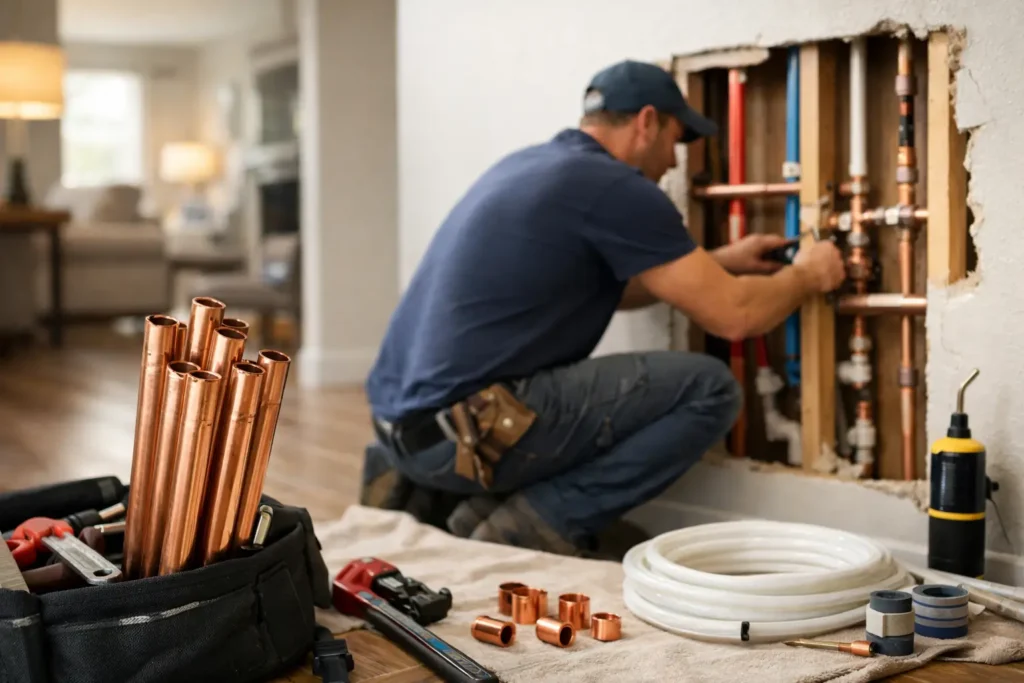
Repiping requires access. In some homes, plumbers can work through an unfinished basement, crawl space, mechanical room, attic, or garage. These areas often reduce the amount of drywall removal and repair required.

Other homes require carefully placed openings in drywall, plaster, tile, ceilings, or cabinets. A slab foundation can add complexity because older water lines may run beneath the concrete. Rather than breaking up floors unnecessarily, a repipe may involve rerouting new lines overhead or through walls. That approach can protect the structure, but it changes the labor and restoration scope.
Drywall, paint, and finish restoration
The plumbing installation is only part of the project. Once new lines are installed and tested, access openings may need drywall repair, texture matching, priming, painting, and in some cases tile or cabinetry work.
Ask whether restoration is included in the estimate and exactly what level of finish is covered. Some plumbing estimates include basic patching, while painting and specialty finishes are separate. There is nothing wrong with either approach, as long as it is clear before work begins.
Permits, inspections, and code updates
A whole-home repipe generally requires permits and inspections. Those requirements help confirm the new plumbing is installed safely and according to local code. Permit costs are not usually the largest line item, but skipping them can create problems when you sell the property, file an insurance claim, or need future repairs.
Older homes may also need updates to shutoff valves, pressure regulation, water heater connections, or other components discovered during the project. A thorough inspection identifies these items early so you can make an informed decision rather than getting surprised midway through the job.
Signs a Full Repipe May Be Worth Considering
One leak does not automatically mean you need new plumbing. A localized problem can often be repaired quickly and affordably. But repeated failures can signal that the piping system is deteriorating throughout the home.
Consider a repiping evaluation if you have frequent pinhole leaks, discolored water, a metallic taste, low pressure at several fixtures, visible corrosion, or repairs becoming routine. Homes with old galvanized steel pipes are common candidates because internal corrosion can restrict water flow and eventually cause leaks. Older polybutylene piping may also warrant an inspection due to its known failure history.
Water damage is another warning sign. A slow leak inside a wall can damage insulation, drywall, flooring, and framing before it becomes visible. If leaks keep appearing in different areas, replacing failing supply lines can be less disruptive and less expensive than waiting for the next emergency.
How to Get an Accurate Repiping Estimate
Start with an on-site evaluation, not a phone-only quote. A plumber should review visible pipe material, inspect accessible areas, check pressure and fixture performance, locate shutoffs, and discuss your leak history. If there is concern about drain or sewer piping as well, camera inspection may be recommended to separate supply-line problems from drainage issues.
A useful written estimate should define the pipe material, fixtures and lines being replaced, expected access points, permit handling, testing, cleanup, and restoration responsibility. It should also explain what could change the price, such as hidden damage, inaccessible lines, code-required corrections, or specialty finishes that cannot be identified until walls are opened.

Before approving work, ask how long water will be shut off, whether temporary water access is possible, how technicians protect floors and furnishings, and what warranty applies to labor and materials. A reputable plumbing team will answer directly. Repiping is significant work, and you should know the plan before the first opening is made.
Can You Repipe in Stages?
Sometimes. A staged repipe can make sense for a rental property, a large commercial space, or a homeowner planning renovations one area at a time. Replacing pipes during a bathroom or kitchen remodel can reduce future wall-opening costs.
The trade-off is that partial replacement leaves some older piping in service. That can mean continued leak risk in the sections that remain, and multiple projects may cost more over time than one coordinated installation. If the entire system is near the end of its service life, completing the repipe at once may offer better value and fewer interruptions.
Protect Your Home Before the Next Leak
A complete repipe is an investment, but so is emergency water damage cleanup, mold remediation, damaged flooring, and repeated service calls. The right decision comes from knowing the actual condition of your pipes and comparing the cost of planned replacement with the cost of continued failures.
Kansas City Plumbers Today can inspect aging plumbing, explain your repair and repiping options, and provide a clear estimate before work begins. If you are seeing leaks, pressure changes, corrosion, or water discoloration, schedule an evaluation before a small warning becomes a major plumbing emergency.
Contact