
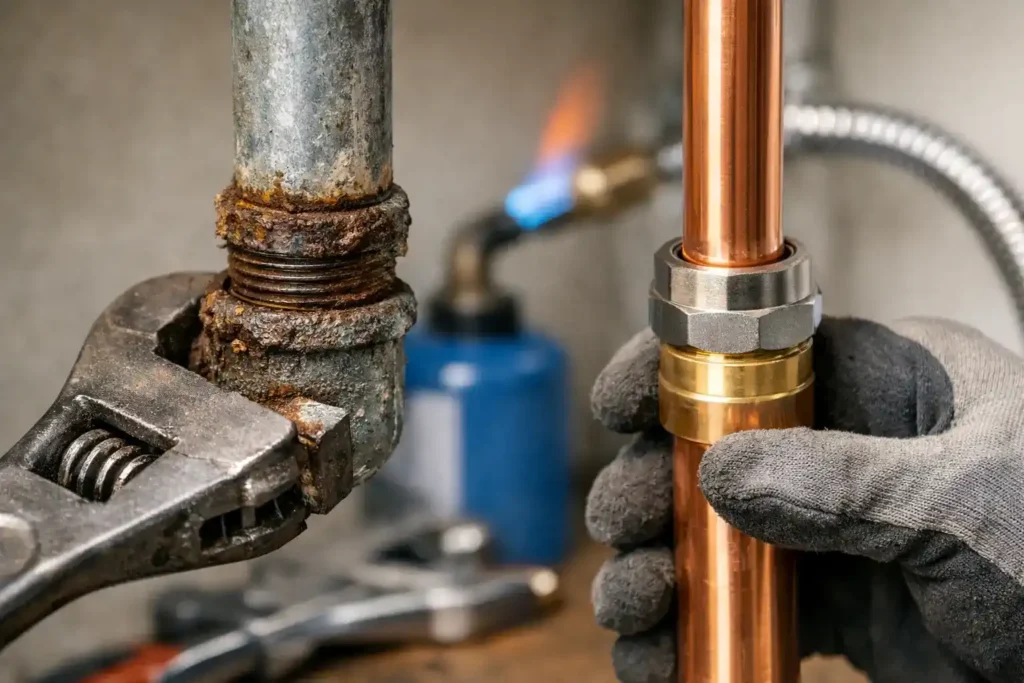
Guide to Replacing Old Galvanized Pipes: The Right Process
A reliable replacement project starts with diagnosis, not guesswork. An experienced plumber maps the plumbing system, identifies which lines are galvanized, checks visible corrosion, tests pressure, and looks for signs of active or previous leaks. In older properties, the original piping may have been partly replaced over the years, so one bathroom may have newer pipe while another still relies on galvanized lines.

1. Build a replacement plan
The plan should identify the water supply routes, fixtures served, access points, shutoff locations, and any areas requiring wall or ceiling repair afterward. For a home, the work may be completed in sections to keep at least some fixtures available. For a restaurant, office, retail site, or multifamily property, scheduling around operating hours and occupants is often just as important as the pipe installation itself.
A professional should also check for unsafe or obsolete materials connected to the system. Older homes can contain lead service components, deteriorated valves, or mixed-metal connections that accelerate corrosion. Those details affect the scope, material selection, permits, and final cost.
2. Choose the replacement material
Copper, PEX, and CPVC are common choices for water supply repiping. The right option depends on the building layout, local code, water conditions, budget, and intended use.
PEX is flexible and can often be routed with fewer connections, which may reduce the amount of wall access needed. Copper has a long track record and is valued for durability, though installation can be more labor-intensive and costly. CPVC can be appropriate in some applications, but its suitability depends on the local code and system conditions.
Do not select pipe based on price alone. A low initial quote can become expensive if it omits permits, shutoff valves, access repairs, pressure testing, or proper transitions to existing plumbing. Ask what material is being installed, why it fits your property, and what is included before work begins.
3. Protect the property before work starts
Replacing pipe means creating access. A careful crew protects floors, furniture, counters, and work areas before opening walls or ceilings. Water should be shut off in a controlled way, and occupants should know which fixtures will be unavailable and for how long.
For commercial properties, the plan should account for customers, employees, sensitive equipment, food-prep areas, and tenant access. The goal is not simply to install new pipe. It is to complete the work safely while keeping disruption as limited as possible.
4. Remove, install, test, and restore
Once the old sections are removed or disconnected, the new piping is installed with properly supported runs, secure connections, and accessible shutoffs where practical. The system should then be pressure-tested and checked fixture by fixture for leaks, flow, and hot-water performance.
A quality job also includes cleanup and a clear explanation of what was replaced. If wall or ceiling openings require restoration, confirm who is handling that work and when. Plumbing is only one part of getting the property back to normal.
What About Partial Replacement?
Partial replacement can be a reasonable strategy when only a limited branch line is galvanized, access is difficult, or budget requires the project to be completed in stages. For example, replacing the lines serving a frequently used bathroom or a leaking kitchen branch can address an immediate risk while you plan the rest of the system.

Still, partial work has limits. New pipe connected to old corroded pipe does not improve the condition of the remaining galvanized sections. If the main supply line or several major branches are restricted, a phased plan should prioritize the areas most likely to leak or affect daily water use.
Be especially cautious if you are buying, renovating, or managing an older property. Fresh paint and updated fixtures can hide decades-old plumbing. A plumbing inspection before closing, remodeling, or leasing can reveal whether galvanized lines are likely to create an unexpected expense later.
Questions to Ask Before You Approve the Work
Before approving a repipe, ask whether the quote covers permits, material, labor, pressure testing, shutoff valve replacement, access openings, cleanup, and any restoration work. You should also ask how long water will be off, whether the work can be phased, and what warranty applies to the installation.
A reputable plumber should explain the problem in plain language. You should know whether you are paying for a targeted repair, a partial repipe, or a full replacement, along with the reason that recommendation fits the condition of your system.
Kansas City Plumbers Today can inspect aging galvanized plumbing, locate active leaks, and provide a straightforward replacement plan for homes, rentals, and commercial properties. For an active leak or a sudden loss of water pressure, same-day help can prevent a manageable pipe problem from becoming a damaging emergency.
Aging galvanized pipes rarely improve on their own. Acting when you first see rusty water, declining pressure, or repeat leaks gives you more control over the schedule, the budget, and the protection of your property.
Kansas City Plumbers Today offer fast, reliable home services for plumbing installation or repair, HVAC and professional electrical services.
With extensive experience in handling common and complex issues or emergency service, our team saves you time and money, ensuring your home services are conducted with the utmost professionalism and efficiency.