
Fast Recovery Basement Flood Cleanup Plumbing
A flooded basement can go from a wet floor to damaged walls, ruined belongings, and a serious mold risk in a matter of hours. Fast basement flood cleanup plumbing starts with stopping the source of water – not simply mopping it up. Whether the problem is a burst pipe, failed sump pump, sewer backup, or leaking water heater, the right response protects your property and limits the repair bill.
If water is still entering the basement, call for emergency plumbing service right away. Kansas City Plumbers Today provides 24/7 response for plumbing failures that cannot wait until morning.
First, Identify the Water Source
Not all basement flooding comes from the same place, and the cleanup plan depends on what caused it. Clean water from a broken supply line is urgent, but it is generally safer to handle than wastewater from a sewer backup. Water coming through foundation walls during heavy rain may point to drainage or sump pump trouble rather than an indoor pipe leak.
Look for obvious clues without stepping into standing water near electrical outlets, appliances, or your electrical panel. A steady spray, dripping ceiling, wet pipe, or puddle around a water heater often signals a plumbing failure. Water rising from a floor drain, toilet, or shower drain is more likely a sewer or drain line problem. If the sump pit is full and the pump is silent, your sump system may have failed.
Do not assume the water is clean because it looks clear. A drain or sewer backup can carry bacteria and contaminants. Keep children and pets out of the area until the source has been identified and the space is safe.
Shut Off Water When It Is Safe
For an active pipe leak or burst pipe, shut off the home’s main water valve if you can reach it safely. This valve is commonly located near the water meter, where the main line enters the home, or in a utility area. Turning it off can stop hundreds of gallons from entering the basement while help is on the way.
If the leak is isolated to a toilet, sink, washing machine, or water heater, use that fixture’s local shutoff valve when possible. This may allow the rest of the property to keep running water. Do not force a corroded valve or attempt a repair with water pressure still behind the line.
For a sewer backup, do not run water anywhere in the building. Avoid flushing toilets, using sinks, running the dishwasher, or starting laundry. More water sent into the drainage system can force more wastewater into the basement.
Electrical Safety Comes Before Cleanup
If water has reached outlets, extension cords, appliances, or the electrical panel, do not enter the flooded area. Turn off power to the basement only if you can do so without walking through water. Otherwise, wait for a qualified professional.
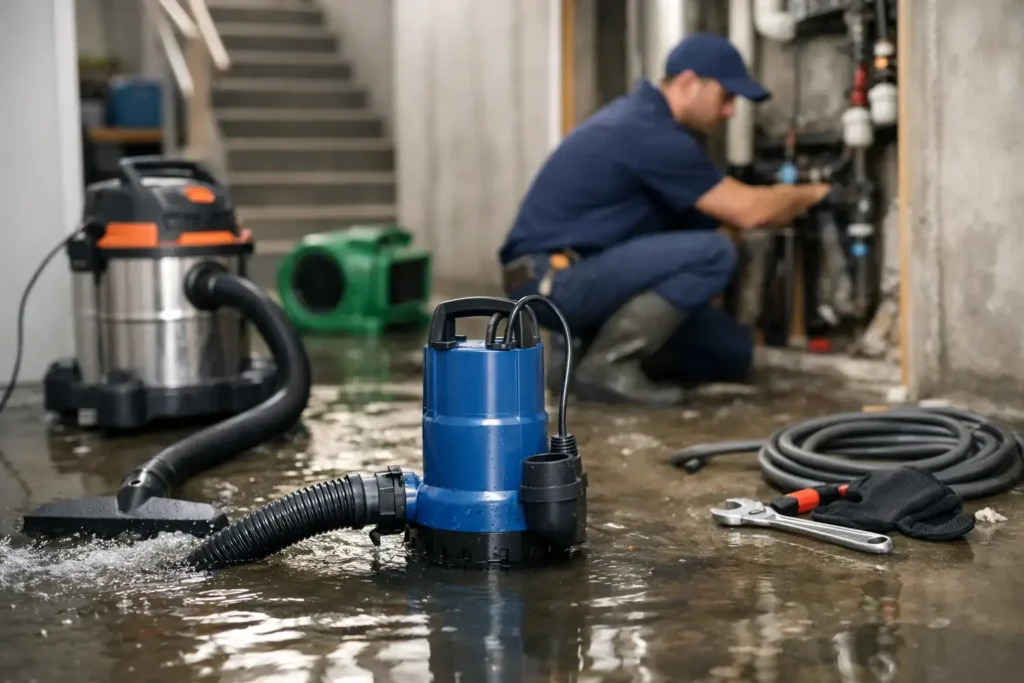
Never use a standard household vacuum to remove standing water. It is not designed for that work and creates an electrocution hazard. A professional restoration crew may use commercial extraction equipment, but the plumbing source still needs to be repaired first.

When Basement Flood Cleanup Plumbing Requires a Pro
A few inches of water can hide a major issue. Plumbing technicians use diagnostic tools to locate the failure, determine whether the problem is inside the home or in the sewer lateral, and recommend the repair that actually solves it.
Call a plumber immediately when you have a burst or frozen pipe, sewer backup, overflowing floor drain, failed sump pump, leaking water heater, recurring drain overflow, or water that returns after you remove it. These problems usually do not improve with a temporary patch.
A sewer camera inspection can show whether a line is blocked by roots, grease buildup, collapsed piping, or a foreign object. Depending on the condition of the line, the repair may involve drain cleaning, hydro jetting, spot repair, pipe replacement, or trenchless sewer lining. The right choice depends on the pipe material, damage location, and the long-term condition of the system.
A failed sump pump may be as simple as a stuck float switch or a clogged discharge line. It can also indicate an undersized pump, a failed check valve, improper basin setup, or a lack of battery backup. Replacing the pump without addressing those conditions can leave your basement vulnerable during the next major storm.
What to Do While You Wait for Help
Once the area is safe and the water source is shut off, move dry furniture, boxes, rugs, and valuables out of the wet area. Place aluminum foil, plastic blocks, or wood blocks under furniture legs that cannot be moved to reduce damage. Take photos and video before throwing away damaged items, especially if you may file an insurance claim.
Open doors and windows if outdoor conditions allow, and use fans only after electrical safety has been confirmed. Remove wet cardboard, fabric, and other absorbent materials promptly. These materials hold moisture against concrete and drywall, creating favorable conditions for mold.
Avoid cutting open walls or removing finished flooring until you know the type of water involved and the extent of the damage. Clean water from a supply line may require drying and selective material removal. Category 2 or Category 3 water from drains, sewage, or outside flooding requires more careful sanitation and often professional restoration. The trade-off is simple: moving too slowly increases damage, but tearing out materials too quickly can create unnecessary cost or disturb contaminated surfaces.
Protect Your Basement From the Next Flood
After the emergency is under control, ask what caused the failure and what will prevent a repeat. A one-time plumbing repair may be enough for a cracked supply line. Repeated backups or storm-related flooding usually call for a broader solution.
For plumbing-related protection, consider routine drain and sewer inspection, sump pump testing, a battery backup sump pump, a properly routed discharge line, and replacement of aging water supply lines. Property managers and commercial operators should also schedule preventive inspections before heavy-rain seasons and before periods of extended vacancy.
If sewer backups are recurring, the answer may involve cleaning or repairing the private sewer line. If water enters only during storms, the sump system, grading, gutters, foundation drainage, or city sewer conditions may also be part of the picture. A plumber can address the plumbing side and help identify when another specialist is needed.

Do Not Wait for a Small Leak to Become a Flood
A slow leak around a water heater, laundry connection, basement bathroom, or exposed pipe is often the warning sign homeowners miss. Watch for musty odors, peeling paint, warped baseboards, rust around appliances, unexplained water bills, or a sump pump that runs constantly. Early repair is almost always less disruptive than emergency cleanup.
For rental and commercial properties, build a response plan before an incident. Make sure tenants or staff know where the main shutoff is located, who to contact after hours, and which areas should be kept clear for access to drains, cleanouts, and utility equipment.
When water reaches your basement, the priority is clear: stop the flow, protect people from electrical and contamination hazards, and get the plumbing system diagnosed quickly. A fast call can be the difference between a contained repair and a long, expensive recovery.