
Water Heater Repair vs Replacement Cost
A water heater usually picks the worst possible time to fail – before work, during a tenant turnover, or right in the middle of a busy day at your property. That is why water heater repair vs replacement cost is not just a budgeting question. It is a decision about downtime, leak risk, energy use, and whether you are putting money into a unit that is already on its way out.
For Kansas City homeowners, landlords, and commercial property managers, the right move depends on the heater’s age, the type of failure, and how much useful life is realistically left. A fast repair can absolutely be the smart call. But there are also plenty of cases where replacing the unit saves money, stress, and repeat service calls.
How to judge water heater repair vs replacement cost
The first number people focus on is the repair bill. That makes sense, but it is only part of the picture. If a repair costs a few hundred dollars and gives you several more years of reliable hot water, that is usually a good investment. If the same repair is going into a 12-year-old unit with corrosion, poor efficiency, and a history of problems, that lower upfront cost can turn into a more expensive decision.
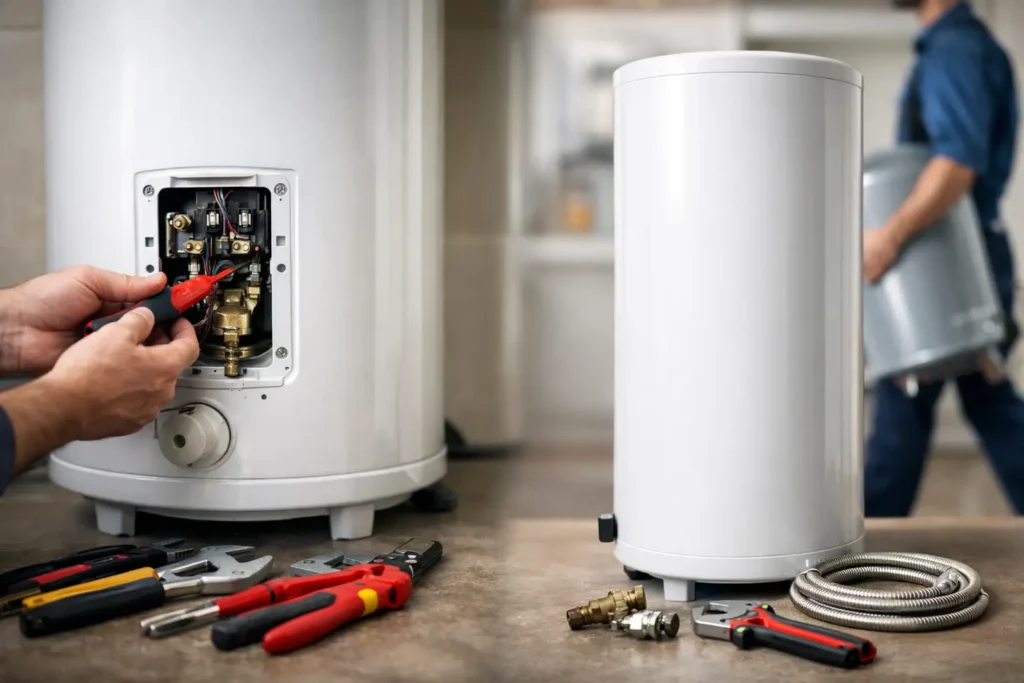
A standard tank water heater repair may involve a thermostat, heating element, pressure relief valve, gas control issue, igniter, or minor leak from a connection. Those are often repairable problems. Replacement becomes more likely when the tank itself is leaking, the unit has severe rust, sediment damage is extensive, or multiple parts are failing at once.
In practical terms, the question is not just, “Can it be fixed?” The better question is, “Is this fix worth it for this unit?” That is where experienced diagnosis matters.
Typical repair costs vs replacement costs
Repair costs vary based on the model, fuel type, part availability, and whether the issue is electrical, gas-related, or structural. Minor fixes tend to stay on the lower end. More involved work, especially on older systems, climbs quickly. If the repair requires several parts or labor-intensive troubleshooting, the final bill can start getting close to replacement territory.
Replacement costs are higher upfront because they include more than the heater itself. You may be paying for removal of the old unit, code updates, connections, pan replacement, venting adjustments, expansion tank work, and installation labor. If you are switching sizes or fuel types, that cost can rise further.
Tankless systems add another layer. Repairs can be more specialized, but replacement costs are usually much higher than standard tank units. Still, tankless units often have a longer lifespan, so repair can make more financial sense on a mid-life tankless model than it would on an aging tank heater.
The real comparison is this: a lower repair invoice today versus the full installed cost of a new system and the reliability that comes with it.
When repair is usually the smarter option
If your water heater is fairly new and the issue is isolated, repair is often the right call. A failed heating element, bad thermostat, pilot light problem, or faulty valve does not automatically mean you need a new unit. These are common service issues, and in many cases the fix is straightforward.

Repair also makes sense when the unit has been dependable, shows no signs of tank corrosion, and has years of expected life left. For example, a 4-year-old tank heater with one failed component is very different from a 14-year-old unit with rust in the water and rumbling from sediment buildup.
For landlords and commercial operators, repair may also be the better short-term move when speed matters and the equipment is still serviceable. Restoring hot water fast with a targeted repair can prevent tenant complaints, operational disruption, and additional plumbing strain.
Signs your water heater is still worth repairing
A repair is often justified if the problem is limited to one replaceable part, the tank is not leaking, the water heater is under 8 to 10 years old for a traditional tank, and the unit has not needed repeated service in the past year. Those factors usually point to a machine with useful life still ahead of it.
When replacement is the better financial decision
There is a point where continuing to repair an old water heater starts costing more than it saves. If the tank is leaking, replacement is usually the only real answer. Once the tank itself fails, patch jobs are not dependable, and the leak can quickly turn into floor damage, wall damage, and mold risk.
Age matters too. Most traditional tank water heaters last around 8 to 12 years, though some go longer with excellent maintenance. As they near the end of that range, efficiency drops, sediment builds up, and internal wear becomes harder to ignore. Putting more money into a heater that old can be hard to justify.
Replacement is also the smarter move when repair estimates are high relative to the cost of a new unit. A common rule of thumb is that if the repair approaches half the price of replacement, especially on an older unit, replacement deserves serious consideration. That is not a strict formula, but it is a useful checkpoint.
Red flags that push the decision toward replacement
Rust-colored hot water, recurring no-hot-water complaints, visible corrosion around the tank base, popping or banging noises from heavy sediment, and frequent leaks from the unit or surrounding fittings all point to a system that may be reaching the end. At that stage, replacing the heater can reduce the chance of an emergency failure.
The hidden costs people forget
Water heater repair vs replacement cost is not only about parts and labor. There are hidden costs tied to each decision, and they matter.
An older heater can quietly drive up utility bills. It may still produce hot water, but do it less efficiently than a newer model. That difference adds up month after month. If your household or building has high hot water demand, even a small efficiency gap becomes noticeable over time.
There is also the cost of interruption. If a failing water heater leaves a family without hot water, that is frustrating. If it shuts down a restaurant, salon, office, or rental unit, it can affect revenue and occupancy. One more repair might look cheaper on paper, but not if the unit fails again a few weeks later.

Then there is water damage risk. A leaking tank can do far more financial damage than the price of a planned replacement. Flooring, drywall, trim, storage areas, and nearby mechanical systems can all be affected.
Age, performance, and usage all change the answer
Two water heaters with the same repair issue may need different recommendations. A lightly used residential unit in a single-family home is not the same as a heavily used heater in a multi-tenant property or commercial space. High-demand systems wear out faster. Hard water and poor maintenance also shorten lifespan.
That is why blanket advice does not help much. A unit that is 9 years old but clean, stable, and otherwise reliable may still be worth fixing. A 7-year-old heater with chronic problems, heavy sediment, and visible deterioration may not be.
This is also where capacity matters. If your current heater never kept up with demand, replacing it may solve two problems at once – the current failure and the long-term performance issue. In those cases, replacement is not just about breakdown. It is an upgrade in reliability and comfort.
Why professional diagnosis saves money
Guessing is expensive. Replacing a repairable heater wastes money. Repairing a heater that is about to fail wastes money too. The right answer comes from a full inspection of the tank, components, venting, safety controls, and overall condition.
A professional plumber can tell you whether the problem is a repair issue, an age issue, or a system-wide issue. They can also explain what is driving the cost, whether code upgrades are likely, and how much life you can reasonably expect from the current unit after repair.
That kind of straight answer matters when you are dealing with urgent hot water loss. Kansas City Plumbers Today approaches these calls the way customers need them handled – fast response, clear pricing, and practical recommendations without surprises. When a repair makes sense, you should hear that. When replacement is the safer financial move, you should hear that too.
The best decision is the one that prevents the next emergency
If your water heater is newer, structurally sound, and dealing with one isolated issue, repair is often the most cost-effective choice. If it is old, unreliable, leaking, or stacking one problem on top of another, replacement is usually the smarter long-term investment.
The key is acting before a small problem turns into a flood or a complete loss of hot water. If your system is showing warning signs, get it inspected now, while you still have options and before the decision gets made for you by a failed tank.