
Sewer Line Repair: Signs, Options, Cost
A sewer problem rarely starts with a dramatic backup. More often, it begins with a toilet that gurgles after you run the sink, a drain that keeps slowing down, or a bad smell outside that does not go away. When those warnings show up, sewer line repair moves from a future concern to an urgent job. Waiting usually means more mess, more damage, and a higher bill.
For homeowners, landlords, and business owners in Kansas City, the real question is not whether sewer trouble is disruptive. It is how fast you can confirm the problem and fix it the right way. A failing sewer line can affect one fixture at first, then spread through the whole property. That is why the best repair process starts with accurate diagnosis, clear pricing, and a solution that matches the actual condition of the pipe.
When sewer line repair is needed
A clogged sink does not always mean your main sewer line is damaged. But when multiple drains act up at the same time, the problem usually runs deeper. If the shower backs up when the washing machine drains, or the toilet bubbles when water is running elsewhere, the main line may be partially blocked, cracked, offset, or collapsed.
Recurring drain cleaning is another warning sign. If you keep clearing the same issue and it returns, there may be a root intrusion, a broken section of pipe, or heavy scale buildup inside the sewer line. Older homes and commercial buildings are especially vulnerable because aging clay, cast iron, and Orangeburg lines do not hold up forever.
Outside the building, you may notice soggy patches in the yard, unusually green grass over the sewer path, or a persistent sewage odor. Inside, the warning signs are harder to ignore – floor drains backing up, sewage near basement fixtures, and water damage around lower-level plumbing. At that stage, fast service matters.
Common causes of sewer line damage
Tree roots are one of the most common reasons for sewer line repair. Roots naturally seek moisture, and even a small pipe joint gap can attract them. Once inside, they expand, trap debris, and create a blockage that keeps growing.
Grease, wipes, paper towels, and foreign objects also cause major problems. Even products labeled flushable can catch in the line and build into a severe obstruction. In restaurants and commercial spaces, grease and food waste can harden in the pipe and narrow the flow path quickly.
Age and ground movement are another factor. Pipes can crack, separate, sag, or collapse over time. In some cases, a line is not fully broken but has a belly – a low section where wastewater and solids collect. That kind of damage may not be obvious without a camera inspection, but it can lead to repeat backups and eventually require repair or replacement.
Why a camera inspection matters
Guesswork wastes time and money. Before any sewer line repair begins, the line should be inspected with a sewer camera whenever possible. That inspection shows exactly where the problem is, what caused it, and how severe the damage has become.
This step matters because the right fix depends on the pipe condition. A line packed with roots may be opened and repaired in one area. A line with widespread cracking may need replacement. A pipe with heavy buildup but no structural failure may benefit from hydro jetting instead of excavation. Without a clear view inside the line, it is too easy to treat the symptom and miss the real issue.

For property owners, camera diagnostics also make pricing more transparent. You can see whether the problem is a localized break, a major collapse, or a maintenance issue that has been building for years. That is how you avoid paying for the wrong repair.
Sewer line repair options
Not every sewer problem requires digging up the whole yard. The right method depends on the age of the pipe, the material, the extent of damage, access points, and local code requirements.
Spot repair for isolated damage
If one section of pipe is cracked, offset, or invaded by roots, a spot repair may be enough. This involves exposing the damaged area and replacing only that section. It is often the most practical choice when the rest of the line is still in good condition.
The advantage is lower cost compared with full replacement. The trade-off is that older sections of the line remain in place, so future issues are still possible if the pipe has widespread wear.
Trenchless sewer line repair
Trenchless methods can reduce disruption when conditions are right. Pipe lining creates a new inner layer inside the existing pipe, while pipe bursting breaks apart the damaged line and pulls in a new one. These methods often protect landscaping, driveways, and sidewalks better than traditional excavation.
That said, trenchless sewer line repair is not always the answer. The pipe must be a good candidate, and some collapsed or severely offset lines still require digging. A proper inspection determines whether trenchless repair is a smart long-term solution or just not feasible for that property.
Full sewer line replacement
When the pipe has extensive damage, repeated failures, or multiple weak points, replacement is usually the better investment. This is common with old clay pipes, badly deteriorated cast iron, or lines that have collapsed or shifted significantly.
Replacement costs more upfront, but it often prevents a cycle of repeat service calls, recurring backups, and emergency cleanups. For landlords and commercial operators, that long-term reliability can matter more than the lowest immediate price.
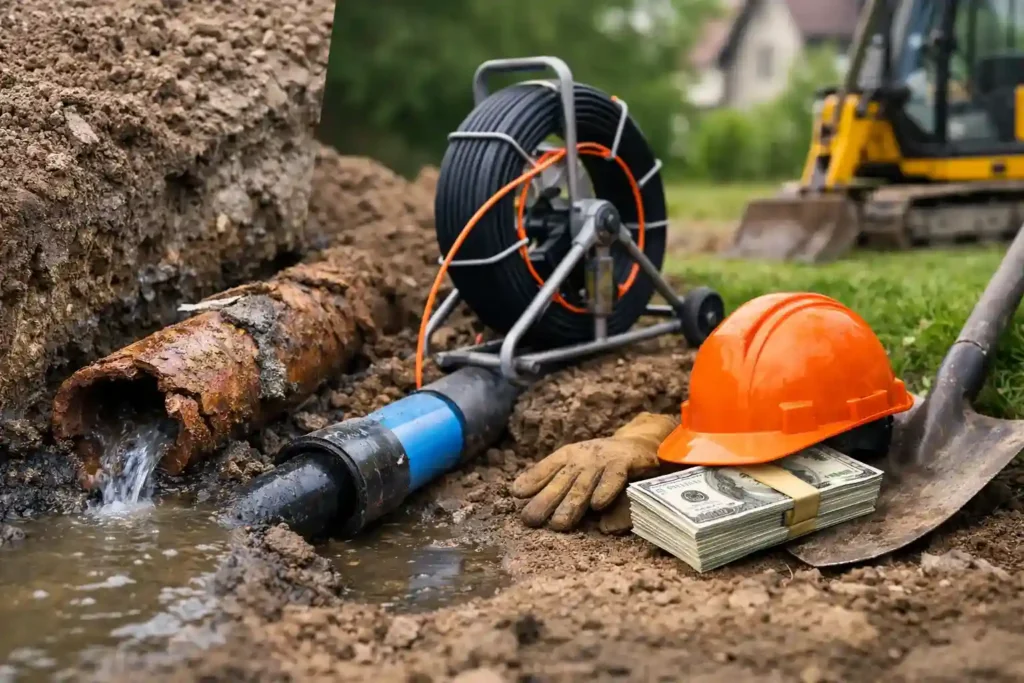
What affects sewer line repair cost
The cost of sewer line repair depends on several factors, and any company promising a flat number before diagnosis is leaving out key details. The first factor is the type of damage. A simple root intrusion is very different from a collapsed line under concrete.
Depth and accessibility also matter. A pipe buried deep in the yard is easier to reach than one running under a driveway, slab, retaining wall, or landscaped area. Pipe length, material, local permits, cleanup needs, and whether emergency service is required can all change the final cost.

The smartest approach is to get a clear inspection, a straightforward explanation, and pricing that reflects the actual work. Fast service matters, but no-surprise pricing matters too.
When to call right away
Some sewer issues can wait a day or two for scheduled service. Others should be treated like an emergency. If sewage is backing up into tubs, showers, floor drains, or lower-level toilets, call immediately. Wastewater exposure is a health risk, and each additional use of sinks, toilets, or appliances can make the situation worse.
You should also call fast if multiple fixtures stop draining at once, if you smell strong sewage indoors, or if there is visible wastewater around the property. Commercial properties need even quicker action because a sewer backup can interrupt operations, create sanitation issues, and affect customers and staff.
Kansas City Plumbers Today handles these situations with the urgency they require – rapid dispatch, advanced diagnostics, and repairs designed to solve the whole problem, not just clear the immediate backup.
How to reduce future sewer problems
No sewer line lasts forever, but a few habits can reduce the risk of major trouble. Keep grease, wipes, hygiene products, and food scraps out of drains. If your property has a history of root intrusion, periodic inspections can catch problems before they turn into a backup.
For older homes and rental properties, proactive evaluation is often worth it. Many owners do not realize the sewer line is failing until the first major emergency. By then, water damage, cleanup, and tenant disruption can cost more than the repair itself.
If you are buying an older property, planning a remodel, or managing a building with recurring drain issues, a camera inspection gives you a much clearer picture of what is happening underground. That kind of information helps you plan ahead instead of reacting under pressure.
Choosing the right sewer line repair company
Sewer work is not the place to gamble on shortcuts. You want a company that can inspect, explain, and repair the problem without bouncing you between contractors. That means having the right equipment, experience with both residential and commercial systems, and the ability to offer more than one repair approach when the situation calls for it.
Look for a team that offers emergency response, same-day service when possible, and pricing that is explained before the work starts. The best sewer line repair company will tell you when a simple repair is enough and when replacement is the better move. That honesty saves time, money, and frustration.
If your drains are slowing down, your yard smells like sewage, or backups keep returning, do not wait for a complete failure. The earlier you act, the more repair options you usually have – and the less disruption you are likely to face. A fast inspection today can prevent a much bigger plumbing emergency tomorrow.