
Sewer line cleaning methods and what they usually cost
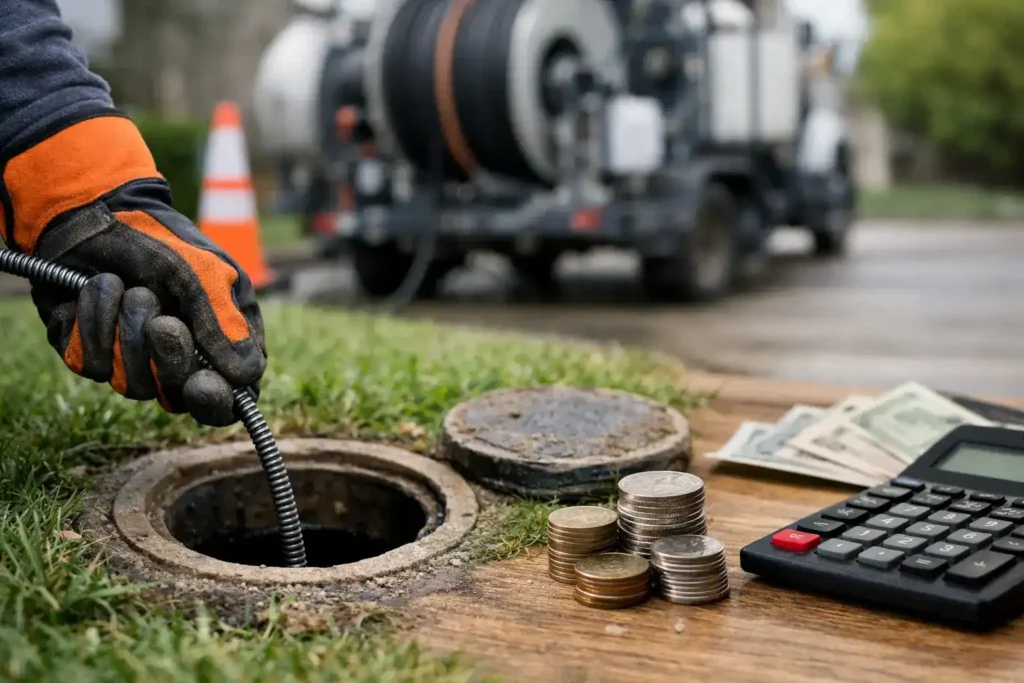
The least expensive approach is usually augering or snaking. This works by breaking through or pulling apart a clog so water can flow again. For basic stoppages, it can be effective and efficient. Typical pricing often starts around $250 and may rise depending on line length, clog severity, and access.

Hydro jetting is a more thorough cleaning method. It uses high-pressure water to scrub the inside of the sewer line and flush debris out of the system. This is often the better option for recurring blockages, grease-heavy commercial lines, and homes with significant buildup. Hydro jetting commonly starts around $500 and can exceed $1,000 when conditions are more difficult.
Camera inspections are often priced separately or bundled with service. They are valuable because they show exactly what is inside the sewer line – roots, grease, bellies, breaks, scaling, or a full obstruction. That helps avoid paying for the wrong service and helps determine whether cleaning will solve the issue or if repair is really needed.
When cleaning is enough – and when it is not
One of the most important parts of sewer service is knowing whether the problem is a clog or a damaged line. Cleaning is the right solution when debris, buildup, grease, waste, or early root intrusion is restricting flow. In those cases, clearing the line can restore normal drainage quickly.
But if the pipe is cracked, collapsed, severely corroded, or separated at the joints, cleaning may only provide temporary relief. Water might flow again for a short time, but the blockage will likely return. That is why experienced plumbers often recommend a sewer camera inspection when backups keep happening or when the property has older underground piping.
This is where homeowners sometimes get frustrated with low advertised prices. A cheap clearing service may reopen the line for the day, but if the real issue is pipe damage, the savings disappear fast. Paying for a proper diagnosis up front is often the smarter move.
Signs you may need sewer line cleaning now
If multiple drains are slowing down at the same time, that usually points to a main sewer line issue rather than a small branch drain clog. Toilets that bubble when sinks or tubs drain are another warning sign. So are sewage odors indoors or around the yard.
The most urgent sign is wastewater backing up into tubs, showers, floor drains, or lower-level fixtures. At that point, this is no longer a minor plumbing inconvenience. It is a sanitation issue and a property damage risk. Fast action matters.
Recurring drain problems also deserve attention, even if they seem manageable. Repeatedly plunging toilets or using store-bought drain chemicals does not fix a sewer line problem. In some cases, those chemicals can even damage pipes and make professional service more complicated.
How to keep sewer cleaning costs from getting worse
The fastest way to control sewer line cleaning cost is to deal with the issue early. A slow main line is usually cheaper to clear than a fully backed-up system that needs emergency response, cleanup coordination, and additional diagnostics. Waiting almost always increases both the scope and the cost.
Routine maintenance can help if your property has a history of sewer issues. For some homes and commercial buildings, scheduled cleaning is a smart preventive service, especially where grease, older pipes, or root intrusion are known problems. It is usually far less expensive than repeated emergency calls.

It also helps to be careful about what goes down the drain. Grease, wipes, paper towels, hygiene products, and heavy food waste all contribute to sewer clogs. In kitchens, especially commercial ones, buildup can happen much faster than people expect.
What to ask before you schedule service
Before you approve sewer line cleaning, ask whether the quote includes diagnosis, labor, equipment, and any emergency service fees. Ask if hydro jetting is included or if the price only covers basic snaking. It is also worth asking whether a camera inspection is recommended and whether that charge is separate.
You should also ask what happens if the plumber finds pipe damage instead of a removable clog. A trustworthy company will explain the next step clearly, give you real options, and avoid surprise pricing. That matters when you are making a decision under pressure.
For Kansas City property owners, speed and proper equipment make a major difference. Kansas City Plumbers Today handles sewer and drain problems with fast dispatch, professional diagnostics, and clear pricing so you know what you’re dealing with before the situation gets worse.
The bottom line on sewer line cleaning cost
So, how much does sewer line cleaning cost? For many properties, expect a general range of $250 to $800, with more difficult jobs, hydro jetting, root removal, and emergency service potentially reaching $1,200 or more. The exact number depends on blockage type, access, equipment, and whether the line only needs cleaning or has a deeper structural problem.
If your drains are slow, your toilets are gurgling, or sewage is backing up, this is the time to act. The sooner the line is inspected and cleared, the better your chances of avoiding bigger damage, bigger disruption, and a much bigger bill.
Kansas City Plumbers Today offer fast, reliable home services for plumbing installation or repair, HVAC and professional electrical services.
With extensive experience in handling common and complex issues or emergency service, our team saves you time and money, ensuring your home services are conducted with the utmost professionalism and efficiency.