
How to Clear a Sewer Line Safely
A sewer line clog usually does not start with one dramatic event. It starts with a toilet that bubbles when the shower runs, a tub that drains slower than usual, or a floor drain that suddenly smells worse than it did yesterday. If you are searching for how to clear a sewer line, the first thing to know is this: speed matters, but so does using the right method.
A main sewer line blockage is different from a simple sink clog. When the line serving your whole home or building is restricted, wastewater has nowhere to go. That can lead to backups in the lowest drains, water damage, foul odors, and a mess that gets expensive fast. Some clogs can be cleared with the right equipment. Others need immediate professional service before they turn into pipe damage, repeated backups, or a health hazard.
How to clear a sewer line without making it worse
The biggest mistake property owners make is treating a sewer line clog like a minor drain issue. Liquid drain cleaners are a common example. They rarely solve a main line blockage, and they can damage older pipes, create fumes, and make the job more dangerous for whoever has to clear the line afterward.
Start by confirming that you are dealing with a sewer line issue, not an isolated fixture clog. If only one sink is slow, the problem may be local to that branch drain. If multiple drains are backing up at once, especially on the lowest level, the main sewer line is the more likely problem. Gurgling toilets, water appearing in the shower when the washing machine drains, and backups in basement floor drains are all strong warning signs.
If sewage is actively backing up into the home or building, stop using water immediately. Do not flush toilets, run the dishwasher, or do laundry. Every gallon you send into the system has to go somewhere, and if the main line is blocked, that somewhere may be your floor.
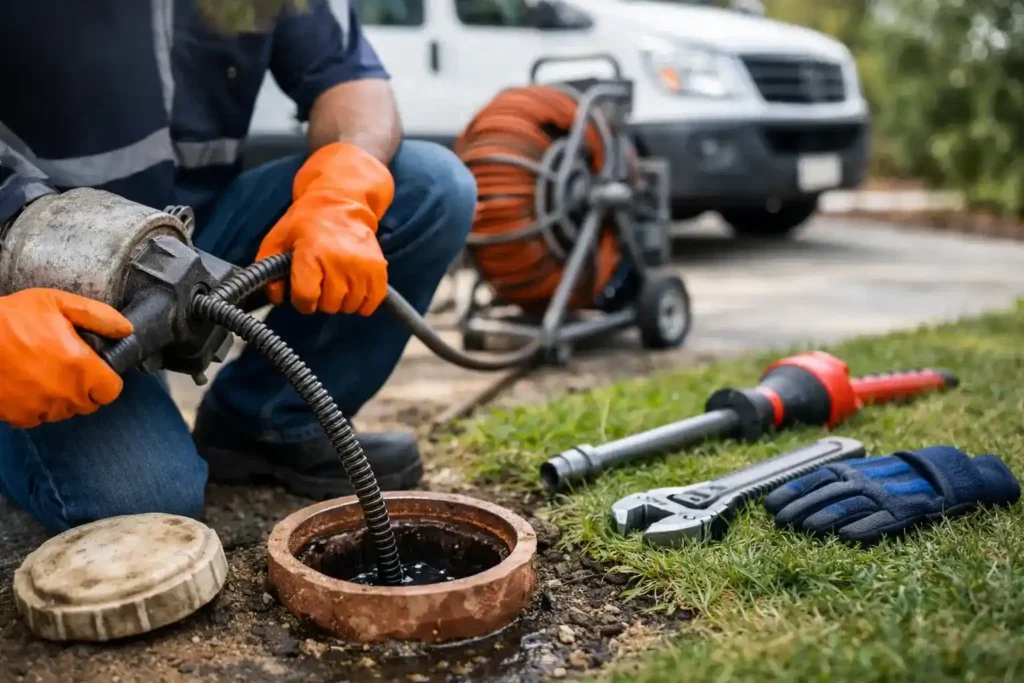
The next step is to locate the sewer cleanout. In many properties, this is a capped pipe found outside near the foundation, in a basement, crawl space, utility room, or along the side yard. Opening a cleanout can release standing wastewater, so use gloves, eye protection, and caution. If the cap is under pressure, back off and let it release slowly. If you are not comfortable doing that, it is time to call for service.
The most effective ways to clear a sewer line
Once the cleanout is accessible, the right clearing method depends on what is causing the blockage. There is no one-size-fits-all answer.
Drain snake or sewer auger
A sewer auger is often the first mechanical option for a main line clog. This tool feeds a cable into the pipe to break through soft obstructions or pull back debris. It can work well on paper buildup, sludge, and some smaller root intrusions.
For a homeowner, the challenge is that sewer machines are stronger, heavier, and less forgiving than handheld drain snakes. Used incorrectly, they can get stuck, damage certain pipes, or fail to remove the full obstruction. Even when an auger restores flow, it may only punch a hole through the clog rather than fully clean the pipe wall. That means the problem can return sooner than expected.
Hydro jetting
Hydro jetting uses high-pressure water to scour the inside of the pipe. It is one of the best solutions for grease buildup, heavy sludge, scale, and recurring blockages. It also does a much better job than cabling when the goal is to clean the full diameter of the line rather than just reopen a small path.

That said, hydro jetting is not automatically the first move in every situation. If the pipe is cracked, badly offset, or already deteriorated, high pressure may not be appropriate until the condition is verified. That is why professionals often inspect the line first with a sewer camera.
Sewer camera inspection
A camera inspection does not clear the line by itself, but it often saves time and money by showing exactly what is inside the pipe. Tree roots, collapsed sections, grease, wipes, foreign objects, and bellied pipe sections can all cause similar symptoms. The fix depends on the actual cause.
If roots are the issue, clearing the line may restore function temporarily, but root intrusion usually means the pipe has a joint or opening that needs attention. If the line has shifted or collapsed, repeated snaking will not solve the real problem.
When a DIY sewer line clearing attempt makes sense
There are situations where a careful property owner can try a basic approach. If you have a known cleanout, no active indoor sewage overflow, and access to the proper machine, you may be able to clear a minor obstruction. The key word is minor.
DIY makes the most sense when the blockage is limited, the pipe material is in decent shape, and you understand the risk. It makes less sense in older homes, commercial buildings, properties with repeated backups, or any situation involving tree roots or suspected pipe damage. Those jobs usually need more than brute force. They need diagnostics, the right equipment, and a plan that prevents the next backup.
If you do attempt it, work slowly. Do not force the cable. If resistance is severe, if the machine binds, or if you restore flow only to have it fail again soon after, stop there. Repeated attempts can turn a clog into a bigger repair.
Signs you need professional sewer line service now
Some sewer line problems should not wait. If sewage is entering the property, if more than one fixture is backing up, or if the cleanout is overflowing outside, you need fast help. The same is true if you notice sewage odors in the yard, soggy patches over the line, or backups that keep coming back after snaking.
Commercial properties and multi-unit buildings should act even faster. A sewer stoppage can interrupt operations, create sanitation issues, and affect multiple tenants or customers at once. In those cases, the cost of delay is usually higher than the cost of immediate service.
Professional service also matters when the goal is not just reopening the line, but solving the problem completely. A trained plumber can determine whether the right answer is cabling, root cutting, hydro jetting, spot repair, trenchless lining, or full sewer replacement. That distinction matters. Temporary relief is not the same as a real fix.
How to keep the sewer line clear after the clog is gone
Once the line is flowing again, prevention becomes the next priority. Sewer clogs often build over time, especially in older systems or properties with heavy use.

Avoid flushing wipes, paper towels, hygiene products, or grease. Even products labeled flushable can create major blockages in real-world plumbing systems. In kitchens, grease is one of the biggest contributors to recurring sewer and drain issues. It may go down hot, but it cools and sticks inside the pipe.
If tree roots have caused trouble before, ask about periodic inspection or maintenance cleaning. Roots do not usually disappear for good unless the damaged pipe section is repaired or replaced. If your property has an aging sewer line, routine camera checks can catch developing issues before they become emergencies.
For property managers and commercial operators, scheduled drain and sewer maintenance often pays for itself. Restaurants, older apartment buildings, and high-use facilities are especially prone to buildup and repeated stoppages. Waiting for a full backup is usually the most disruptive and expensive option.
How to clear a sewer line the right way the first time
The real answer to how to clear a sewer line is not just about getting water to move again. It is about choosing the right method for the cause, the pipe condition, and the urgency of the situation. Sometimes a sewer auger is enough. Sometimes hydro jetting is the better fix. Sometimes the line needs a camera inspection first because the blockage is a symptom of a larger failure.
That is why fast response and accurate diagnosis matter. A rushed guess can leave you with the same backup next week. The right service clears the line, identifies why it clogged, and gives you a clear path forward with no surprises.
Kansas City Plumbers Today handles sewer line problems with the equipment and urgency these jobs demand, from camera inspections to hydro jetting and repair recommendations. If your drains are backing up, the safest move is to stop using water and get the line checked before a bad clog turns into property damage.
A sewer line problem never improves by waiting, but it usually gets more expensive. The sooner you act, the better your chances of a cleaner, faster, and less disruptive repair.
About Us