
Guide to Emergency Plumbing Response for Homes
A pipe can burst behind a wall without warning. A toilet can overflow just before guests arrive. A sewer backup can shut down a rental unit, restaurant, or office in minutes. When water is moving where it should not be, the first decisions you make can limit damage and keep a manageable repair from becoming a major restoration project.
This guide to emergency plumbing response explains what to do first, when to shut down water or power, and when it is time to call a licensed plumber immediately. The goal is not to perform a risky repair yourself. It is to stabilize the situation, protect people and property, and get the right help moving fast.
What Counts as a Plumbing Emergency?
A plumbing issue is an emergency when it creates an immediate risk of water damage, contamination, loss of essential service, or unsafe conditions. A slowly dripping faucet can usually wait for a scheduled repair. Water pouring from a ceiling, a sewage-filled drain, or a failed water heater often cannot.
Call for urgent plumbing service when you have a burst pipe, active leak that cannot be contained, sewer backup, overflowing toilet that will not stop, no water to the building, no hot water in a critical commercial setting, suspected gas leak, or a failed sump pump during heavy rain. In Kansas City, freezing temperatures can turn a small pipe problem into a fast-moving flood, while seasonal storms can overwhelm drains and sump systems.
The right response depends on the source. Clean water from a supply line is still damaging, but sewage water requires extra caution because it may contain bacteria and other contaminants. A gas smell is not a plumbing repair situation to troubleshoot at home. Leave the building, avoid switches and open flames, and contact the gas utility or emergency services from a safe location.
Guide to Emergency Plumbing Response: The First 15 Minutes
The first 15 minutes are about control, not diagnosis. Do not start opening walls, disconnecting pipes, or using chemical drain cleaners. Take the safest steps available and let a professional determine the full cause.
1. Stop the water source if you can do it safely
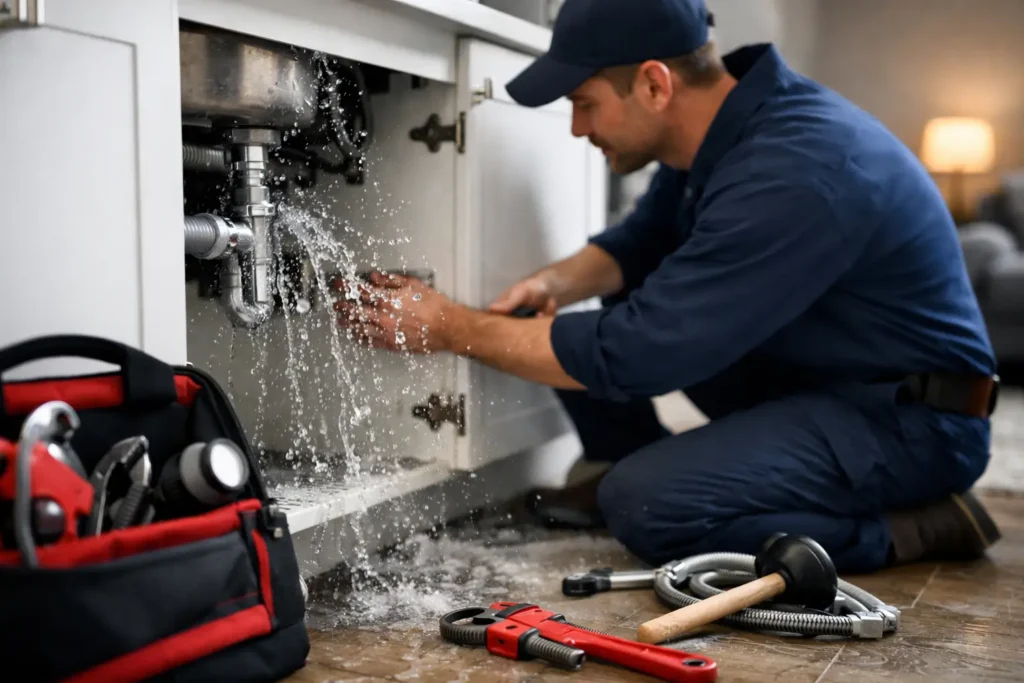
For a leaking toilet, sink, or water heater, look for the fixture’s local shutoff valve. It is commonly located beneath a sink, behind the toilet, or on the water line above the water heater. Turn the valve clockwise until it stops.
If water is coming from an unknown source, a burst pipe, or multiple fixtures, shut off the main water supply. Many homes have a main shutoff near the water meter, in a basement, utility room, crawl space, or exterior meter box. Property managers should make sure the main shutoff location is documented and accessible before an emergency occurs.
Do not force a corroded valve. If it will not turn easily, call for help and focus on containing the water with towels, buckets, or pans.
2. Keep electricity away from standing water
Water and electricity are a dangerous combination. If water is near outlets, appliances, a breaker panel, or electrical equipment, stay clear of the area. Shut off power at the breaker only if you can reach it without walking through water or touching wet surfaces.

Never use an extension cord, shop vacuum, or household appliance in a wet area unless you are certain the electrical hazard has been eliminated. If you have any doubt, treat the area as unsafe and wait for qualified help.
3. Protect the area without spreading damage
Move furniture, electronics, inventory, rugs, and personal belongings away from the affected space when it is safe to do so. Place containers under controlled drips and use towels to keep water from traveling into adjacent rooms. Take photos or video of the problem and visible damage for insurance documentation.
For a sewer backup, keep people and pets away from the affected area. Do not try to mop up sewage without proper protective equipment, and do not run water elsewhere in the building. Flushing toilets, starting a dishwasher, or running a washing machine can force more wastewater back through the blocked line.
4. Call a 24/7 emergency plumber
Once the immediate hazard is controlled, call for emergency service. Provide a clear description: where the water is coming from, whether the main water is off, whether sewage is present, and whether the issue affects a home, rental property, or business.
Kansas City Plumbers Today responds to urgent plumbing problems with trained technicians, advanced diagnostic equipment, and clear repair recommendations. Fast dispatch matters, but accurate diagnosis matters too. A visible leak may be the symptom of a failed supply line, damaged pipe, pressure issue, sewer blockage, or fixture failure that needs a complete repair.
Emergency Responses for Common Plumbing Problems
Burst or frozen pipes
Shut off the main water supply immediately. Open nearby faucets after the water is off to help relieve pressure in the lines. If the pipe is frozen but has not burst, do not use an open flame, torch, or high-heat device to thaw it. That can damage the pipe or create a fire hazard.
Gentle warmth may help in some accessible areas, but a plumber should inspect the pipe before water service is fully restored. Frozen pipes often split in places that are not immediately visible.
Overflowing toilet
Remove the tank lid and push the rubber flapper down if water is continuing to run into the bowl. Then close the shutoff valve behind the toilet. If the toilet is not overflowing but will not flush, do not keep trying. Repeated flushes can turn a minor clog into a bathroom flood.
A plunger may work for a simple blockage, but stop if water rises or there is a backup in a tub, shower, or nearby drain. Multiple affected fixtures often point to a larger drain or sewer line issue.
Sewer backup or floor drain overflow
Stop using water throughout the property. Sewer backups can be caused by a main line clog, tree root intrusion, damaged pipe, grease buildup, or municipal sewer issues. The cause is not always obvious, which is why camera inspection is often the fastest way to find the problem without unnecessary digging.

Avoid chemical drain cleaners. They rarely solve a main sewer blockage and can make the workspace more hazardous for the technician. Professional drain cleaning, hydro jetting, camera inspection, or sewer line repair may be needed depending on what the inspection shows.
Water heater leak or failure
If the water heater is leaking, shut off the cold-water supply valve above the unit if accessible. For an electric water heater, turn off the breaker. For a gas unit, do not adjust gas controls if you smell gas. Leave the area and contact the gas utility or emergency services.
A small drip from a fitting may be repairable. Water pooling around the base can indicate a failing tank, which typically requires replacement rather than a patch. Do not ignore rusty water, popping sounds, or pressure relief valve discharge, especially if the unit is older.
What Not to Do During a Plumbing Emergency
Emergency repairs can become more expensive when well-intentioned actions create additional damage. Do not use drain chemicals in a backed-up sewer line, puncture walls or ceilings without identifying the source, or turn water back on just to see whether a leak has stopped.
Avoid using tape, clamps, or temporary sealants as a reason to delay a professional repair. These products can sometimes slow a minor leak until help arrives, but they do not correct corroded pipes, split fittings, failing valves, or water pressure problems. The trade-off is simple: a quick temporary measure may buy time, but relying on it can hide damage until it worsens.
For commercial properties, do not reopen bathrooms, kitchens, or work areas that have been affected by sewage or standing water until the area has been properly assessed and cleaned. Protecting employees, tenants, customers, and inventory has to come before getting operations back to normal.
How to Prepare Before an Emergency Happens
The best time to locate shutoff valves is not during a flood. Walk through your home or facility and identify the main water shutoff, water heater shutoff, fixture shutoffs, electrical panel, and sump pump. Make sure responsible family members, maintenance staff, or key employees know where they are.
Keep the area around your water heater, main shutoff, and sump pump clear. Test sump pumps before storm season and after long periods of nonuse. If your property has older pipes, recurring drain clogs, low water pressure, or frequent backups, schedule an inspection before the next emergency forces the issue.
Landlords and property managers should also keep current tenant contact information, access instructions, and a simple emergency protocol. A tenant who knows to shut off a toilet valve can prevent a single-unit overflow from damaging multiple apartments.
When Fast Service Makes the Difference
Water does not wait for business hours, and neither should your response. A professional emergency plumber can isolate the failure, identify hidden damage, and explain the repair options before the problem spreads further. Transparent pricing and a clear scope of work are especially valuable when you are dealing with a stressful, unexpected repair.
If you have active water, sewage, a failed essential fixture, or a suspected gas issue, act now: secure the area, shut down the source if it is safe, and get qualified help on the way. Quick action protects more than pipes. It protects your property, your schedule, and your peace of mind.