
Best Sump Pump Backup Options for Kansas City Homes
A primary sump pump can be working perfectly at 8:00 p.m. and become useless the moment a Kansas City storm knocks out power. That is why the best sump pump backup options are not an optional upgrade for many homes, rentals, and commercial buildings. They are the systems that keep water moving when the main pump fails, the power goes out, or groundwater rises faster than one pump can handle.
A flooded basement is rarely a small cleanup job. Water can damage finished walls, flooring, furniture, appliances, stored belongings, electrical systems, and foundations. For landlords and property managers, it can also mean displaced tenants, insurance claims, and urgent repair bills. The right backup system gives you time and protection when conditions are at their worst.
Why Your Main Sump Pump Needs a Backup
Your primary pump depends on several things going right: electricity must be available, the float switch must activate, the discharge line must stay clear, and the pump must have enough capacity for incoming water. During severe rain, any one of those points can fail.
Power outages are the most obvious risk. Heavy winds, lightning, and ice storms can cut power just as saturated soil sends water toward your foundation. But power is not the only concern. A primary pump can burn out, become clogged with debris, lose its switch, or simply be overwhelmed by a high-volume water event.
A backup pump installed above the primary pump provides a second layer of protection. It should activate automatically when the water level rises beyond the primary pump’s normal range. That means you do not have to be home, awake, or standing in the basement when the problem begins.
Best Sump Pump Backup Options Compared
The best choice depends on your property, water pressure, pump run time, basement risk, and budget. There is no single backup that fits every Kansas City property. Here is how the main options perform in real-world conditions.
Battery-Powered Backup Pumps
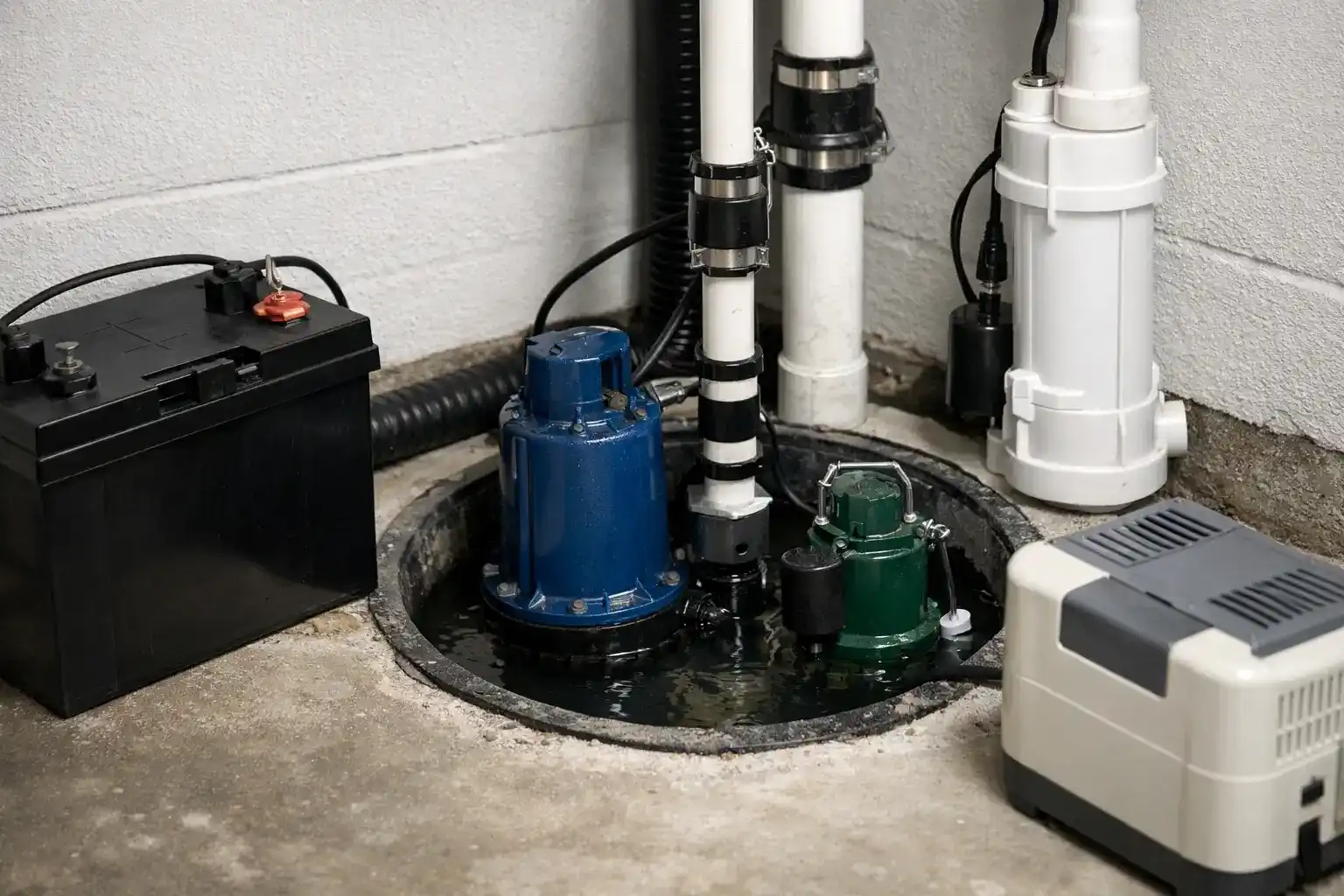
A battery backup sump pump is the most common choice for residential basements. It uses a dedicated deep-cycle battery to power a secondary pump when the main pump cannot keep up or when utility power is out.
This option works well because it is independent of the home’s electrical supply and can activate automatically. Quality systems often include an alarm, indicator lights, and monitoring features that alert you when the pump has run, the battery is low, or maintenance is needed.
The trade-off is run time. A battery backup is not intended to run indefinitely through days of heavy water flow. Its operating time depends on the battery capacity, pump size, lift height, and how frequently the pump cycles. A properly sized high-capacity battery may protect a home through a typical outage, but a fast-moving storm with constant inflow can drain it sooner than homeowners expect.
Battery systems need regular attention. The battery should be tested, terminals checked for corrosion, and the pump tested with water. If your primary pump runs frequently, do not wait until storm season to find out that the backup battery is weak.

Water-Powered Backup Pumps
A water-powered backup pump uses your home’s municipal water supply to create suction and remove sump water. It does not need electricity or a battery, which makes it especially valuable during extended power outages.
For homes on city water with strong, reliable water pressure, this can be one of the most dependable backup solutions available. It can continue operating as long as the municipal water supply remains available, making it a strong option for properties with recurring water problems or basements containing valuable finished space.
The biggest limitation is that water-powered systems are not suitable for every home. They do not work well for properties on private wells because a well pump also needs electricity. They also require adequate water pressure and proper plumbing installation. Some communities have water-use restrictions or plumbing-code requirements that affect installation, so professional assessment matters.
Water-powered pumps use a significant amount of municipal water while they operate. That may increase your water bill during a major event, but the cost is usually far less than repairing a flooded basement.
Generator Backup for a Sump Pump
A standby generator can keep more than your sump pump running. Depending on its size and electrical setup, it may power the sump pump, refrigerator, furnace, internet equipment, security system, and selected lighting during an outage.
For homes with frequent or lengthy power failures, a permanently installed standby generator offers broad protection. It starts automatically when utility power fails and runs on natural gas or propane. This eliminates the limited run time associated with a battery backup, provided the generator is properly sized and maintained.
A portable generator can also power a sump pump, but it requires someone to be present to set it up safely, start it, and connect the equipment. That is a serious limitation if an outage occurs while you are away from home. Portable generators must never run inside a garage, basement, or enclosed area because of carbon monoxide risk.
Generator backup is usually the highest-cost option because it may involve electrical work, gas piping, permits, and ongoing maintenance. It is most practical when you need whole-property outage protection, not just a secondary sump pump.
A Second AC-Powered Sump Pump
A second standard electric sump pump can add pumping capacity during heavy rainfall. It is useful when the primary pump is undersized for the amount of water entering the pit or when a property has experienced repeated high-water events.
On its own, however, a second AC pump does not protect you in a power outage. It is best paired with a battery backup, water-powered backup, or generator. Think of it as a capacity upgrade rather than a complete emergency solution.

How to Choose the Right System
Start with the reason you need a backup. If your main concern is a short power outage during ordinary storms, a quality battery backup may be the right fit. If your basement has flooded before, your home is in a high-water area, or outages can last many hours, a water-powered unit or standby generator may offer stronger protection.
Your water source is a major deciding factor. Homes on municipal water can often use battery or water-powered systems. Homes with private wells generally need battery backup or generator power because water-powered pumps depend on pressurized city water.
Also consider how quickly water enters the sump pit. A backup pump must be sized for the expected flow rate and the vertical distance it needs to lift water before discharge. A pump that is too small may run continuously without lowering the water level. A professional sump pump inspection can identify whether the issue is pump capacity, a failing check valve, a blocked discharge line, poor grading, or excessive groundwater.
For rental and commercial properties, remote alarm capability can be worth the investment. A water alarm or monitoring system can notify you of high water, power loss, or pump failure before a minor issue becomes a major claim.
Installation Details That Make or Break Protection
Even the best backup pump will not perform if the system is installed poorly. The backup must sit at the correct height, have a clear discharge route, and use properly sized piping. The discharge line should direct water far enough away from the foundation that it does not cycle back toward the basement.
A check valve is also critical. It prevents discharged water from flowing back into the pit after the pump shuts off. If the valve is installed incorrectly, worn out, or missing, the pump works harder and may cycle more often than necessary.
Test the system after installation. Pour water into the pit or use the test feature recommended by the manufacturer, then confirm that the primary and backup pumps activate as intended. Verify that water exits outside and does not leak from fittings or return to the basin.
Kansas City Plumbers Today can inspect your existing sump setup, identify weak points, and install the right backup solution with clear pricing before work begins. If your pump is alarming, cycling constantly, failing to start, or facing an active water issue, request service right away.
Keep Your Backup Ready Before the Next Storm
A backup sump pump is not a set-it-and-forget-it device. Check the pit for debris, test the float switch, inspect the discharge line, and confirm that the primary pump is still doing its job. For battery systems, follow the manufacturer’s replacement schedule rather than waiting for an alarm to tell you the battery has failed.
The best time to choose a backup is when your basement is dry and you have options. A quick inspection before the next heavy rain can protect the space, equipment, and belongings you cannot afford to lose.