
Commercial Plumbing Maintenance Services That Work
A restroom backup during the lunch rush, a water heater failure before opening, or a slow leak above inventory can turn an ordinary workday into an expensive interruption. Commercial plumbing maintenance services give Kansas City business owners and property managers a practical way to catch those problems before they force a closure, damage a tenant space, or create an emergency call at the worst possible time.
For a commercial property, plumbing is not just a building system. It affects employees, customers, sanitation, revenue, insurance exposure, and your ability to stay open. Planned service keeps small issues from becoming major repairs and gives you a clear picture of what your plumbing system needs next.
Why Preventive Plumbing Matters for Commercial Properties
Commercial plumbing works harder than residential plumbing. Restaurants send grease and food debris toward drains. Apartment buildings experience constant fixture use. Office restrooms, retail spaces, medical facilities, warehouses, and schools all depend on reliable water, drainage, and hot water systems throughout the day.
Waiting for a visible failure is usually the costly option. A drain line can build up gradually for months before it backs up. A toilet can run unnoticed long enough to waste thousands of gallons. A small pipe leak can damage drywall, flooring, insulation, electrical components, and stored products before anyone sees it.
Maintenance changes the response from reactive to controlled. Instead of scrambling to find a plumber after a flood, you can schedule inspections and cleaning around business hours, address wear before it causes damage, and budget for repairs with fewer surprises.
It also protects the people using your property. Restroom closures, sewer odors, poor water pressure, and inconsistent hot water affect customer confidence quickly. For restaurants and facilities with sanitation requirements, a plumbing issue can become more than an inconvenience.
What Commercial Plumbing Maintenance Services Should Include
The right maintenance plan depends on your property type, age of the plumbing, occupancy, and past repair history. A small professional office may need periodic inspections and drain service, while a busy restaurant or multi-unit property may require more frequent cleaning and monitoring.
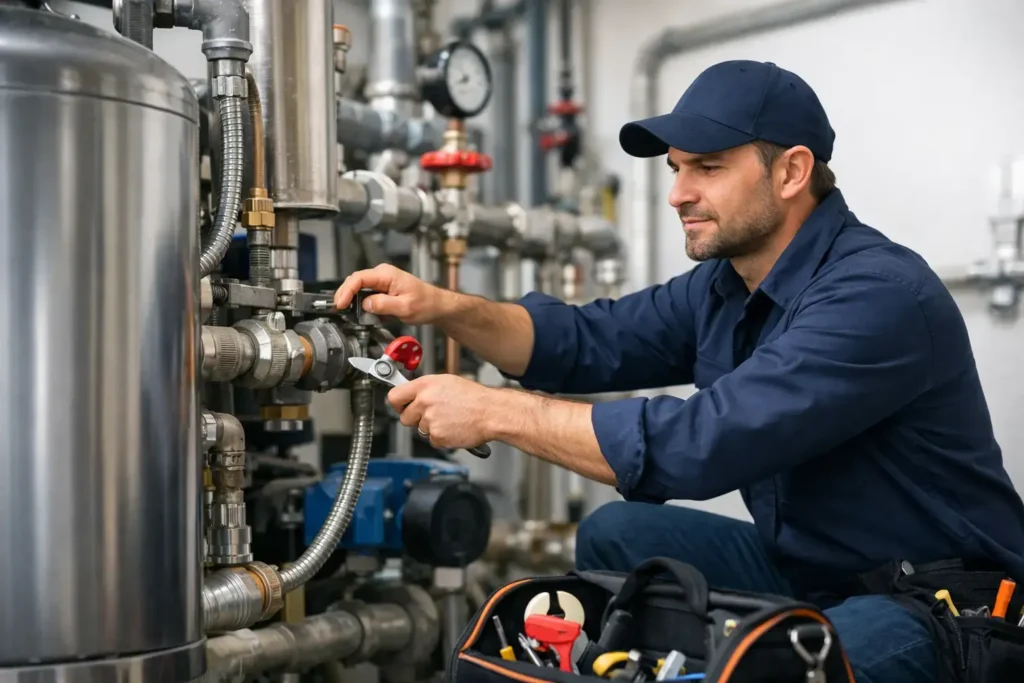
A thorough commercial maintenance visit typically starts with an inspection of the systems most likely to disrupt operations. That can include water supply lines, shutoff valves, toilets, faucets, water heaters, sump pumps, floor drains, cleanouts, backflow-related components, and visible drain piping.
Drain and sewer maintenance should be a priority for high-use properties. Technicians can identify slow drainage, recurring clogs, root intrusion, buildup, damaged pipe sections, or improper flow before sewage backs up into a restroom, kitchen, or lower-level space. Sewer camera inspections provide a direct view inside the line when recurring issues need a clear diagnosis. For buildup-heavy lines, professional drain cleaning or hydro jetting may be the right solution.
Water heater maintenance is equally important where employees, customers, tenants, or food-service operations rely on hot water. Sediment, worn components, pressure problems, and corrosion can reduce performance long before the unit stops working. Routine service helps identify whether a repair is reasonable or whether replacement planning will prevent a sudden outage.

Leak detection is another high-value part of a commercial maintenance program. Not every leak leaves a puddle. Hidden water loss may show up as rising utility bills, stained ceiling tiles, warped flooring, low pressure, or an unexplained musty odor. Early detection limits damage and keeps repair scopes smaller.
The Problems That Need Attention Now
Some plumbing problems should not wait for the next scheduled visit. Call for prompt service if you see water near electrical equipment, sewage coming up through a floor drain, a burst or actively leaking pipe, no water service, no hot water in an occupied facility, or a toilet and drain backup affecting multiple areas.
Recurring clogs deserve immediate investigation too. Repeatedly plunging the same fixture may restore temporary flow, but it does not remove the cause. The issue could be buildup farther down the line, root intrusion, a damaged sewer pipe, poor venting, or a problem shared by several fixtures.
A sudden increase in your water bill should also raise a flag. Commercial properties can lose substantial water through running toilets, underground leaks, faulty valves, and aging supply lines. The longer the leak continues, the greater the cost and potential property damage.
When an emergency happens, Kansas City Plumbers Today can respond with the diagnostic equipment and repair capability needed to locate the problem, explain the options, and get your business moving again. Fast service matters, but a lasting repair matters more.
Building a Maintenance Schedule That Fits Your Property
There is no single schedule that works for every commercial building. Maintenance frequency should reflect usage and risk. A restaurant with grease-heavy drains may need recurring drain maintenance several times a year. A retail store with limited plumbing use may need a less frequent inspection. Multi-family properties often benefit from routine checks because one failed fixture or branch line can affect multiple tenants.
Start with your repair history. If you have had repeated drain calls, water heater issues, sewer odors, low-pressure complaints, or leaks in the same part of the building, those are the systems to monitor first. A qualified plumber can use that history to recommend a service interval based on actual conditions instead of a generic calendar.
Your maintenance plan should also account for seasonal risks. Freezing temperatures can threaten exposed pipes, vacant units, exterior hose connections, and poorly insulated areas. Heavy rain can test sump pumps, floor drains, and sewer systems. Before peak weather arrives, verify that these systems are ready.
For property managers, documented maintenance provides an operational advantage. Inspection notes, repair records, camera findings, and replacement recommendations make it easier to plan capital work, communicate with owners, and respond to tenant concerns with facts instead of guesses.
What Your Team Can Watch Between Service Visits
Your staff does not need to perform plumbing repairs, but they are often the first to notice warning signs. Encourage employees or site managers to report slow drains, gurgling sounds, toilet problems, dripping fixtures, sewer odors, water stains, changes in water pressure, and unusually hot or cold water.

A simple monthly walk-through can catch visible issues before they spread. Check under sinks, around toilets, near water heaters, inside mechanical rooms, and around floor drains. Make sure shutoff valves remain accessible and that storage has not blocked cleanouts, equipment, or electrical panels.
Avoid treating chemical drain cleaners as a maintenance plan. Some products can be harsh on pipes and may not reach the actual blockage. They can also make later repair work more hazardous. Professional cleaning is more controlled and gives you a better understanding of the drain line’s condition.
Choosing a Commercial Plumber for Ongoing Service
Commercial properties need more than a plumber who can handle a single clogged sink. Look for a service provider that can inspect, diagnose, clean, repair, and replace the full range of plumbing systems your building depends on. That includes drain and sewer work, leak detection, water heaters, pipe repair, sump pumps, fixtures, and emergency response.
Clear communication matters just as much. Your team should know what was found, what requires immediate repair, what can be monitored, and what costs to expect. Transparent pricing helps you make decisions without unnecessary delay, especially when a repair affects tenants, customers, or daily operations.
Ask how emergency calls are handled and whether the provider has the equipment to diagnose difficult issues on site. Sewer cameras, hydro jetting equipment, leak detection tools, and experienced technicians reduce guesswork. In commercial plumbing, the fastest solution is often the one that identifies the real cause the first time.
Protect Operations Before the Next Plumbing Failure
A plumbing emergency rarely arrives at a convenient time. Planned maintenance gives your business more control over the timing, cost, and scope of repairs while protecting the property and the people who rely on it every day.
If your Kansas City facility has recurring drain problems, aging equipment, unexplained water use, or plumbing that has simply not been inspected in too long, schedule service before a small warning becomes a business interruption. A proactive visit today can prevent the call nobody wants to make tomorrow.
Kansas City Plumbers Today offer fast, reliable home services for plumbing installation or repair, HVAC and professional electrical services.
With extensive experience in handling common and complex issues or emergency service, our team saves you time and money, ensuring your home services are conducted with the utmost professionalism and efficiency.