
Pipe Leak Repair Options That Work
A pinhole leak can soak a wall cavity for weeks before it becomes visible. A burst line can flood a basement in minutes. The right pipe leak repair options depend on the pipe material, leak location, water pressure, and condition of the rest of the plumbing system. What looks like a small repair can be a warning that aging pipes need more than a patch.
First, stop the water if you can. Turn off the nearest fixture shutoff valve for a local leak, or use the home or building’s main shutoff valve if water is actively flowing. Then call for prompt service. Water can damage drywall, flooring, insulation, electrical components, and inventory long before the visible puddle gets large.
1. Emergency Pipe Clamps and Repair Sleeves
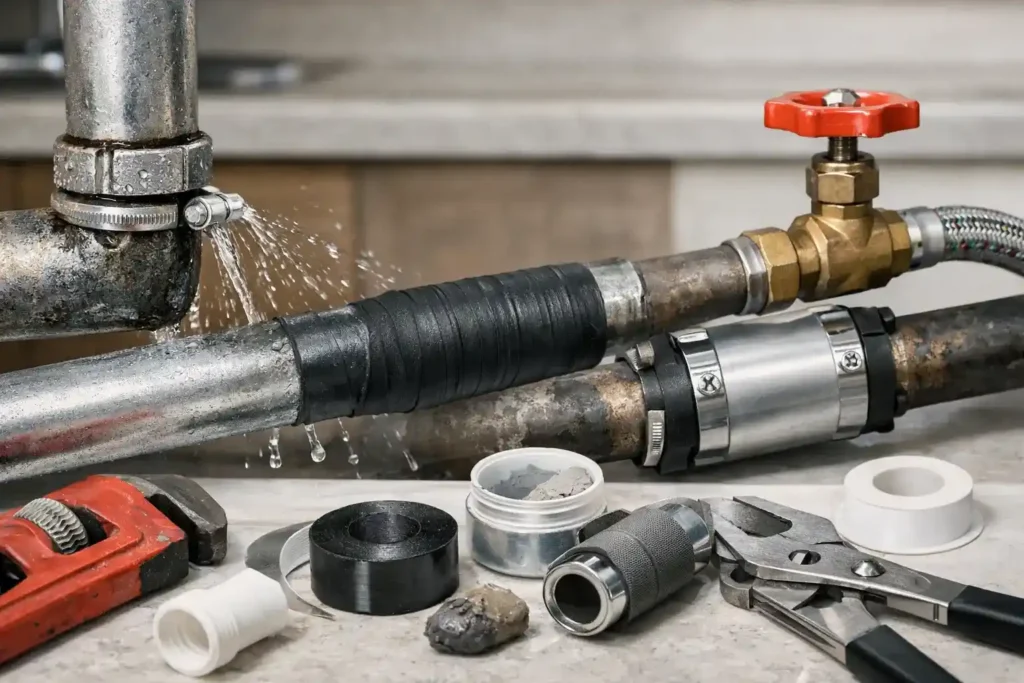
A pipe clamp or repair sleeve can stop a leak quickly when a section of accessible pipe has a crack, pinhole, or failed joint. These devices use a rubber gasket and metal clamp to compress around the damaged area. They are often useful for an emergency repair on copper, galvanized steel, or certain plastic lines.
This option is fast and can limit immediate water damage, but it is not always a permanent answer. A clamp works best when the surrounding pipe is solid, clean, and not heavily corroded. If corrosion caused the hole, another weak spot may be close behind it. A professional plumber will check the pipe wall and nearby fittings before recommending that the clamp remain in place long term.
2. Epoxy Repair for Small, Accessible Leaks
Epoxy putty and pipe repair compounds can sometimes seal a very small leak on a dry, accessible pipe. These products are generally used as a temporary measure while a permanent repair is scheduled. The water must be shut off, the pipe surface must be cleaned, and the material must cure correctly to have any chance of holding.
Epoxy is not a reliable fix for a split pipe, a leaking fitting under pressure, or a pipe hidden inside a wall or slab. It also will not correct widespread deterioration. If a homeowner applies material over an active leak without removing the pressure and moisture, the repair may fail quickly and allow concealed damage to continue.
3. Replacing a Damaged Pipe Section
For many isolated leaks, cutting out the damaged section and installing new pipe is the most dependable repair. This is commonly called a spot repair. A plumber removes the compromised portion, installs the correct replacement material, and uses approved fittings to restore the line.
Spot repairs are effective when the issue is truly limited to one area, such as a frozen pipe that split, accidental damage during remodeling, or one failed section of copper pipe. The right replacement may be copper, PEX, CPVC, PVC, or another code-appropriate material based on the system and application.
The trade-off is access. Repairing a pipe in a basement utility room is straightforward compared with a line behind tile, under concrete, or inside a commercial ceiling. Opening a wall or floor may be necessary to make a repair that lasts. Avoid choosing a shortcut simply because it avoids access work. A properly repaired pipe is less expensive than repeated leaks and restoration bills.
4. Replacing Failed Fittings, Valves, or Supply Lines
Not every apparent pipe leak comes from the pipe itself. Leaks often develop at joints, shutoff valves, appliance connections, toilet supply lines, water heater connections, and outdoor hose bibs. A loose connection may need adjustment, but corroded fittings or deteriorated supply hoses should be replaced rather than repeatedly tightened.

This is especially important around water heaters, washing machines, ice makers, and toilets. These connections can leak slowly for a long time, damaging cabinets, subfloors, or framing. Replacing an aging valve or supply line is usually a smaller job than repairing the water damage that follows a failure.
5. Slab Leak Repair and Rerouting
A slab leak occurs in water lines beneath a concrete foundation. Homeowners may notice warm spots on the floor, unexplained increases in water bills, damp carpet, low water pressure, moldy odors, or the sound of running water when fixtures are off. These leaks require accurate detection before any repair plan is chosen.
The main repair paths are direct access, pipe rerouting, or in limited cases, internal pipe restoration. Direct access involves opening the slab to reach the damaged line. It can make sense when the leak is easy to locate and the rest of the piping is in good condition.
Rerouting moves the water line through walls, ceilings, or another accessible path. This may avoid major concrete demolition and can be the better long-term solution if multiple under-slab lines are aging. The best choice depends on the layout of the home, the condition of the plumbing, and whether more failures are likely.
6. Trenchless Sewer Pipe Repair Options
A leak or break in a sewer line is different from a pressurized water line, but it can be just as urgent. Slow drains throughout the property, recurring backups, sewage odors, wet areas in the yard, and tree-root intrusion can point to a damaged sewer pipe. A camera inspection identifies the location and type of failure before repair begins.
Where conditions allow, trenchless methods can repair a sewer line with far less digging than traditional excavation. Pipe lining creates a new pipe-like surface inside an existing host pipe. Pipe bursting replaces a failing pipe by pulling new pipe through the path of the old one. These methods can help preserve landscaping, driveways, and hardscaping.
Trenchless service is not automatically the right answer. A pipe that has collapsed, has severe offsets, or has a poor route may require excavation and replacement. A clear inspection and honest explanation of the findings matter more than pushing one repair method for every sewer problem.
7. Partial or Whole-Home Repiping
When leaks keep appearing in different places, spot repairs can become a costly cycle. Older galvanized pipes, deteriorating copper lines, defective polybutylene piping, and repeated pinhole leaks may indicate that a larger replacement is the smarter investment.
A partial repipe replaces the most failure-prone branch lines or a specific area of a property. A whole-home repipe replaces the supply piping throughout the house, often with modern PEX or copper. For commercial properties, replacement may be phased to reduce disruption to tenants, employees, customers, or operations.
Repiping costs more up front than patching a single leak, but it can improve water pressure, reduce emergency repairs, and provide more predictable maintenance costs. It is worth discussing when a property has recurring leaks, visible corrosion, rusty water, frequent pressure problems, or pipes near the end of their service life.

Contact