
Where to Start for Low Water Pressure in House
You turn on the shower, and instead of a steady stream, you get a weak trickle that barely rinses shampoo. Then the kitchen sink does the same thing. If you are dealing with low water pressure in house plumbing, the problem may be simple, or it may be an early warning sign that something in your system needs fast attention.
Weak water flow is more than an annoyance. It slows down daily routines, makes appliances work harder, and can point to leaks, failing valves, mineral buildup, or supply issues that get worse over time. The right response is to narrow down where the pressure drop is happening and act before minor symptoms turn into pipe damage, fixture failure, or a full plumbing repair.
What causes low water pressure in house plumbing?
Low pressure usually comes from one of three places: a problem at one fixture, a problem affecting part of the home, or a problem impacting the whole property. That distinction matters because a clogged faucet aerator is a quick fix, while a hidden leak or failing pressure regulator needs professional repair.
If the pressure is poor at only one sink or shower, the issue is often localized. Mineral deposits can clog aerators and showerheads, especially in homes with hard water. A fixture shutoff valve under the sink may also be partially closed after recent work. In some cases, the fixture itself is worn out internally and no longer allows proper flow.
If low pressure shows up in one bathroom or one side of the building, the issue may be tied to branch lines, a partially closed valve, or buildup inside older galvanized piping. Older pipes can narrow over time as corrosion forms inside the line. Water still gets through, but not at the volume you need.
When the entire house has weak pressure, the cause is usually broader. A main shutoff valve may not be fully open. The pressure regulator may be failing. There may be a leak in the main line or somewhere behind walls or under the slab. Sometimes the issue starts with the municipal water supply, especially after utility work, main breaks, or neighborhood demand spikes.
Start with the fastest checks
Before assuming the worst, check whether the problem is happening at every fixture. Turn on a bathroom sink, kitchen faucet, shower, and an outdoor spigot if you have one. If only one fixture is weak, the repair may stay small and targeted.
Next, look at your shutoff valves. Under sinks and behind toilets, make sure the fixture valves are fully open. Then check the main water shutoff for the home. A valve that is only partly open can reduce pressure throughout the property. This happens more often than people think, especially after maintenance, remodeling, or emergency shutoffs.
Ask a neighbor if they are seeing the same issue. If they are, the problem may be coming from the city side rather than your plumbing system. That does not rule out a house problem, but it can save time and point you in the right direction.
Also pay attention to when the pressure drops. If it happens only when multiple fixtures are running, your plumbing may be undersized, partially restricted, or struggling with a regulator issue. If the pressure is always low, the cause is usually more consistent, such as buildup, a bad valve, or a supply-side problem.

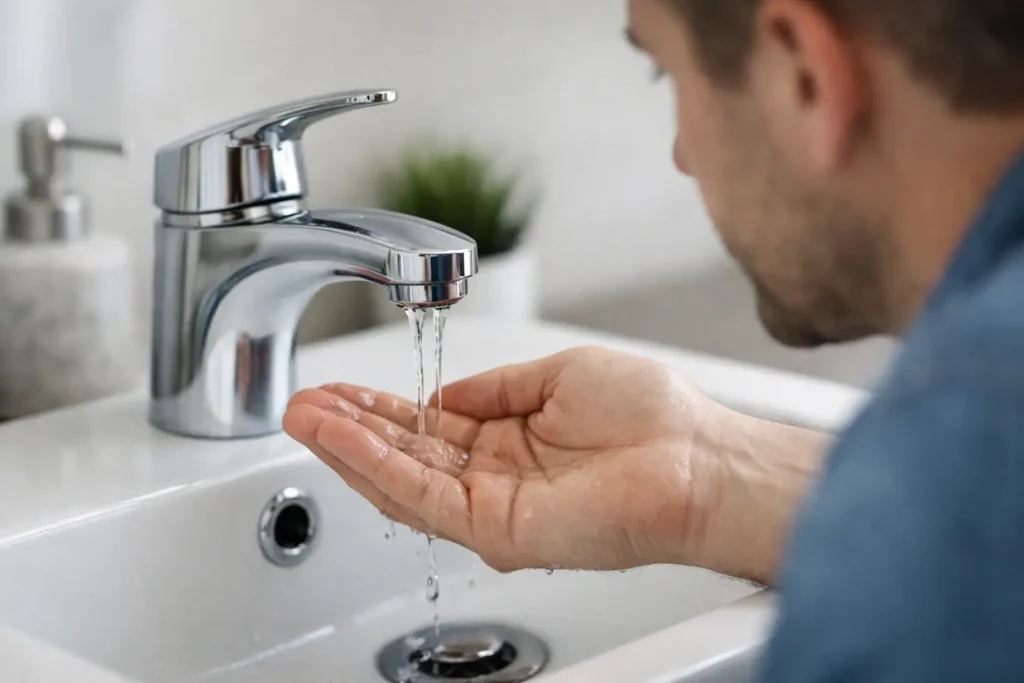
Common fixture problems that reduce pressure
A clogged aerator is one of the simplest causes. The small screen at the tip of a faucet collects sediment and mineral debris over time. Cleaning or replacing it often restores normal flow right away.
Showerheads can do the same thing. If one shower has poor pressure while the rest of the house seems fine, buildup inside the head is a likely culprit. In rental properties and older homes, this is especially common.
Toilet supply valves and faucet cartridges can also restrict water. These parts wear out internally, and the symptoms can mimic a larger plumbing issue. The trade-off is that while fixture repairs are usually straightforward, guessing wrong can waste time if the real problem is deeper in the line.
Bigger plumbing problems behind low pressure
When simple checks do not solve it, the concern shifts to the plumbing system itself.
Hidden leaks
A leak can pull pressure away from fixtures while increasing your water bill and damaging walls, floors, or foundations. Not every leak is obvious. Some are behind drywall, under concrete, or in crawl spaces where they go unnoticed until pressure drops or staining appears.
Signs that low pressure may be tied to a leak include unexplained wet spots, mold odor, warm areas on the floor, the sound of running water when nothing is on, or a sudden increase in your utility bill.
Failing pressure regulator
Many homes have a pressure-reducing valve installed on the main line. Its job is to keep incoming water pressure at a safe, consistent level. When it fails, the symptoms can go in either direction: pressure that is too low, pressure that fluctuates, or pressure that spikes and then drops.
This is not a part to ignore. Poor regulation can affect water heaters, appliances, fixtures, and pipe joints across the property.
Corroded or clogged pipes
In older homes, especially those with galvanized steel piping, the inside diameter of the pipe can shrink from rust and mineral buildup. Water flow weakens gradually, not overnight, which is why some homeowners adjust to it without realizing how much pressure they have lost.
This kind of issue usually does not improve with a quick cleaning. In many cases, sections of pipe need repair or replacement.

Main line or municipal supply issues
If the main service line is damaged, partially blocked, or leaking, the whole house can lose pressure. Tree root intrusion, ground shifting, age, and prior repairs can all play a role. Municipal supply interruptions can create similar symptoms, but if neighboring properties are unaffected, the problem is more likely on your side of the meter.
When low water pressure is an urgent call
Low pressure is not always an emergency, but sometimes it is the first visible sign of a major plumbing issue. If the pressure drops suddenly, if discolored water appears, or if low flow is paired with banging pipes, leaks, or wet drywall, it is time to move fast.
The same goes for commercial properties, restaurants, rentals, and multi-bathroom homes where plumbing downtime affects tenants, customers, or daily operations. Waiting can turn a manageable repair into water damage, lost business, or a larger system failure.
How a plumber diagnoses the problem
A professional diagnosis should do more than confirm that the pressure is low. It should pinpoint why.
That usually starts with pressure testing, valve inspection, and fixture checks to see whether the issue is isolated or system-wide. From there, a plumber may inspect for hidden leaks, test the regulator, evaluate the condition of supply lines, and check for signs of corrosion or restriction. If needed, more advanced diagnostics can identify underground or behind-wall issues without unnecessary guesswork.
This is where experience matters. Low pressure can have several overlapping causes, and treating the wrong one only delays the real repair.
Repair options depend on the source
If the issue is fixture-related, cleaning or replacing clogged components may solve it the same day. If valves are partially closed or faulty, adjusting or replacing them may restore proper flow quickly.
If the pressure regulator has failed, replacement is often the right move. If hidden leaks are involved, the best repair depends on leak location, pipe material, and overall system condition. In older homes with corroded piping, spot repairs may help temporarily, but repiping can make more sense if pressure problems are widespread.
That is the part many property owners want answered plainly: is this a small fix or a larger project? The honest answer is that it depends on what testing shows. A good plumbing company will explain the source, walk you through the repair options, and give you clear pricing before work begins.
Preventing future pressure problems
Not every pressure issue can be prevented, but a few habits help. Pay attention to gradual changes in flow. Replace worn fixtures before they fail completely. Do not ignore small leaks. If you have an older plumbing system, periodic inspections can catch regulator problems, corrosion, and supply-line issues before they affect the entire property.
For landlords and commercial operators, this matters even more. Tenants and customers notice weak water pressure immediately, and small complaints often point to larger maintenance issues behind the scenes.
When low water pressure in house plumbing does not clear up with basic checks, the safest move is to get it diagnosed quickly. Kansas City Plumbers Today handles pressure problems, leak detection, pipe repairs, and whole-system plumbing issues with fast dispatch, straightforward pricing, and repairs built to last. A weak stream today can be a bigger repair tomorrow, so if the pressure is off, it is worth finding out why now.