
How to Prevent Sewer Backups Top Tips
A sewer backup can turn a normal afternoon into a property-damage emergency fast. Wastewater may rise through a floor drain, shower, toilet, or utility sink, bringing contamination, odor, cleanup costs, and business interruption with it. Knowing how to prevent sewer backups gives homeowners, landlords, and facility managers a chance to stop a major problem before sewage reaches the building.
Kansas City properties face a mix of risks: older clay sewer lines, shifting soil, mature tree roots, heavy rain, grease buildup, and aging plumbing connections. Some causes are outside a property owner’s control, but many backups start with warning signs and maintenance issues that can be addressed early.
How to Prevent Sewer Backups at Your Property
The most effective prevention plan starts with keeping the sewer line clear and making sure wastewater has only one direction to travel: away from the building. Kitchen sinks, toilets, tubs, laundry drains, and commercial fixtures all feed into a shared drain and sewer system. When that system narrows or blocks, the lowest drain in the property is often the first place sewage appears.
Do not treat slow drainage as a minor annoyance. A single slow sink can be a local clog, but multiple slow fixtures usually point to a developing main drain or sewer line problem. If flushing a toilet makes water rise in a tub, or running the washer causes a floor drain to gurgle, schedule a professional sewer inspection before the line closes completely.
Keep grease and food waste out of drains
Grease is one of the most common causes of preventable sewer clogs. It may look harmless when poured down the kitchen sink as a warm liquid, but it cools inside pipes and sticks to the walls. Over time, grease catches food particles, soap residue, and debris until the pipe has far less room for water to move.
Let cooking oil, bacon grease, butter, and pan drippings cool in a disposable container, then place them in the trash. Wipe greasy pans before washing them. A garbage disposal is not a solution for grease, fibrous vegetables, coffee grounds, eggshells, or large food scraps. It only breaks material into smaller pieces that can still collect farther down the line.
For restaurants, break rooms, and other commercial kitchens, grease-control practices need to be consistent across every shift. A neglected grease interceptor or poor disposal habits can create an expensive drain emergency and disrupt operations at the worst possible time.
Be strict about what goes into toilets
Toilets are designed for human waste and toilet paper. Products labeled “flushable” can still create trouble, particularly in older lines, low-flow systems, or pipes with rough interior surfaces. Wipes, paper towels, facial tissue, cotton swabs, dental floss, feminine hygiene products, diapers, and cat litter do not break down like toilet paper.
Keep a covered trash can in every bathroom so there is an easy alternative. For rental properties and commercial restrooms, clear signage can prevent repeated misuse. One item may pass through without incident, but repeated flushing is what forms a blockage or catches on tree roots, damaged pipe joints, or existing buildup.
Protect the sewer line from tree roots
Tree roots naturally seek moisture. Even a small crack or loose joint in a sewer pipe can attract roots, which enter the line and expand over time. Older Kansas City homes with clay, cast iron, or Orangeburg sewer pipes are especially vulnerable, though any damaged line can develop root intrusion.

Roots can cause recurring clogs, slow drains, gurgling fixtures, and eventually a complete sewer backup. Root cutting can restore flow, but it is often a maintenance step rather than a permanent repair if the pipe is cracked or separated. A sewer camera inspection shows where roots are entering and whether the best long-term answer is cleaning, spot repair, trenchless pipe lining, or sewer line replacement.
Avoid planting trees or large shrubs close to the sewer route when possible. If mature trees are already in place, periodic camera inspections are a smart way to find root growth before it becomes an emergency.
Use professional drain cleaning before a crisis
Chemical drain cleaners are not a preventive maintenance plan. They often fail to reach a main sewer blockage, can damage certain pipes, and may leave hazardous chemicals sitting in the plumbing when a technician arrives. Repeated use can mask a growing problem while making the eventual repair more complicated.
Professional drain cleaning removes buildup with equipment matched to the pipe and blockage. For heavy grease, scale, sludge, and root debris, hydro jetting can clean the inside of the line more thoroughly than a basic cable alone. The right method depends on the age and condition of the pipe. A damaged or fragile line may need a more cautious approach, which is why camera diagnostics should guide the work.
Properties with recurring clogs, mature trees, older sewer lines, high occupancy, or commercial food service typically benefit from scheduled maintenance. The right schedule depends on use and pipe condition. A busy restaurant may need service far more often than a single-family home with a newer sewer line.
Control Rainwater Around the Building
Not every sewer backup begins inside the drain line. During severe rain, municipal sewer systems can become overloaded, and water can push back toward private property. Basement floor drains and lower-level bathrooms are often at greatest risk.
Start outside. Keep gutters clean, extend downspouts away from the foundation, and make sure the grading slopes away from the building. Do not connect sump pump discharge, roof runoff, or exterior drainage into the sanitary sewer unless local code specifically allows it. Extra stormwater can overload private and public sewer systems during heavy weather.
A properly installed backwater valve can help prevent sewage from reversing direction into a building when the public sewer is overloaded. It is not a universal solution, and it must be sized, installed, and maintained correctly. A valve can also temporarily prevent fixtures from draining while it is closed during a backup event, so a plumber should evaluate whether it fits the property’s layout and local requirements.
For finished basements or low-lying commercial spaces, sump pump reliability matters too. Test the pump, verify that the discharge line is clear, and consider a battery backup where power outages and stormwater are concerns. A sump pump does not clear a blocked sanitary sewer, but it can reduce groundwater-related flooding that complicates an already stressful situation.
Know the Warning Signs of a Developing Backup
Sewer backups rarely arrive with no warning at all. The sooner you recognize the signs, the more likely a plumber can clear or repair the issue before wastewater enters the property.

Watch for these patterns, especially when they affect more than one fixture:
- Toilets that bubble, gurgle, flush weakly, or cause water to rise in nearby tubs or showers.
- Drains that are slow throughout the property, not just at one sink.
- Water appearing at a basement floor drain after using the washer, dishwasher, shower, or toilet.
- Sewage odors near drains, cleanouts, the basement, or outside along the sewer route.
- Frequent clogs that return soon after plunging or basic drain cleaning.
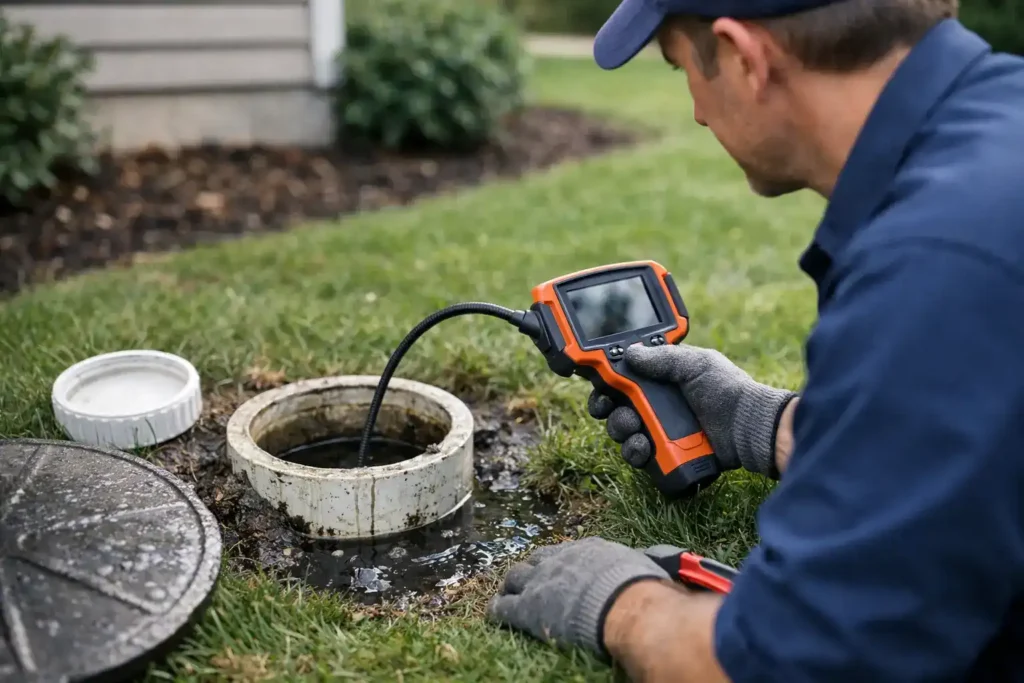
A sewer camera inspection is one of the fastest ways to replace guesswork with a clear answer. It can identify roots, collapsed sections, offset joints, grease accumulation, cracked pipe, foreign objects, and bellies where waste collects. For homeowners, that means targeted repair instead of paying repeatedly for temporary clearing. For property managers and commercial operators, it helps document the condition of the system and plan repairs around tenants or business hours.
What to Do If Sewage Starts Coming Back Up
If wastewater is already rising from a drain, act quickly. Stop using all water fixtures immediately. Do not flush toilets, run the dishwasher, start laundry, or take showers. Every gallon sent down the plumbing can add to the backup.
Keep people and pets away from the affected area, particularly if sewage has reached floors or stored items. Raw sewage can contain harmful bacteria and other contaminants. Do not attempt to clear a main sewer blockage with chemical cleaners, and do not use a plunger aggressively on a floor drain if sewage is present.
If the backup follows heavy rain and affects nearby properties, the public sewer may be involved. If it is isolated to your property, a private sewer line blockage or failure is more likely. Either way, a professional assessment is needed quickly. Kansas City Plumbers Today provides 24/7 emergency response, sewer camera inspections, drain cleaning, hydro jetting, and repair options so the source can be identified and addressed without delay.
Protecting a sewer line is less about one dramatic fix and more about acting early: keep damaging materials out of drains, respond to slow fixtures, manage water around the property, and inspect aging lines before they fail. The moment multiple drains start acting differently, treat it as a sewer warning, not a minor plumbing inconvenience.
Kansas City Plumbers Today offer fast, reliable home services for plumbing installation or repair, HVAC and professional electrical services.
With extensive experience in handling common and complex issues or emergency service, our team saves you time and money, ensuring your home services are conducted with the utmost professionalism and efficiency.