
When Should a Sump Pump Be Replaced in KC?
A sump pump can seem fine right up until the first hard Kansas City rain exposes a problem. That is why asking when should a sump pump be replaced should happen before water reaches the basement floor, not after. A working pump protects finished basements, stored belongings, foundations, and electrical systems. A failing one can turn a routine storm into an expensive cleanup.
Most sump pump replacements are not emergencies – until they are. Knowing the warning signs gives homeowners, landlords, and property managers time to choose the right equipment, schedule service, and avoid water damage when the pit starts filling.
When Should a Sump Pump Be Replaced?
Most primary pedestal and submersible sump pumps last about 7 to 10 years. Some units fail sooner because they run frequently, handle muddy water, were installed incorrectly, or have not been tested and maintained. A lightly used pump may last longer, but age alone is still a reason to have it inspected before another wet season.
Replacement is usually the smarter option when a pump is near the end of its expected life and begins showing performance issues. Repeated repair calls, intermittent operation, and poor drainage are especially concerning. A sump pump is not a fixture to keep repairing indefinitely. When its reliability is uncertain, the cost of a replacement is often far lower than the cost of restoring a flooded basement.
For rental homes and commercial properties, proactive replacement matters even more. A failure can affect tenants, inventory, operating hours, and insurance claims. Property owners should keep records of pump age, previous repairs, and battery backup condition so replacement decisions are not made in a rush.
Warning Signs Your Sump Pump Is Failing
A sump pump does not need to be completely dead to put your property at risk. Pay attention to changes in its sound, cycling pattern, and ability to move water.
It runs constantly or cycles too often
A pump that runs continuously may be dealing with a high water table, but it can also point to a stuck float switch, a blocked discharge line, an undersized unit, or a pump that is losing efficiency. Short cycling – turning on and off repeatedly – wears out the motor and can signal that the float is improperly positioned.
If the pump is running when the pit is nearly empty, do not ignore it. Shut off power if it is safe to do so and have the system checked. Continuous operation can burn out the motor quickly.
It makes loud or unusual noises
Grinding, rattling, banging, or a loud humming sound often means a mechanical component is failing. Worn bearings, a damaged impeller, loose piping, and motor problems can all create noise. A brief hum at startup is normal. A pump that hums but does not move water is not.
Water stays in the pit or returns after pumping
If water remains high in the basin after the pump runs, the pump may be too weak, the intake screen may be clogged, or the discharge pipe may be blocked or frozen. Water that flows back into the pit after a cycle can indicate a failed check valve. That valve prevents discharged water from returning to the basin and forcing the pump to work again.

It has visible rust, corrosion, or damage
Rust around the pump body, float switch, electrical connections, or battery terminals is a serious warning sign. Corrosion can affect electrical reliability and mechanical movement. Cracked housings, frayed cords, loose discharge piping, and a tilted pump should also be addressed immediately.
It fails a simple water test
Testing a sump pump is straightforward. Slowly pour water into the pit until the float rises and the pump activates. The pump should start promptly, move water through the discharge line, and shut off after the water level drops. If it does not start, starts slowly, runs without lowering the water level, or fails to shut off, schedule service or replacement.
Do not test a pump by reaching into the pit or handling electrical components. If there is standing water around the outlet, exposed wiring, or signs of electrical damage, leave the area and call a professional.
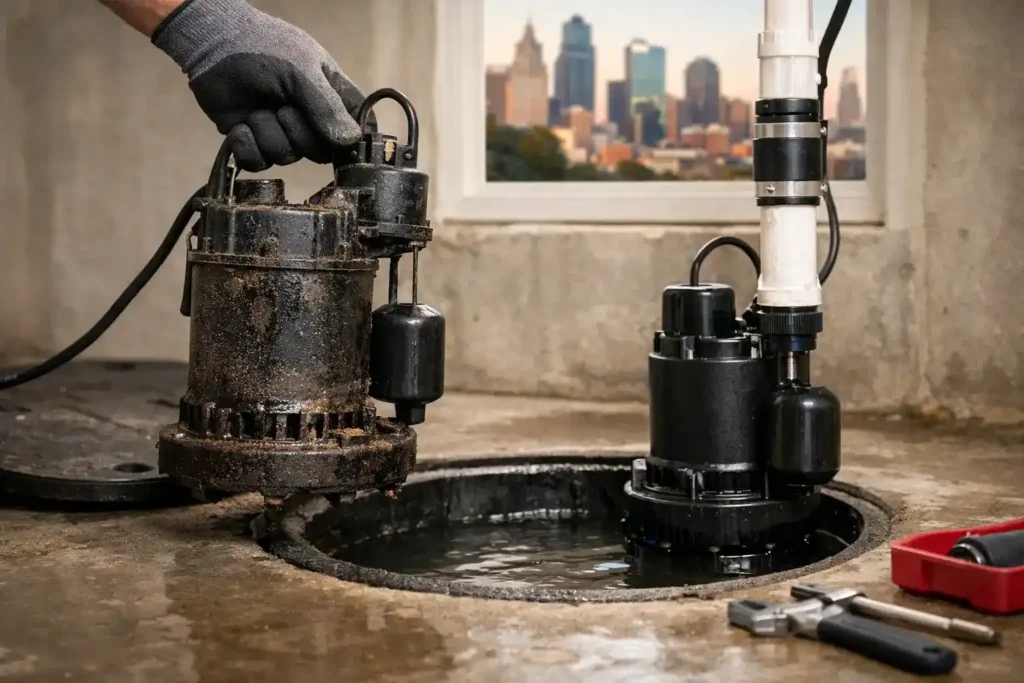
Age Is Only Part of the Decision
A 10-year-old sump pump that has worked through years of spring storms may need replacement even if it passes a quick test. Internal wear is not always visible, and older motors can fail under heavy demand. On the other hand, a newer pump with a clogged intake or bad check valve may only need a targeted repair.
The decision comes down to condition, repair history, and the consequences of failure. If the pump is less than a few years old and the problem is isolated, repair may make sense. If it is older, unreliable, or needs a major motor or switch repair, replacement is usually the safer investment.
A professional inspection can also identify problems outside the pump itself. The sump pit may be too small, the discharge line may be improperly routed, or the drainage system may be sending more water to the basin than the pump can handle. Replacing a pump without correcting those issues can lead to the same failure pattern during the next storm.
Do Not Forget the Battery Backup
A primary sump pump needs electricity. Heavy storms can cause power outages at the same time groundwater rises, which is exactly when a standard pump is most needed. A battery backup sump pump provides another layer of protection by activating when the primary pump cannot run or cannot keep up.
Backup systems also need replacement and testing. Batteries have a limited service life, commonly three to five years depending on the battery type, use, and charging conditions. A backup alarm, controller, float switch, or charger can fail even when the primary pump is working perfectly.
If your home has a finished basement, valuable storage, or a history of water intrusion, a properly installed backup system is worth serious consideration. Ask about an alarm that alerts you to high water, power loss, or backup activation. Early warning gives you time to act before water reaches the floor.
Choosing the Right Replacement Pump
The best replacement is not always the most powerful pump on the shelf. A unit must match the size and depth of the sump basin, the height it must push water, the length of the discharge line, and the amount of groundwater entering the system. A pump that is too small can be overwhelmed. One that is oversized may cycle excessively and wear out sooner.

Submersible pumps are installed inside the pit and are often quieter, more protected, and better suited for regular use. Pedestal pumps keep the motor above the pit, which can make them easier to access but often louder. Either style can work well when properly selected and installed.
Look for a quality float switch, a reliable check valve, a properly sized discharge pipe, and a discharge location that directs water away from the foundation. In Kansas City winters, the exterior discharge route also needs attention. A frozen line can stop water flow and make even a new pump ineffective.
Get Help Before the Next Storm
If your sump pump is old, noisy, cycling strangely, or failing its water test, schedule an inspection now rather than waiting for severe weather. Kansas City Plumbers Today can inspect the pump, pit, check valve, discharge line, and backup system, then explain the repair or replacement options with clear pricing before work begins.
A sump pump is a small piece of equipment with a major job. Give it attention while the basement is dry, and you can make a confident decision long before the next storm puts it to the test.
Quick Links