
Homeowner Guide to Leak Detection for Fast Action
A small water spot under a cabinet can become warped flooring, mold growth, and a major repair bill faster than most homeowners expect. This homeowner guide to leak detection helps you recognize the warning signs early, take the right first steps, and know when the problem needs professional equipment instead of guesswork.
Leaks do not always announce themselves with a burst pipe or a flooded basement. Many start behind walls, beneath slabs, under appliances, or inside a toilet tank. The sooner you identify the source and stop the water, the more control you have over the damage and the cost.
Homeowner Guide to Leak Detection: Start With the Signs
Your water bill is often the first clue. If usage jumps without a change in household routines, water may be escaping somewhere in the plumbing system. Compare the bill with the same month last year when possible, since seasonal watering and guests can affect normal use.
Watch for damp cabinet bottoms, peeling paint, stained ceilings, soft drywall, warped baseboards, or a musty smell that does not go away after cleaning. These signs can point to a slow supply-line, drain, roof, or appliance leak. Plumbing leaks are especially likely when the damage appears near bathrooms, kitchens, laundry rooms, water heaters, or pipe routes.
You may also hear the problem before you see it. Hissing, dripping, or the sound of water moving when every fixture is off deserves attention. A toilet that refills on its own is another common source of wasted water. It may look minor, but a continuously running toilet can waste a surprising amount of water over time.
Check Your Water Meter for a Hidden Leak
A water meter test is one of the most useful checks a homeowner can perform. First, turn off faucets, showers, ice makers, dishwashers, washing machines, and any irrigation system. Do not use water during the test.
Locate the meter, then note the position of the leak indicator or take a clear photo of the dial. Wait 30 minutes to two hours without using water and check it again. If the indicator moves or the reading changes, water is likely flowing somewhere it should not be.
This test tells you there may be a leak, not where it is. A running toilet, an underground irrigation line, a leaking water heater, or a damaged pipe beneath the slab can all produce the same result. If you cannot find an obvious fixture leak, professional leak detection is the next smart move.
Rule Out Toilet Leaks First
Toilets are easy to overlook because the leak often goes directly into the bowl. Add a few drops of food coloring to the tank, then wait about 15 minutes without flushing. If color appears in the bowl, the flapper or another tank component is allowing water through.
A toilet repair may be straightforward, but do not ignore repeated refill cycles after replacing a flapper. The issue could involve the fill valve, flush valve, water pressure, or a worn tank component. A plumber can identify the exact cause and prevent recurring waste.

Inspect Visible Connections Carefully
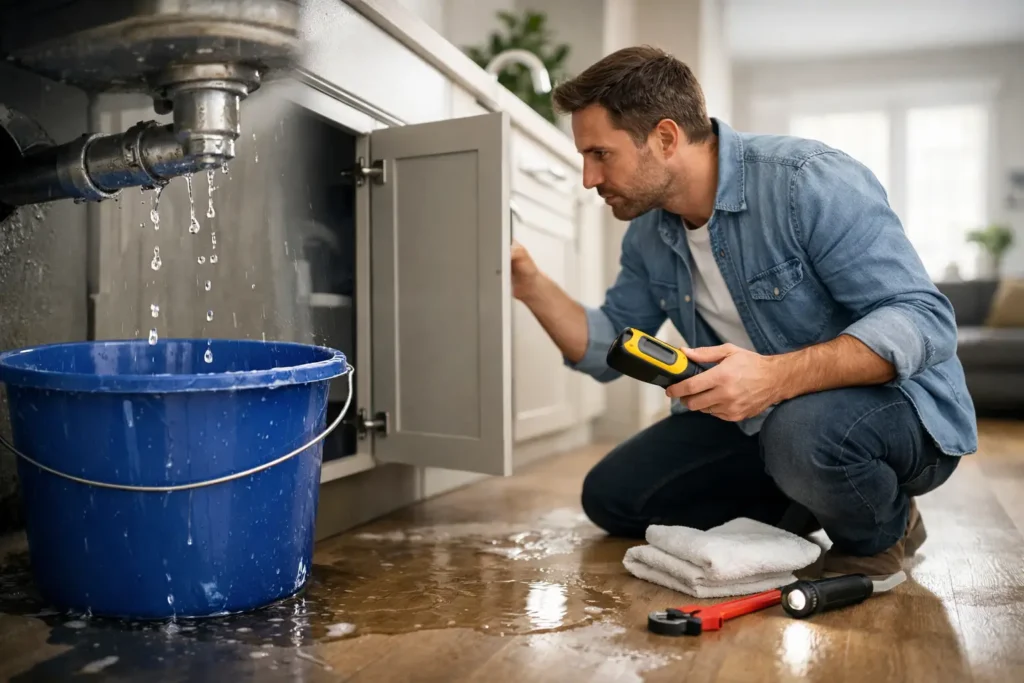
Look beneath sinks and behind appliances for moisture around shutoff valves, supply hoses, P-traps, disposal connections, and drain lines. Run water in the sink while watching each connection with a flashlight. Check the floor around the water heater, washing machine, refrigerator water line, dishwasher, and utility sink as well.
Do not tighten fittings aggressively. Overtightening can crack plastic components, damage threads, or turn a small drip into a larger leak. If a connection is corroded, brittle, or actively dripping, shut off the local valve if it works and schedule repair.
Know the Difference Between Supply and Drain Leaks
A supply-line leak is pressurized, so it can leak even when no fixture is running. These leaks often cause constant meter movement, steady dampness, or sudden water damage. A damaged supply pipe can become an emergency quickly, especially if the leak is behind a wall or ceiling.
A drain leak usually appears only when water is being used. For example, a kitchen sink may leak only while the dishwasher drains, or a second-floor shower may stain the ceiling below only after someone bathes. Test one fixture at a time and note exactly when the moisture appears. That information helps a technician diagnose the problem faster.
Sewer-related leaks need prompt attention too. If you notice foul odors, dark water, repeated backups, or wet areas near a cleanout or floor drain, keep people and pets away from the affected area. Wastewater can create sanitation concerns as well as property damage.
What to Do When You Find Active Water
If water is spraying, rapidly pooling, or coming through a ceiling, act immediately. Shut off the nearest fixture valve if you can safely reach it. If that does not stop the flow, use the home’s main water shutoff valve. Most homes have one near the water meter, in a basement, utility room, crawl space, or exterior wall.
Then move electronics, rugs, furniture, and stored items away from the water. If a ceiling is bulging with water, stay clear of it. Water can weaken drywall and create a sudden collapse risk. Turn off electricity to the affected area only if you can do so without stepping in water or touching wet electrical equipment.
Take a few photos for documentation, but do not delay the repair to investigate. Fast action matters more than finding the perfect explanation. For a burst pipe, ceiling leak, slab leak, or water heater leak, call for 24/7 emergency plumbing service.
When DIY Makes Sense and When It Does Not
Homeowners can often handle simple steps such as replacing a toilet flapper, tightening a loose faucet handle, or changing a worn washing-machine hose before it fails. Routine visual inspections are also worthwhile, particularly in older Kansas City homes where aging pipes, previous repairs, and freeze-thaw cycles can add risk.
The trade-off is that visible water is not always the source. Water can travel along framing, pipes, and ceilings before appearing somewhere else. Opening walls without a clear diagnosis can add unnecessary repair costs, while waiting too long can allow hidden moisture to damage insulation, framing, flooring, and finishes.

Call a licensed plumbing professional when the meter indicates a leak but no source is visible, when water damage keeps returning, or when you suspect a slab, wall, sewer, or underground line issue. Advanced diagnostic tools can locate many hidden leaks with far less disruption than exploratory demolition.
Why Professional Leak Detection Saves Time
A qualified plumber can combine pressure testing, meter readings, thermal imaging, acoustic listening tools, moisture measurement, and camera inspection to narrow down the source. The right method depends on the pipe material, the location of the suspected leak, and whether the problem involves a water line, drain, sewer, or appliance connection.
That targeted approach matters. A pinhole leak in a copper line may require a different repair than a failed polybutylene fitting, cracked PVC drain, deteriorated cast-iron sewer line, or leaking water heater connection. The goal is not just to stop visible water. It is to identify why the failure happened and recommend a repair that holds up.
Kansas City Plumbers Today provides fast leak detection and repair for homeowners, landlords, and commercial properties across the metro. Clear findings and upfront pricing help you make a decision without surprises, whether the fix is a small fixture repair or a larger pipe replacement.
Prevent the Next Leak Before It Starts
A few maintenance habits can reduce your risk. Check under sinks and around appliances every few months, replace old rubber supply hoses with quality braided lines, and make sure everyone in the household knows where the main water shutoff is located. During freezing weather, protect exposed pipes and address drafts near plumbing lines.
Pay attention after severe cold, construction work, water-pressure changes, or a sudden spike in utility use. These events do not guarantee a leak, but they are good reasons to inspect the system before a small weakness becomes a serious failure.
A leak rarely becomes less expensive by waiting. If something looks damp, sounds wrong, or causes your meter to move when water is off, treat it as a reason to act now and protect the home before the damage spreads.
Kansas City Plumbers Today offer fast, reliable home services for plumbing installation or repair, HVAC and professional electrical services.
With extensive experience in handling common and complex issues or emergency service, our team saves you time and money, ensuring your home services are conducted with the utmost professionalism and efficiency.