
Guide to Whole Home Repiping Kansas City Homes
A pipe that leaks once can be repaired. A plumbing system that keeps leaking in different places is sending a different message. This guide to whole home repiping helps Kansas City property owners recognize when isolated repairs are no longer protecting the home, what a full replacement involves, and how to plan the work without unnecessary surprises.
Whole-home repiping is a major project, but it is also a practical reset for an aging water system. Done correctly, it replaces failing supply lines, improves reliability, and helps protect walls, floors, ceilings, and belongings from the next preventable leak.
When Whole Home Repiping Makes Sense
Repiping is not the first answer for every plumbing issue. A single leak caused by a loose fitting, frozen section of pipe, or one damaged branch line may only need a focused repair. The decision changes when the same system develops recurring problems.
Older Kansas City homes may have galvanized steel, polybutylene, or deteriorating copper supply pipes. Galvanized pipes corrode from the inside out. As buildup reduces the pipe’s interior diameter, water pressure can weaken and water may develop a rusty or metallic color. Polybutylene pipes, used in some homes built from the late 1970s into the 1990s, can become brittle and fail without much warning.
Call for a professional evaluation if you are dealing with repeated pinhole leaks, low pressure at multiple fixtures, discolored water that does not clear, frequent slab or wall leaks, or water damage appearing in new locations. High water bills without an obvious fixture leak also deserve immediate attention. These are not problems to ignore while waiting for a larger failure.
Property managers should look at the repair history, not just the latest invoice. If a rental property has needed several pipe repairs in a short period, repiping may cost less than repeated emergency visits, tenant disruption, water restoration, and vacant-unit time.
Guide to Whole Home Repiping: What Gets Replaced
A whole-home repipe usually means replacing the hot and cold water supply lines that deliver water from the main connection to fixtures throughout the building. This can include lines serving bathrooms, kitchens, laundry rooms, water heaters, hose connections, and utility areas.
Drain and sewer pipes are separate systems. They may be inspected during the project, especially if the home has backups, odors, slow drains, or an older cast-iron sewer line, but they are not automatically included in a water-line repipe. A clear estimate should spell out exactly which systems are being replaced so there is no confusion.
The work commonly includes new pipe runs, shutoff valves where needed, fixture connections, pressure testing, wall access and basic patching arrangements. Depending on the home, it may also involve a new main shutoff, pressure regulator, water heater connections, or updated supply connections to appliances.
A thorough contractor starts with an inspection and a plan. The technician should identify pipe material, locate accessible routes, review fixture count, check water pressure, and explain where wall or ceiling openings may be necessary. In homes with crawl spaces, basements, attics, or open utility chases, crews can often route much of the new piping with less drywall disruption. Slab homes may require a different approach, often routing new lines overhead or through walls rather than breaking into the slab.

Choosing Between PEX and Copper
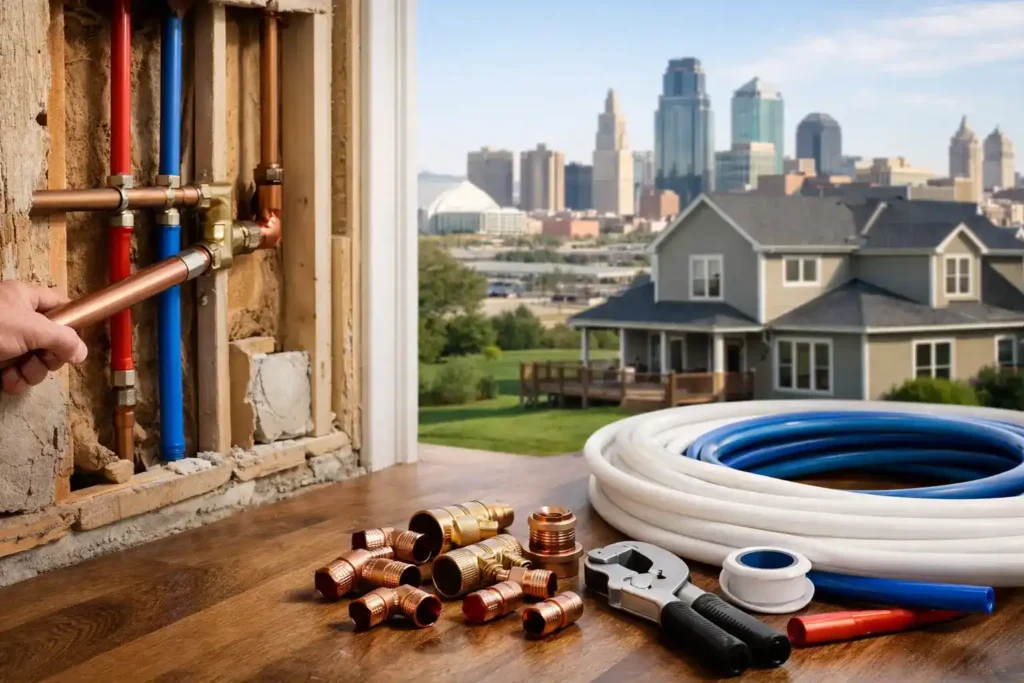
Most modern repipes use PEX, copper, or a combination based on the property and local code requirements. Neither material is automatically right for every home.
PEX is flexible, efficient to install, and resistant to corrosion. Its flexibility lets technicians make longer runs with fewer fittings, which can reduce potential leak points and limit wall openings. It is a common choice for residential repipes, particularly when access is tight or the system needs to be rerouted around a slab.
Copper has a long track record and is valued by some owners for its durability and traditional appearance. However, copper costs more, requires more connections in many layouts, and can be vulnerable to certain water conditions. A skilled plumber should consider water chemistry, the existing installation, local requirements, budget, and long-term plans for the property before recommending a material.
Do not choose based on a quick online comparison alone. The best material is the one that fits the building, the water supply, the installation method, and the scope of work being quoted.
What the Repiping Process Looks Like
The project begins before the crew arrives. Once the estimate is approved, the plumbing team should confirm the scope, scheduling, material selection, access needs, and any required permits. For commercial properties, this planning stage should also account for customer traffic, employee access, health requirements, and operating hours.
On installation day, crews protect work areas and isolate the water supply. Water may be off for portions of the day, but a well-planned project aims to restore service as quickly as possible. In many homes, technicians can complete major sections while keeping limited water available at certain times. The exact schedule depends on the size and layout of the property.
New lines are installed through planned access points. Technicians then connect fixtures, test the system under pressure, inspect for leaks, and flush the lines. Drywall repair and painting are often handled separately unless they are specifically included in the agreement. Ask this question upfront. Plumbing contractors may make the necessary access openings, while finish restoration may require a drywall or painting professional.
For a typical single-family home, repiping may take several days. Large homes, difficult access, multiple stories, occupied commercial spaces, and unexpected conditions can extend the timeline. A reliable contractor gives you a realistic range instead of promising an unrealistic one-day turnaround for a complex system replacement.
How Much Does a Whole-Home Repipe Cost?
There is no honest flat price for every property. The cost depends on the home’s square footage, number of bathrooms and fixtures, pipe material, accessibility, local permitting, whether the home is on a slab, and the amount of wall restoration required.
A small home with accessible plumbing has a very different scope than a multi-bathroom home with finished ceilings, a basement bar, laundry hookups, and a detached structure. Commercial repiping can vary even more because it may require phased work, after-hours scheduling, code upgrades, or coordination with tenants.

The lowest quote is not always the lowest total cost. A vague estimate can leave out patching expectations, permits, fixture reconnection, water heater work, or testing. Ask for a written scope that identifies the materials, affected areas, warranty coverage, exclusions, and payment terms. Transparent pricing matters because repiping is too significant a project to manage through assumptions.
How to Prepare Your Property
Before work begins, clear cabinets beneath sinks, move personal items away from work areas, and make sure technicians can reach utility rooms, water heaters, and access panels. If pipes run behind furniture, move those items ahead of time when possible. Secure pets in a comfortable area away from work zones.
Plan for short water shutoffs and communicate the schedule to everyone in the property. Landlords should notify tenants early, while business owners may need to post restroom or water-use notices. If anyone in the home relies on medical equipment or has special water needs, discuss that with the plumbing team before scheduling.
After the project, watch for normal adjustment items such as air sputtering from faucets while lines are flushed. That should clear quickly. Report any persistent dripping, low pressure, unusual noise, or fixture issue right away so the team can inspect it.
Do Not Wait for a Major Water Loss
A failing pipe system rarely gets better with time. What starts as a small ceiling stain or a low-pressure shower can turn into a burst line, mold risk, damaged flooring, and an emergency repair decision made under pressure.
Kansas City Plumbers Today can inspect aging supply lines, explain whether targeted repair or full repiping makes sense, and provide a clear plan before work begins. If recurring leaks are disrupting your home, tenants, or business, schedule an evaluation now while you still have time to choose the right solution.
Kansas City Plumbers Today offer fast, reliable home services for plumbing installation or repair, HVAC and professional electrical services.
With extensive experience in handling common and complex issues or emergency service, our team saves you time and money, ensuring your home services are conducted with the utmost professionalism and efficiency.