
Effective Drain Cleaning Methods That Work
A slow kitchen sink during dinner prep is frustrating. A toilet that gurgles when the washing machine drains is a warning. And wastewater coming back into a tub or floor drain is an emergency. This guide to drain cleaning methods explains what can safely handle a minor clog, what can make a plumbing problem worse, and when to call for immediate professional service.
The right solution depends on where the blockage is, what caused it, and whether the problem is isolated or affecting multiple fixtures. A hair clog in one bathroom sink needs a different response than a main sewer line blocked by roots, grease, or a broken pipe.
Start by Identifying the Type of Drain Clog
Before using any drain cleaner or tool, pay attention to the symptoms. One slow sink, tub, or shower usually points to a local blockage near that fixture. Hair, soap residue, toothpaste, food debris, and grease are common causes.
When several drains slow down at once, toilets bubble, or water appears in a shower after flushing a toilet, the issue may be in the main sewer line. Stop running water in the building if sewage is backing up. Continued use can force contaminated water onto floors, damage finishes, and create a much larger cleanup problem.
Commercial properties should act quickly when a restroom, kitchen, mop sink, or floor drain is not draining correctly. A closed restroom or backed-up kitchen line can interrupt operations, affect customers, and create health concerns.
Guide to Drain Cleaning Methods for Minor Clogs
For a single slow drain with no sewage backup, start with the least aggressive method. The goal is to remove the blockage without harming pipes, seals, or fixtures.
Remove Visible Debris First
Take out the stopper or drain cover and look for debris close to the opening. In bathroom drains, hair often collects around the stopper assembly or just below it. Use gloves and a small plastic drain tool to pull the material out rather than pushing it deeper into the pipe.
In a kitchen sink, check the basket strainer and disposal first. Never put your hand inside a garbage disposal. Shut off power at the switch and breaker before inspecting it, and use tongs or pliers to remove any visible object.
Use a Plunger Correctly
A plunger is one of the most effective drain cleaning tools when used with the right setup. For a sink or tub, cover the overflow opening with a wet rag so pressure stays in the drain. Add enough water to cover the plunger cup, then make several firm, controlled strokes.
Use a flange plunger for toilets. If the toilet bowl is close to overflowing, do not keep flushing. Turn off the water supply valve behind the toilet if needed, wait for the water level to drop, then plunge carefully.

Plunging works best on soft clogs close to the fixture. It will not solve a collapsed sewer line, heavy root intrusion, or a large grease blockage farther down the system.
Try a Hand Auger for Deeper Local Blockages
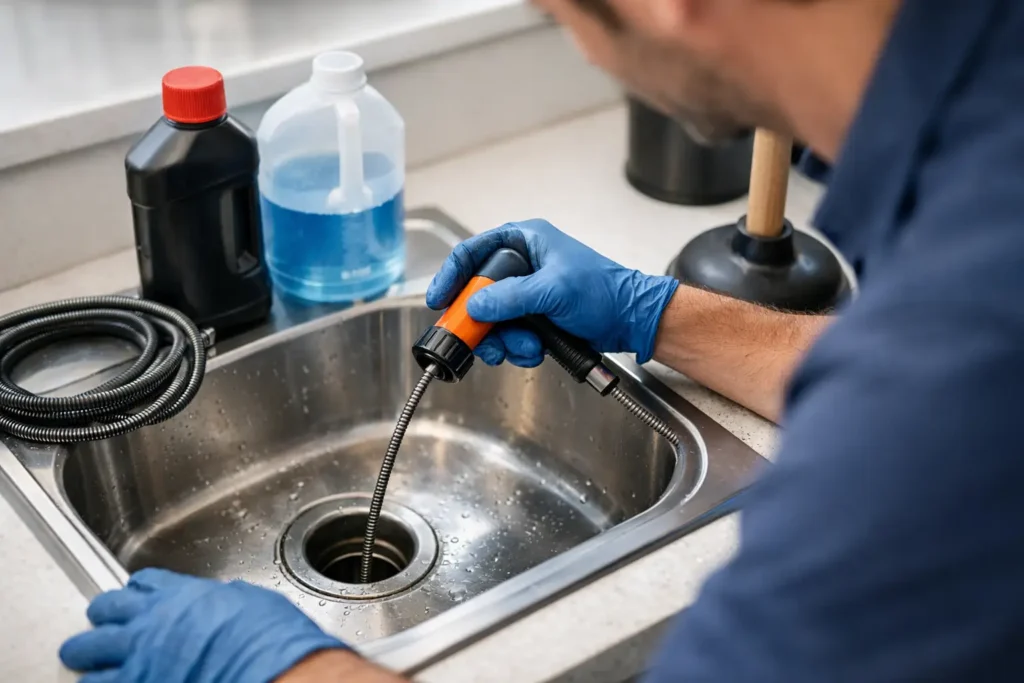
A hand-crank drain auger, also called a small drain snake, can reach farther than a plunger. It is useful for hair and soap buildup in bathroom sinks, tubs, and showers. Feed the cable slowly, rotate it when you feel resistance, and pull it back out carefully.
This method takes patience. Forcing an auger can scratch porcelain, damage a drain trap, or wedge the cable in old piping. Avoid using a small homeowner auger in toilets unless it is specifically designed as a toilet auger. Standard cables can damage the bowl.
Flush With Hot Water Only When It Makes Sense
Hot water may help loosen light soap residue or small amounts of grease, particularly in a kitchen line. Use hot tap water, not boiling water. Boiling water can crack porcelain fixtures and may stress older plastic drain pipes.
Hot water is not a fix for a solid blockage. If the sink fills and refuses to drain, stop pouring water into it. More water will not clear the pipe and may overflow the cabinet or floor.
Why Chemical Drain Cleaners Are Usually a Bad Bet
Store-bought liquid drain cleaners promise fast results, but they bring real risks. Strong chemical formulas can generate heat, damage aging pipes, weaken seals, and leave corrosive liquid sitting in the line if the clog does not clear. That creates a hazard for anyone who later opens the drain or attempts professional service.
Chemical products are especially risky in homes with older metal pipes, septic systems, or repeated drain problems. They also do little for common main-line issues such as tree roots, broken pipe sections, heavy scale, or a sewer belly where the line has sagged and collects waste.
If you have already used a chemical cleaner, tell your plumber before service begins. That information helps the technician take the right safety precautions.
Professional Drain Cleaning Methods for Tough Clogs
When DIY steps fail, repeated clogs return, or multiple fixtures are involved, professional equipment provides a safer and more complete answer. The best method is selected after identifying the location and condition of the line.
Drain Snaking and Cable Machines
Professional drain machines use stronger cables and specialized cutting heads to clear blockages deeper in branch lines and sewer pipes. A technician can match the cable size and cutter to the pipe and clog, whether the issue is hair, compacted debris, grease buildup, or root intrusion.

Cable cleaning can restore flow quickly, but it may not remove every layer of grease or mineral scale from the pipe walls. In older sewer lines, it can also reveal that a recurring clog is being caused by pipe damage rather than buildup alone.
Hydro Jetting
Hydro jetting uses high-pressure water to scour the inside of a drain or sewer line. It is highly effective for grease, sludge, soap buildup, roots, and recurring commercial kitchen clogs. Unlike a cable that cuts a path through a blockage, hydro jetting can clean much more of the pipe interior.
Hydro jetting is not appropriate for every system. Damaged, fragile, or severely deteriorated pipes may need camera inspection before high-pressure cleaning. A qualified plumber should assess the line first, especially in older Kansas City homes and buildings with clay, cast iron, or unknown sewer materials.
Sewer Camera Inspection
A sewer camera does not clean the drain by itself, but it prevents guesswork. The camera shows whether the line contains roots, grease, offset joints, cracks, standing water, or a collapsed section. It also helps confirm whether cleaning solved the problem.
This matters when a clog keeps coming back. Repeated snaking without identifying the cause can waste money and delay a necessary repair. If the camera finds structural pipe damage, options may include spot repair, pipe lining, or replacement.
When to Call for Drain Cleaning Right Away
Do not wait on a professional drain service if you notice any of these warning signs:
- Sewage backing up into a tub, shower, sink, or floor drain
- Multiple drains slowing down or gurgling at the same time
- A toilet overflowing repeatedly or failing to flush normally
- Standing water around a basement floor drain
- Strong sewer odors indoors or near the yard
- A clog that returns soon after plunging or snaking
These symptoms can point to a main sewer blockage or damaged line. Fast action limits water damage, protects occupants, and reduces the chance that a small drainage issue becomes a major repair.
Prevent Future Drain Problems
Good drain habits are less expensive than emergency cleanup. Keep grease, cooking oil, coffee grounds, rice, pasta, and fibrous food scraps out of kitchen drains. Use strainers in showers and bathroom sinks to catch hair. Only flush toilet paper, never wipes, paper towels, hygiene products, or so-called flushable products that may not break down reliably.
Property managers and business owners should schedule preventive drain maintenance where usage is heavy. Restaurants, multi-unit buildings, offices, and retail spaces often benefit from routine line cleaning before a backup disrupts operations.
Kansas City Plumbers Today can inspect, clear, and diagnose everything from a stubborn sink clog to a blocked main sewer line. If water is backing up, drains are affecting each other, or the same clog keeps returning, stop using the affected fixtures and get the line checked before the problem reaches your floors, walls, or business operations.