
Understanding How Backflow Testing Protects Your Water Supply
A sprinkler system, commercial dishwasher, boiler, irrigation line, or fire suppression connection can become a pathway for contaminated water to move the wrong direction. Backflow testing verifies that the protective device on that connection is working before a pressure change creates a water-quality problem at your Kansas City home or business.
This is not a repair to postpone until a notice arrives or a system fails. A properly tested backflow preventer protects drinking water, supports code compliance, and helps prevent a small mechanical issue from turning into a disruption for tenants, employees, customers, or your family.
What Is Backflow Testing?
Backflow occurs when water flows backward through a plumbing connection instead of moving from the public water supply into the property. It can happen when there is a sudden loss of pressure in the supply line, such as during a water main break, firefighting activity, or heavy water demand. It can also happen when pressure inside a connected system becomes greater than the supply pressure.
That reverse movement can pull or push non-potable water into the drinking-water system. Depending on the connection, the water may contain lawn chemicals, fertilizer, bacteria, cleaning agents, boiler treatment chemicals, or other contaminants.
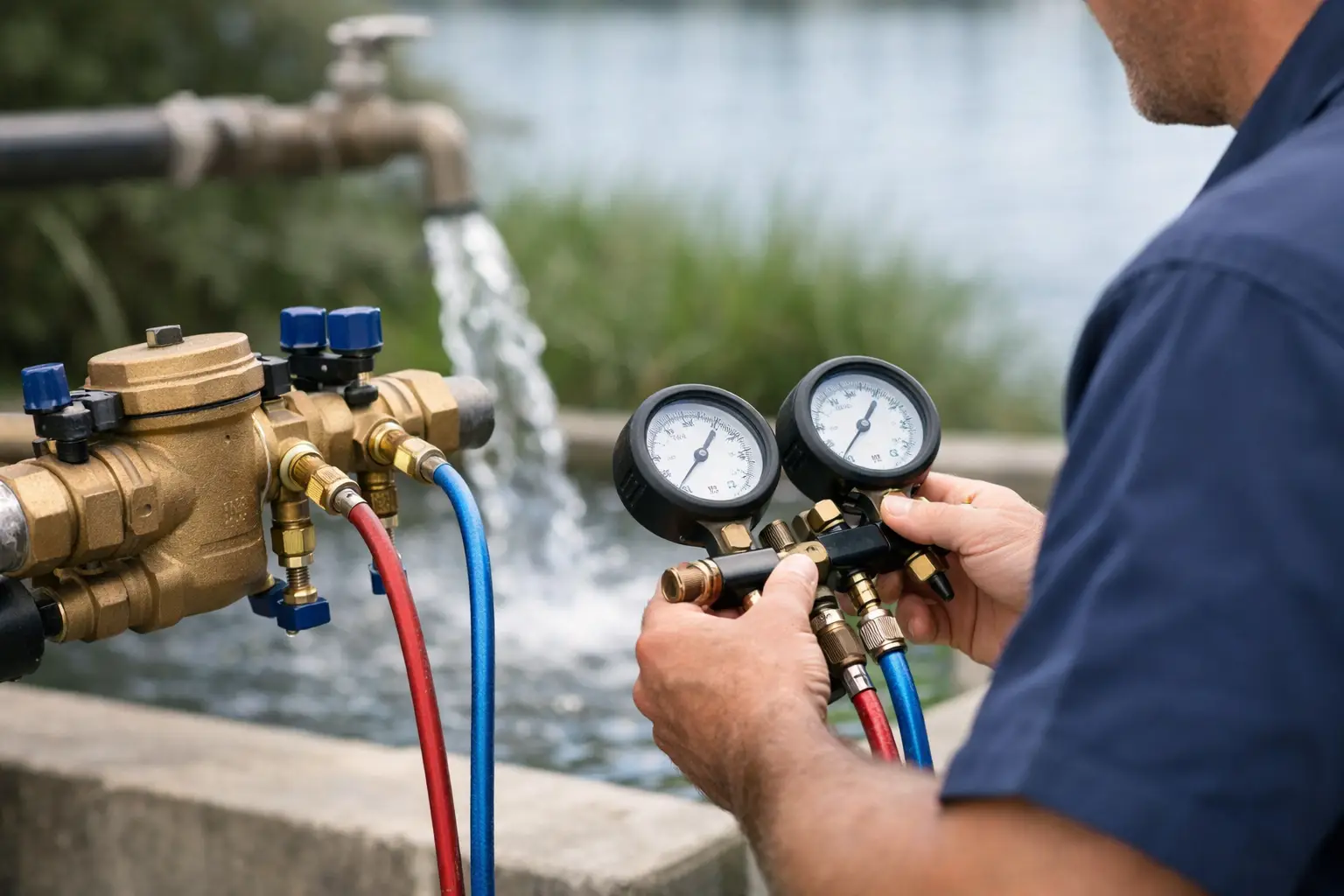
A backflow preventer is designed to stop that reverse flow. During a certified test, a trained technician uses calibrated gauges to check the device’s valves, pressure zones, and shutoff components. The goal is simple: confirm the assembly closes and protects the water supply the way it is supposed to.
A visual inspection alone is not enough. A device can look clean and intact while internal checks, springs, seals, or valves are failing. Testing measures actual performance.
Why Backflow Testing Matters for Kansas City Properties
Backflow prevention is a public-health requirement, but it is also practical property protection. Water contamination can create serious consequences quickly. A failed assembly may result in a failed inspection, a compliance notice, interrupted water service, or the need for urgent repairs at the worst possible time.
For homeowners, irrigation systems, pool fill lines, auxiliary water systems, and certain heating equipment can create cross-connections that need protection. Many property owners are not aware of the device until testing season arrives or the water provider sends a notice.
For commercial properties, the stakes are often higher. Restaurants, medical offices, apartment communities, warehouses, schools, manufacturing spaces, and retail facilities may have multiple assemblies serving irrigation, boilers, fire lines, equipment, or process water. One overdue test can become a scheduling headache, especially when a business cannot afford downtime.
The exact requirements depend on the water provider, the type of assembly, and how the property is used. Many backflow assemblies require annual testing, but property owners should follow the schedule and reporting process required by their local authority. If you have received a letter or deadline, act early rather than waiting until the last day.

When Should You Schedule a Backflow Test?
The best time is before your compliance deadline. Early scheduling gives you time to address a failed test, obtain any required parts, complete repairs, and retest the device without pressure.
You should also schedule service after a backflow preventer has been installed, repaired, relocated, exposed to freezing temperatures, or affected by a plumbing pressure event. Freezing weather can crack components and damage internal parts, even when there is no obvious leak. Construction work, valve replacements, and changes to an irrigation or mechanical system can also affect the device or create a new cross-connection concern.
Do not ignore warning signs between scheduled tests. Water leaking from the relief valve, a constantly dripping assembly, reduced water pressure, unusual noises near the device, or a failed inspection notice all call for prompt attention. These symptoms do not automatically mean the assembly has failed, but they are reasons to have it evaluated by a qualified professional.
What Happens During Professional Backflow Testing?
The appointment is typically straightforward when the assembly is accessible and its shutoff valves operate correctly. A technician identifies the device, confirms its configuration, connects approved testing equipment, and checks each required component under controlled conditions.
The water may need to be briefly shut off to the protected line while testing is performed. For many residential assemblies, that interruption is limited. At a commercial property, a professional should coordinate around operating hours, tenant needs, food service operations, fire protection requirements, and any equipment that cannot be taken offline without planning.
If the assembly passes, the test results are documented according to the applicable requirements. If it fails, the technician explains what is wrong and what it will take to restore protection. Common repairs can involve cleaning debris from internal components, replacing worn check assemblies, repairing shutoff valves, replacing damaged parts, or installing a new device when repair is not cost-effective.
There is an important trade-off here: the cheapest immediate repair is not always the best long-term answer. An older assembly that repeatedly fails, leaks, or has obsolete parts may cost more in repeat service than replacement. A clear recommendation should account for the device’s condition, available parts, testing requirements, and the demands placed on the system.
Backflow Testing vs. General Plumbing Inspections
A general plumbing inspection can identify visible leaks, damaged piping, poor drainage, or fixture problems. It does not replace a certified backflow test. Backflow assemblies are specialized devices, and their performance must be measured with the correct equipment and procedure.
Likewise, a backflow test is not a full inspection of every plumbing system in the building. If the technician finds leaking valves, damaged piping, low pressure, or signs of a larger issue, additional plumbing diagnosis may be needed. Handling both concerns early helps avoid a failed test becoming a broader water or property-damage problem.
Property managers benefit from keeping a simple record of every device location, prior test date, repair history, and compliance deadline. This is especially useful for multi-building sites and commercial facilities where equipment can be overlooked after staffing changes. A planned maintenance approach is usually less expensive and far less stressful than an emergency response to a shutoff notice.

Do Not Wait on a Failed Backflow Device
A failed backflow test does not always mean a full replacement is required, but it does mean the assembly should not be ignored. The device is a barrier between the potable water supply and a potential contamination source. Delaying repair can expose your property to enforcement issues and leave the system unprotected.
Kansas City Plumbers Today can inspect the assembly, explain the result in plain terms, complete needed plumbing repairs, and help get your system ready for retesting. You will know what work is recommended before it begins, with straightforward pricing and service focused on getting the issue resolved without unnecessary delays.
If your notice has a deadline, gather the device location and any paperwork you received before scheduling. If you are unsure whether your property has a backflow assembly, a professional evaluation can identify the equipment and the next step. A quick test today can protect the water people depend on tomorrow.