
Why Is My Sink Gurgling – Causes & Fixes?
A sink that gurgles after you run the faucet is not just an annoying sound. If you are asking, “why is my sink gurgling,” your drain is usually struggling to move water and air through the plumbing system correctly. The noise can be an early warning of a clog, a blocked vent, or a developing sewer-line issue. Acting before the drain stops completely can help prevent dirty water, foul odors, and an expensive backup.
Why Is My Sink Gurgling?
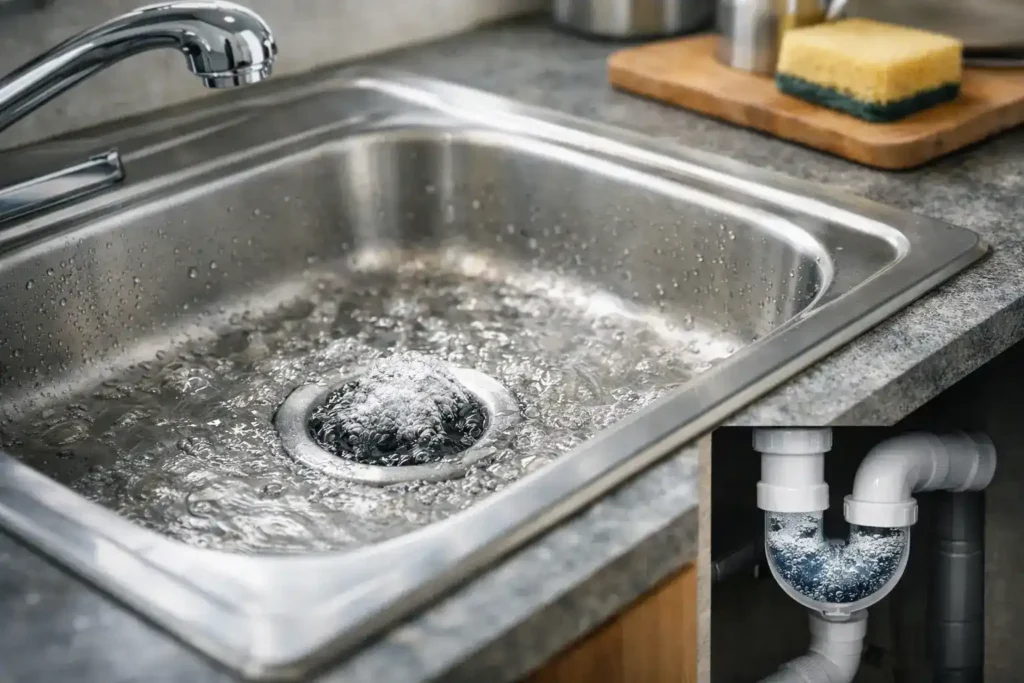
Every drain needs two things to work properly: a clear path for wastewater and enough air pressure to keep the water flowing. Your plumbing vent system supplies that air through pipes that typically exit at the roof. When water flows down the drain, air must move behind it. If it cannot, the system pulls air through the sink trap instead. That movement creates the familiar bubbling or gurgling sound.
Sometimes the cause is a small clog close to the sink. Other times, the blockage is farther down the branch drain, in the vent stack, or in the main sewer line. The details matter. A single bathroom sink that gurgles calls for a different response than multiple fixtures making noise at once.
The Most Common Causes of a Gurgling Sink
A partial drain clog
Soap residue, toothpaste, hair, grease, food particles, and mineral buildup can narrow the inside of a drainpipe over time. Water can still get through, but it has to force air through the restricted opening. That pressure change can make the sink bubble as it drains.
Kitchen sinks often collect grease and food debris, even when a garbage disposal is installed. Bathroom sinks tend to clog with hair, soap scum, and personal-care products. If the sink drains slowly and gurgles, a partial clog is the most likely starting point.
A blockage in the plumbing vent
A vent obstruction can create the same symptoms as a drain clog, but cleaning the sink trap will not solve it. Leaves, nests, debris, snow, or damage around the roof vent can restrict airflow. In older properties, vent pipes may also be undersized, cracked, corroded, or improperly modified during a renovation.
Vent work is not a casual DIY job. Accessing a roof carries real safety risks, and the actual obstruction may be beyond what you can see from the opening. A plumber can evaluate the vent system and confirm whether it is the source of the pressure problem.
A problem farther down the drain line
If the pipe serving one sink has a blockage beyond the wall, the sink may gurgle even after you clean the visible trap. This is common when buildup has accumulated in a longer horizontal drain run. Water may appear to drain normally at first, then slow down or bubble as more water enters the pipe.
Professional drain cleaning removes the material causing the restriction instead of simply punching a temporary hole through it. The right method depends on the pipe material, the clog location, and what is inside the line.
A main sewer line restriction
Gurgling becomes more urgent when it involves several fixtures. You may hear the toilet bubble when the washing machine drains, notice the bathtub gurgle after running the kitchen sink, or see water rise in a floor drain. Those are common signs that wastewater is having trouble leaving the property through the main sewer line.

Tree roots, grease, wipes, scale buildup, shifted pipes, and damaged sewer lines can all restrict the main line. In Kansas City, older homes can be especially vulnerable to aging clay, cast-iron, or deteriorated sewer piping. A main-line issue can turn into a backup quickly, so do not keep sending large amounts of water down the drains to test it.
An improperly installed or dry P-trap
The curved pipe beneath a sink is called a P-trap. It holds water that blocks sewer gases from entering the room. If the trap is installed incorrectly, siphons empty, or has dried out in a rarely used sink, you may hear unusual drain noises or notice sewer-like odors.
A dry trap is easy to address: run water in the sink for a minute. If gurgling continues, the trap may be reacting to a venting or drainage issue rather than causing it. Persistent sewer odors should be checked promptly, particularly in commercial restrooms, vacant rentals, and properties with infrequently used fixtures.
What You Can Safely Try Before Calling a Plumber
Start with the simple checks, but do not force the issue. Remove the sink stopper and clear visible hair, debris, or food buildup. Then fill the sink partway with hot water and let it drain while you watch for slow drainage or bubbling.
For a bathroom sink, a small hand plunger can sometimes clear a light clog. Cover the overflow opening with a damp rag, add enough water to seal the plunger cup, and use several firm, controlled plunges. For a double kitchen sink, seal the second drain before plunging the clogged side.
If you are comfortable doing so, place a bucket under the P-trap, remove it, and clean out debris. Reinstall it carefully and check for leaks. This can help with clogs located directly beneath the sink, but it will not remove a blockage deeper in the line.
Avoid pouring harsh chemical drain cleaners into a gurgling sink. These products can damage older pipes, create dangerous fumes, and leave caustic liquid sitting in the line when the drain does not clear. They also make later professional service more hazardous. Do not use a wire coat hanger or aggressively force objects into the drain, either. You can damage the pipe or push the blockage farther away.
When a Gurgling Sink Needs Immediate Service
Call for professional help sooner rather than later if the sink gurgles repeatedly, drains slowly after basic cleaning, or backs up when another fixture runs. The need is more urgent if wastewater appears in a tub, shower, floor drain, or lower-level sink.
Stop using water and arrange prompt service when you notice any of these conditions:
- More than one drain is gurgling, slow, or backing up.
- The toilet bubbles when a sink, dishwasher, or washing machine drains.
- Sewage odors are present inside the building.
- Dirty water comes up through a shower, tub, or floor drain.
- The issue keeps returning after plunging or cleaning the trap.
For a homeowner, this can protect floors, cabinets, and finished spaces. For a restaurant, office, retail location, or rental property, it can also prevent sanitation issues, tenant complaints, and costly downtime.

How a Plumber Finds the Real Cause
The fastest repair begins with an accurate diagnosis. A plumber will assess which fixtures are affected, inspect accessible drain components, and determine whether the issue is local to the sink or tied to the larger drainage system.
A drain cable may be used to clear a targeted blockage. For heavy buildup or recurring grease and sludge, hydro jetting can clean the pipe walls more thoroughly when the pipe condition allows it. If a main sewer issue is suspected, a sewer camera inspection can show roots, cracks, offsets, collapsed sections, or buildup inside the line. That prevents guesswork and helps avoid paying for the wrong repair.
Kansas City Plumbers Today provides 24/7 emergency response and same-day plumbing service for drain and sewer problems throughout the Kansas City metro. You get a clear explanation of the issue and transparent pricing before repair work moves forward.
Preventing Future Sink Gurgling
The best prevention is keeping material that does not belong in the drain out of the plumbing system. In the kitchen, let grease cool and dispose of it in the trash instead of washing it down the sink. Use a sink strainer to catch food particles. In bathrooms, clean hair from stoppers regularly and avoid flushing wipes, even products labeled flushable.
For older homes, rental properties, and commercial facilities, recurring drain noise is a reason to schedule preventive drain maintenance. It is usually easier and less disruptive to clean a developing blockage than to respond after a sewer backup reaches the building.
A quiet drain is the goal, but a gurgling sink gives you useful warning before a bigger failure occurs. If the noise persists, spreads to other fixtures, or comes with slow drainage or odors, stop treating it as a minor nuisance and get the drain system checked before the next load of water has nowhere to go.
Kansas City Plumbers Today offer fast, reliable home services for plumbing installation or repair, HVAC and professional electrical services.
With extensive experience in handling common and complex issues or emergency service, our team saves you time and money, ensuring your home services are conducted with the utmost professionalism and efficiency.