
A whole house water filter review should answer one practical question first: what is actually in your water, and what problem are you trying to fix? A filter that improves chlorine taste may do very little for hard-water scale. A system built for private well sediment may be unnecessary for a city-water home. The right choice protects your plumbing investment without adding needless maintenance or restricting water flow.
For Kansas City homeowners, landlords, and property managers, the best system is rarely the one with the biggest claims on the box. It is the one sized correctly for the building, matched to a current water test or local water report, and installed where it can be serviced without creating a new leak risk.
What a Whole House Filter Does
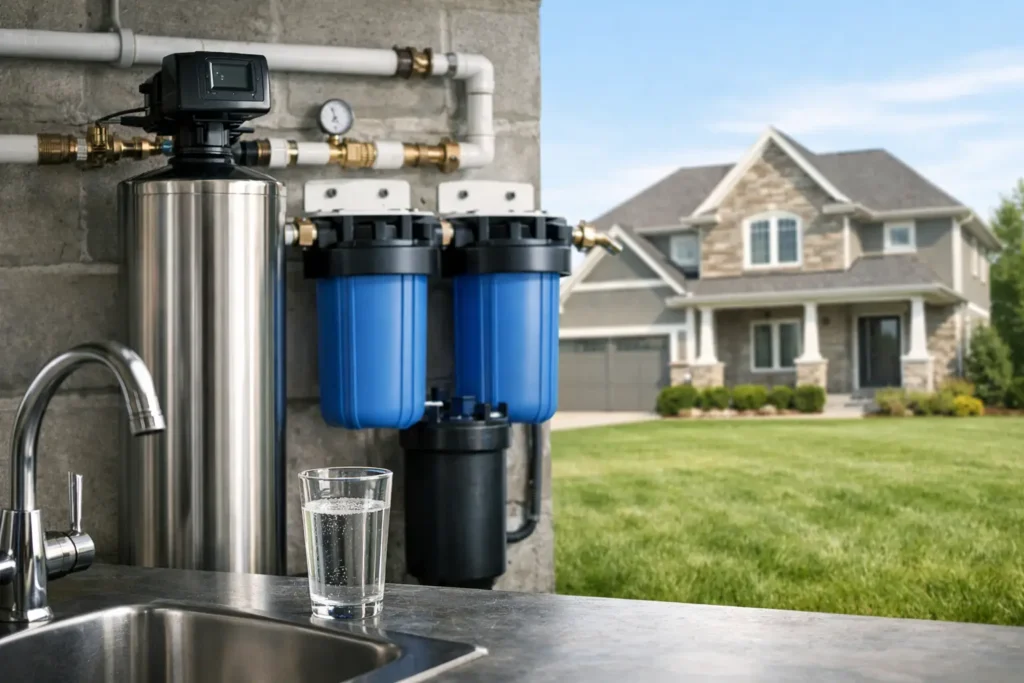
A whole house water filter is installed on the main water line, typically after the shutoff valve and before the plumbing branches to fixtures, appliances, and water heaters. Every cold-water fixture receives filtered water, and depending on the piping layout, so do showers, washing machines, dishwashers, and water heaters.
That broad coverage is the main advantage over a pitcher filter or under-sink unit. If sediment is clogging faucet aerators, staining fixtures, or wearing down appliance valves, filtering only the kitchen sink does not solve the system-wide problem. Whole house filtration can also reduce unpleasant odor, improve water clarity, and help protect plumbing components from debris.
It does have limits. Most whole house filters are not water softeners. If white crust is building up on shower doors, faucets, and heating elements, hardness minerals may be the issue. Filtration and softening can work together, but they perform different jobs.
Whole House Water Filter Review: The Types That Matter
The filter media matters more than marketing language. Here is how the most common whole-home options perform in real homes and commercial properties.
Sediment Filters
Sediment filters catch physical particles such as sand, rust flakes, pipe scale, and dirt. They are especially useful for homes supplied by private wells, older properties with deteriorating galvanized piping, or buildings that experience discolored water after water-main work.
These filters are usually affordable, but they need regular attention. A cartridge that becomes loaded with debris can reduce pressure throughout the property. If you have strong flow at the street but weak flow at several fixtures, a clogged filter is one possible cause.
Carbon Filters
Carbon media is commonly used to improve chlorine-related taste and odor and reduce certain organic compounds. For city-water households, this is often the category that produces the most noticeable everyday improvement, particularly at showers and kitchen fixtures.
The trade-off is that carbon has a service life. Once the media is exhausted, water continues moving through the tank but treatment performance declines. Replacement timing should be based on actual water use, the manufacturer’s rated capacity, and water conditions, not just a calendar reminder.

KDF and Specialty Media
Some systems combine carbon with KDF or other specialty media intended to address specific contaminants, bacteria control conditions, or heavy-metal reduction. These systems may be appropriate, but the claims need to be verified carefully. Look for performance data tied to the exact contaminant you want to reduce, rather than relying on broad phrases such as “purifies water.”
A professional water test is the smart starting point when you are concerned about lead, iron, sulfur odor, manganese, or other specific water-quality problems. The treatment recommendation should follow the results.
Iron, Sulfur, and Well-Water Treatment
Well-water systems can require more than a standard filter. Iron can leave orange staining, sulfur can create a rotten-egg smell, and sediment can quickly overwhelm a basic cartridge. Depending on the test results, the solution may involve oxidation, specialty media, a retention tank, disinfection, or multiple treatment stages.
This is where buying a general whole house filter online can become expensive trial and error. A system that is excellent for municipal water may not address the source of a well-water problem at all.
The Details That Decide Whether a Filter Works
A filter can have quality media and still disappoint if it is undersized. Water flow is the first factor to check. A one-bathroom home with one or two occupants has very different demand than a large home with multiple showers, irrigation, a large soaking tub, and several people getting ready in the morning.
Pay attention to the rated flow rate and pressure drop. If a system cannot keep up with peak demand, it can leave you with weak showers, slow washing machine fills, and poor performance at multiple fixtures. Larger tanks and appropriately sized plumbing connections usually deliver better flow, though they cost more and need more installation space.
Filter capacity is the second factor. A low-cost cartridge system may be a good fit for a small household willing to change filters regularly. A tank-style system can reduce hands-on maintenance and offer longer service intervals, but it requires a higher upfront investment. Neither choice is automatically better. The right answer depends on water use, water quality, budget, and access for future service.
Installation location also matters. The system needs to be protected from freezing, installed before branches serving the areas you want filtered, and placed where cartridges or media tanks can be serviced. It should include shutoff valves and a bypass arrangement so the water supply can remain available during maintenance or repairs.
What Whole House Filtration Really Costs
The purchase price is only part of the cost. Homeowners should account for installation, replacement cartridges or media, pressure gauges, testing, and any needed plumbing modifications. Homes with limited access near the main line, corroded shutoff valves, or older pipe materials can require more labor than a simple installation in an open basement utility room.
The least expensive unit is not always the lowest-cost choice over five years. A cartridge filter with frequent replacements can add up, while a larger media tank may cost more initially but require less frequent service. Conversely, a premium whole-house system is poor value if your only concern is minor chlorine taste at the kitchen sink.

Ask for clear pricing that separates the equipment, installation, and future maintenance. That makes it easier to compare options without surprises later.
When a Filter Will Not Solve the Plumbing Problem
Filtered water cannot repair leaking pipes, remove a drain clog, restore a failing pressure regulator, or fix a water heater that is producing rusty water from internal corrosion. If the problem appears at only one fixture, the source may be a clogged aerator, worn supply valve, faucet cartridge, or localized pipe issue rather than the incoming water supply.
Low pressure deserves a careful diagnosis before installing a filter. Adding a filter to an already restricted plumbing system can make the symptom worse. A plumber can check the main shutoff, pressure regulator, pipe condition, fixture restrictions, and existing treatment equipment before recommending a system.
For renters and property managers, this distinction is particularly useful. Replacing filters repeatedly will not resolve recurring brown water caused by an aging building pipe or a failing water heater. The repair needs to match the source.
A Practical Buying Checklist
Before committing to a whole house system, confirm these four points: the contaminants or symptoms you want to address, your home’s peak flow needs, the system’s certified or documented reduction claims, and the ongoing maintenance cost. Also verify where the unit will be installed and whether the existing main line, shutoff valve, and drain access are suitable.
If you are on municipal water, start with your local water-quality report and consider a targeted test if you have a specific concern. If you use well water, test before choosing equipment and retest after installation. Water conditions can change, and a treatment system should be adjusted to the water you actually have.
Kansas City Plumbers Today can inspect the main water line, diagnose pressure or pipe concerns, and provide straightforward installation guidance for a properly sized filtration system. The goal is not to sell more equipment than you need. It is to give your home clean, reliable water flow while protecting the plumbing behind your walls.
If your water has suddenly changed color, odor, or pressure, do not assume a new filter is the answer. Get the cause checked first, then choose treatment that solves the problem for the long term.
About Us