
Water Heaters Repair or Replacement Top Considerations:
A water heater rarely fails at a convenient time. One morning you have hot water, and by afternoon there is a cold shower, a puddle in the utility room, or rusty water coming from every faucet. For Kansas City homeowners, landlords, and business owners, water heaters are not a wait-and-see plumbing problem. Fast action can protect your building, restore daily routines, and prevent a small leak from becoming costly water damage.
Water Heaters: Know When to Call for Help
Some warning signs are obvious, such as no hot water at all. Others are easy to dismiss until the system stops working completely. If your water heater is making noise, running out of hot water faster than usual, leaking, or producing discolored water, schedule service before the failure turns into an emergency.
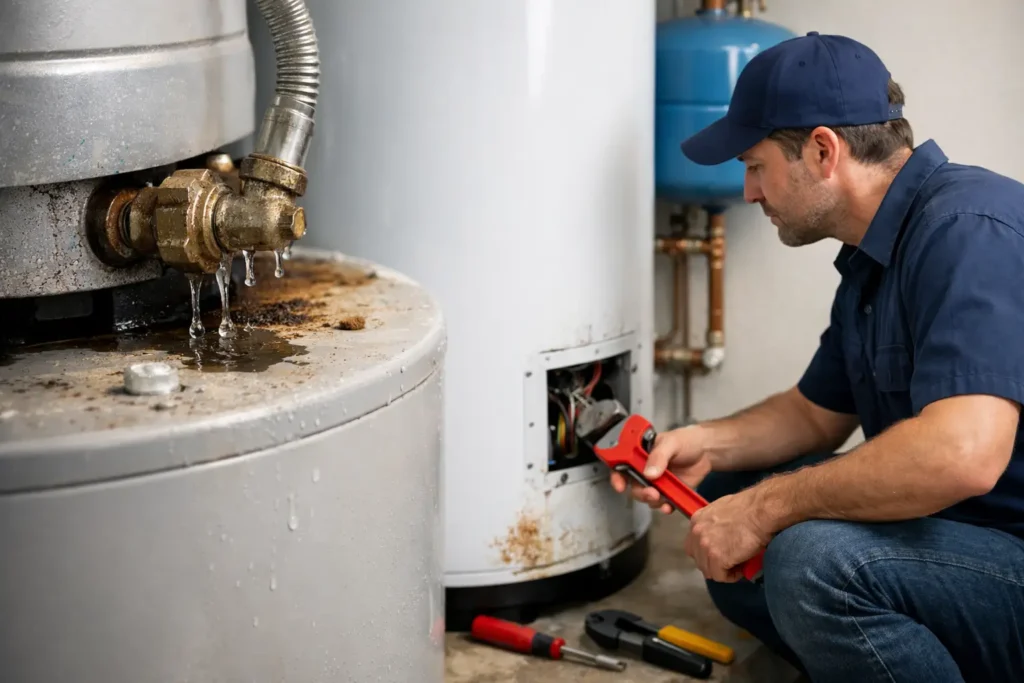
A tank-style unit can hold 40 to 80 gallons of water. When the tank itself splits or corrodes through, that water can release quickly. A small drip from a fitting may be repairable. Water pooling beneath the tank, especially around the base, often points to internal corrosion and may mean replacement is the safer option.
Call for prompt service if you notice any of these issues:
- No hot water or water that turns cold within minutes
- Water around the heater, a leaking pressure relief valve, or moisture at pipe connections
- Rumbling, popping, banging, or hissing noises from the tank
- Rust-colored water, metallic-smelling water, or visible corrosion
- A pilot light that will not stay lit or a gas odor near a gas-powered unit
- A sudden increase in utility costs without a clear explanation
If you smell gas, leave the area, avoid switches and open flames, and contact your gas utility or emergency services as appropriate. Do not try to relight the appliance yourself until it has been inspected.
Repair or Replace? The Answer Depends on the Failure
Not every water heater problem requires a new installation. Heating elements, thermostats, thermocouples, pilot assemblies, relief valves, expansion tanks, and pipe connections can often be repaired. An experienced plumber can diagnose the actual cause instead of replacing parts based on a guess.
Age matters, though. Conventional tank water heaters commonly last about 8 to 12 years, depending on water quality, maintenance, installation quality, and household demand. A well-maintained unit may last longer. A neglected tank in an area with hard water may fail sooner.
If a newer unit has a failed component and the tank is sound, repair is usually the practical choice. If an older tank is leaking from the bottom, rusted through, or repeatedly needing service, replacement can save you from paying for repairs that only delay the next breakdown.
For rental properties and commercial facilities, replacement decisions also involve downtime. Waiting for an aging heater to fail can leave tenants without hot water, disrupt restaurant operations, or create a complaint that needs immediate attention. Planned replacement gives you more control over equipment selection, scheduling, and cost.
Tank leaks are different from connection leaks
A leak at the cold-water inlet, hot-water outlet, drain valve, temperature and pressure relief valve, or nearby plumbing may be repairable. A plumber needs to identify where the water is actually coming from. Water can travel along pipes or collect at the base, making the source difficult to see.

A leak from the tank body itself is the major concern. The glass lining inside a tank eventually breaks down, allowing corrosion to reach the steel. Once the tank wall has failed, patching it is not a reliable repair. Replacement is typically the right call.
Why Sediment Causes So Many Water Heater Problems
Kansas City area water can leave mineral deposits inside a tank. Over time, sediment settles at the bottom, where the burner or heating elements must work harder to heat the water. The result can be popping or rumbling sounds, slower recovery times, reduced hot-water capacity, and higher energy use.
Sediment also creates hot spots on the bottom of a gas water heater. Those hot spots can stress the tank and shorten its service life. On electric models, mineral buildup can damage or reduce the efficiency of heating elements.
Flushing a tank may help when performed early and correctly. However, flushing is not a cure for a corroded tank or a heater that is already near the end of its usable life. Older units with heavy buildup deserve a professional assessment, especially if valves are stuck, the drain is clogged, or the system has never been serviced.
Choosing the Right Replacement Water Heater
The best replacement is not always the biggest tank or the lowest-priced unit. It needs to match the property, the number of occupants, available fuel, venting requirements, fixture demand, and budget.
A standard storage-tank heater is familiar, dependable, and often more affordable to install. It stores a set amount of hot water and reheats after use. This can work well for many homes, but a large family using multiple showers, laundry, and a dishwasher at the same time may exceed the tank’s available supply.
Tankless water heaters heat water on demand rather than storing it in a tank. They can provide a continuous supply when properly sized, take up less floor space, and may offer energy savings for certain households. The trade-off is a higher upfront installation cost and possible upgrades to gas piping, venting, electrical service, or water lines. Tankless equipment must be sized for your peak demand, not just the number of bathrooms.
Heat pump water heaters can be highly efficient, but they need adequate installation space and perform best in suitable locations. They also cool and dehumidify the surrounding air, which can be useful in some utility spaces and less desirable in others. For commercial properties, multiple units, larger-capacity systems, recirculation equipment, and code requirements can change the decision entirely.
A professional installation should account for expansion control, shutoff valves, drain pan needs, venting, combustion air, gas connections, electrical requirements, and local code compliance. Those details affect safety, longevity, and whether the new system performs as expected.
Do Not Ignore Pressure Relief Valve Problems
The temperature and pressure relief valve is a critical safety device. It opens if pressure or temperature inside the tank becomes unsafe. A dripping relief valve does not always mean the valve itself is bad. High incoming water pressure, thermal expansion in a closed plumbing system, or overheating can cause it to discharge.

Replacing the valve without finding the reason it opened can leave the underlying problem unresolved. A plumber can test water pressure, inspect the expansion tank, check the thermostat or gas controls, and determine whether the heater is operating safely.
Never cap, plug, or block a relief valve discharge line. That creates a serious hazard. The same rule applies to turning up the temperature setting to compensate for poor hot-water performance. Excessively hot water can cause burns and may signal an equipment issue that needs repair.
What You Can Do Before the Plumber Arrives
If the heater is leaking heavily, turn off the cold-water supply valve above the unit if you can do so safely. For an electric water heater, turn off power at the breaker before touching anything near the appliance. For a gas unit, turn the control to the off position only if there is no gas odor and you can access it safely.
Take a quick photo of the leak, the model label, and any error code on the display. This can help speed up diagnosis. Clear a path to the utility area and move stored belongings away from the heater. Avoid draining or disassembling the unit unless a qualified technician tells you to do so.
For urgent failures, Kansas City Plumbers Today can inspect the problem, explain the repair or replacement options clearly, and handle the work with no-surprise pricing. Whether it is a failed element, a leaking tank, a gas-line concern, or a full installation, the goal is to get reliable hot water back without unnecessary delay.
Protect Your Next Water Heater Investment
A few practical habits can extend the life of a new system. Keep the area around the heater clear, watch for early signs of moisture, test water pressure when plumbing problems arise, and consider routine maintenance before sediment becomes severe. If your household has changed, reassess whether the heater still meets your demand instead of forcing an undersized unit to work beyond its capacity.
Hot water should be dependable, not something you worry about every time someone starts a shower. When your system shows warning signs, acting early gives you more options and helps keep a water-heater problem from becoming a property-damage emergency.
Kansas City Plumbers Today offer fast, reliable home services for plumbing installation or repair, HVAC and professional electrical services.
With extensive experience in handling common and complex issues or emergency service, our team saves you time and money, ensuring your home services are conducted with the utmost professionalism and efficiency.