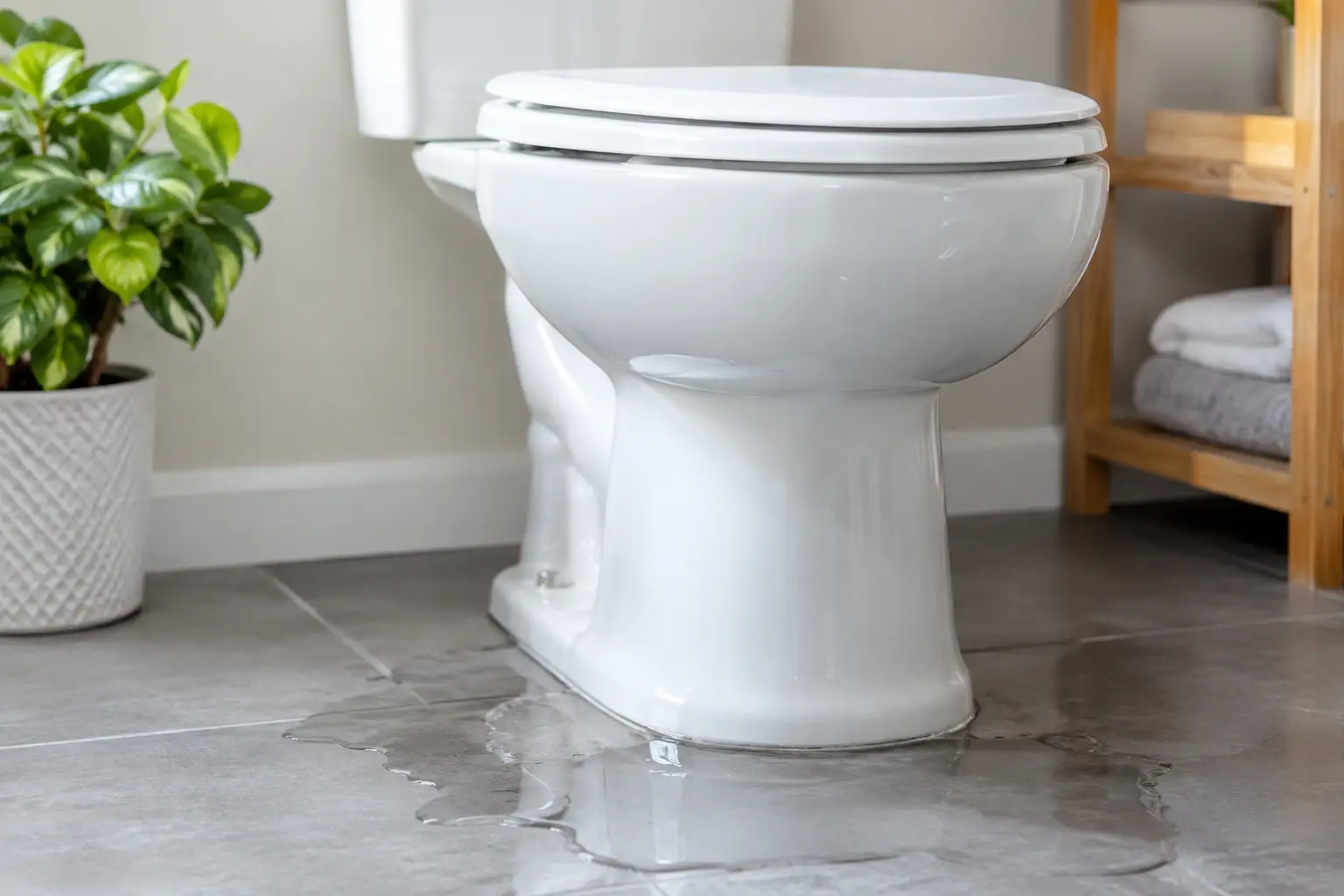
A toilet can leak for weeks without making a sound, soaking into flooring, staining ceilings below, and adding unnecessary charges to your water bill. Other toilet leaks announce themselves quickly with a puddle, a constantly running tank, or water spreading across the bathroom floor. Either way, the right response is the same: identify where the water is coming from, stop the immediate damage, and get the repair handled before a small fixture issue becomes a flooring, subfloor, or mold problem.
Why Toilet Leaks Need Fast Attention
Not every leak is an emergency, but no toilet leak should be ignored. A slow leak at the base can weaken the floor around the toilet over time. A failed supply line can release a surprising amount of water in minutes. Internal tank leaks may not damage the room, yet they can waste hundreds of gallons of water and keep your toilet running long after it should have stopped.
Watch for these warning signs, especially in bathrooms that are not used every day:
- Water collecting around the base of the toilet after flushing
- A toilet that refills on its own or runs intermittently
- Damp flooring, loose tile, soft vinyl, or a musty bathroom odor
- Water stains on the ceiling below an upstairs bathroom
The source matters. Condensation on the outside of a tank during humid weather is different from a cracked tank or failed seal. If you are unsure whether the water is condensation, dry the tank and floor completely, then check again after several flushes. Fresh water means there is a leak that needs attention.
Finding the Source of Toilet Leaks
Before taking anything apart, use a flashlight and dry the visible areas around the toilet. Flush once and watch closely. If water is actively flowing onto the floor, turn the shutoff valve behind or beside the toilet clockwise to stop the water supply. Do not force an old valve if it will not move easily.
Water at the Base of the Toilet
Water around the base often points to a failed wax ring or toilet seal. The seal sits between the toilet and the drain opening in the floor. When it fails, water can escape underneath the fixture during a flush rather than traveling safely into the drain line.
A loose toilet can cause the same problem. If the toilet rocks when you sit down or press gently on it, the base may have shifted and compromised the seal. Avoid repeatedly flushing it until it is repaired. Water can travel under finished flooring where the damage is not visible until the floor starts to feel soft or stains appear below.
There is one important exception: if water appears only after someone showers or the tub drains, the toilet may not be the source. A nearby shower drain, tub overflow, or drain line could be leaking instead. Accurate diagnosis prevents paying for the wrong repair.
A Running Toilet or Water Moving Into the Bowl
When the tank quietly refills without being flushed, the issue is usually inside the tank. A worn flapper may not seal against the flush valve, allowing water to leak from the tank into the bowl. A fill valve set too high or a faulty overflow tube can also keep water moving when it should be still.
This is one of the most common toilet leaks because it is easy to miss. Add a few drops of food coloring to the tank and wait about 15 minutes without flushing. If color appears in the bowl, water is passing through the flush valve. The repair may be as simple as replacing a flapper, but mismatched parts, mineral buildup, or damaged flush valve components can require more involved work.

Water at the Supply Line or Shutoff Valve
The flexible line that connects the wall valve to the toilet tank can drip at either connection. Check for moisture around the nuts, corrosion on the valve, or a swollen, cracked, or rusted supply line. A line that is old or damaged should be replaced, not taped or patched.
Supply line leaks deserve immediate action because pressure is constantly behind them. If tightening a connection does not stop a drip right away, shut off the toilet’s water supply and call for service. If the valve itself is leaking or will not shut off, use the home’s main water shutoff if necessary to protect the property.
Cracks in the Tank or Bowl
Hairline cracks in porcelain can be hard to see, but they can leak slowly and worsen with time. Check the exterior of the tank and bowl for damp trails, discoloration, or fine cracks. Never rely on sealant as a permanent fix for a cracked toilet tank. Tanks are under pressure when filled, and a failure can release water across the floor without warning.
A cracked bowl is also a safety concern. Replacement is usually the practical solution, particularly when the fixture is older, loose, or already showing signs of repeated repairs.
What to Do When You Find a Leak
First, protect the room. Place towels around the toilet, remove bath mats, and keep water away from electrical outlets or cords. Then stop the flow. For a leak tied to flushing or the tank, close the toilet shutoff valve. For a major leak from a broken supply line or a leaking valve that will not close, shut off water at the main valve and get professional help.
Do not keep flushing to test the problem if water is reaching the floor. One extra flush can push contaminated water under the toilet, into adjacent rooms, or through the ceiling below. If the leak involves wastewater, wear gloves and disinfect any affected hard surfaces after the repair is complete.
Take note of when the leak occurs. Does it happen only during a flush, continuously while the toilet is idle, or only when someone sits on the fixture? Those details help a plumber pinpoint the cause faster and can reduce unnecessary diagnostic time.
Which Toilet Repairs Are Safe to Handle Yourself?
A homeowner may be able to replace a standard flapper, tighten a loose tank-handle nut, or change a toilet fill valve if the problem is clearly inside the tank and the shutoff valve works properly. These repairs are generally low risk when the correct parts are used and the toilet is tested carefully afterward.
The trade-off is that a visible symptom is not always the actual failure. A new flapper will not solve a warped flush valve seat. Tightening bolts on a rocking toilet can crack porcelain or crush a deteriorated seal. Overtightening supply-line connections can damage the fitting and create a bigger leak.
Repairs involving the toilet base, wax ring, shutoff valve, drain line, cracked porcelain, or water damage are better left to a qualified plumber. Removing and resetting a toilet requires proper sealing, stable mounting, and an inspection of the flange and floor beneath it. That is where hidden damage is often found.

The Cost of Waiting on a Leaking Toilet
A toilet that runs intermittently can raise water use without leaving a visible puddle. A leak at the base can be more expensive because it threatens the materials below the fixture. Tile may loosen, wood subfloors can rot, and moisture can create conditions for mildew or mold in enclosed spaces.
For landlords, property managers, and commercial operators, delays can also mean tenant complaints, closed restrooms, damaged units below, and sanitation concerns. A restaurant, office, retail location, or rental property needs a repair that addresses the source of the leak, not a temporary workaround that fails after the next busy day.
When to Call a Plumber for Toilet Leak Repair
Call for professional service right away if water is actively spreading, the toilet is backing up, the base is leaking, the supply line is damaged, the shutoff valve will not close, or there is any sign of a cracked tank or bowl. Also call if you see water damage on a ceiling below the bathroom, smell sewage, or notice the toilet rocking on the floor.
Kansas City Plumbers Today provides fast diagnosis and repair for toilet leaks, including fixture seals, fill valves, supply lines, shutoff valves, drain issues, and water-damaged connections. A trained technician can determine whether the trouble is isolated to the toilet or connected to a larger plumbing or drain problem, then explain the repair before work begins.
A dry bathroom floor should not be the only goal. The repair should leave the toilet stable, properly sealed, and ready to flush without sending water where it does not belong. Acting early protects your home, your budget, and the room beneath the bathroom.