
Residential Plumbing Maintenance Checklist Guide
A slow drip under the kitchen sink can become cabinet damage, mold, and a costly repair long before it feels like an emergency. This residential plumbing maintenance checklist guide helps Kansas City homeowners spot small problems early, protect their pipes through changing weather, and act fast when a professional repair is the safer choice.
Plumbing maintenance is not about taking apart your home’s pipes every weekend. It is about paying attention to the warning signs that lead to water damage, sewer backups, frozen pipes, and water heater failures. A few routine checks can prevent a stressful after-hours call. When something is already leaking, backing up, or flooding, skip the checklist and get help immediately.
Why Routine Plumbing Checks Save Money
Water follows the easiest path, and it does not need a large opening to cause serious damage. A pinhole leak behind a wall, a worn toilet flapper, or a loose supply line can waste water every day while damaging flooring, drywall, framing, and personal belongings.
Kansas City homes also deal with freeze-thaw cycles, heavy rain, aging sewer lines, and hard-working sump pumps. Maintenance helps you find vulnerable areas before weather or heavy use pushes the system past its limit. The goal is simple: catch minor wear before it becomes a burst pipe, a backup, or a cleanup project.
Residential Plumbing Maintenance Checklist Guide: Monthly Tasks
Set aside 15 to 20 minutes once a month to walk through these visible plumbing checks. You do not need special tools for most of them. A flashlight, dry paper towel, and a willingness to investigate anything unusual will go a long way.
Check for Leaks Under Sinks and Around Fixtures
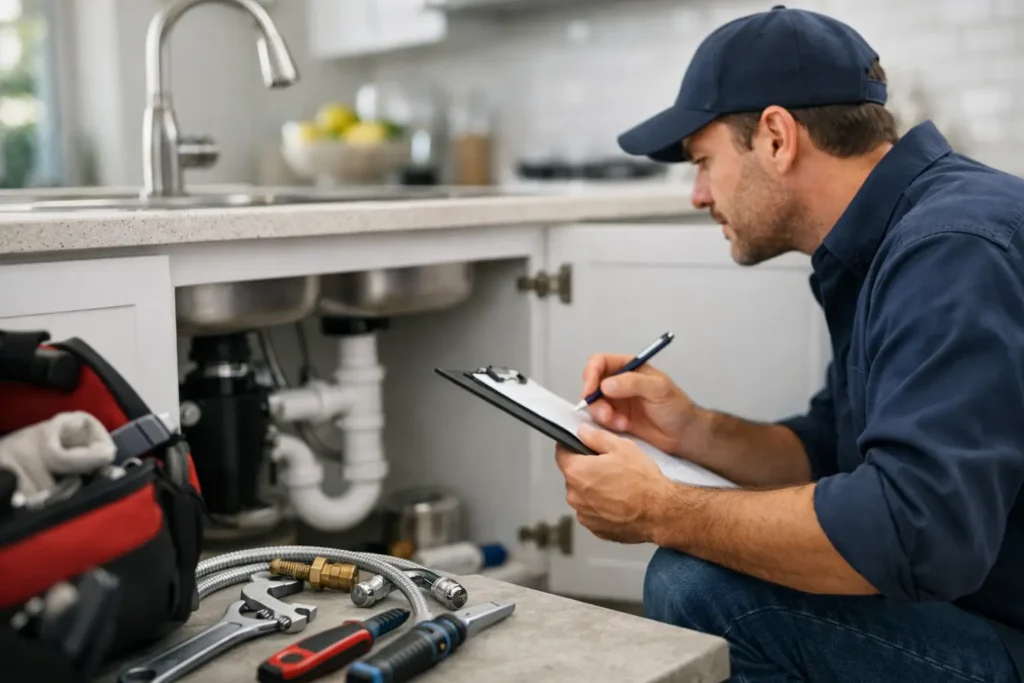
Open the cabinets under every kitchen, bathroom, laundry, and utility sink. Look for moisture, water stains, swollen cabinet material, corrosion on shutoff valves, or a musty odor. Run both hot and cold water while you watch the drain connections and supply lines.
Use a dry paper towel around joints and valves if you are unsure whether a spot is damp. Even a slow leak deserves attention. Tightening a loose connection may be enough in some cases, but cracked fittings, corroded valves, and damaged supply hoses should be repaired rather than patched.
Test Toilets for Silent Leaks
A toilet that runs occasionally after flushing can waste a surprising amount of water. Listen for refilling sounds when no one has used the bathroom. You can also add a few drops of food coloring to the tank and wait about 15 minutes without flushing. If color appears in the bowl, water is leaking past the flapper.
Check around the base of the toilet, too. A soft floor, loose toilet, sewer odor, or water at the base can point to a failing wax ring or another issue below the fixture. Do not keep using a toilet that rocks or leaks at the floor. That moisture can damage the subfloor quickly.
Keep Drains Moving Without Harsh Chemicals
Run water in less-used sinks, tubs, and showers to keep trap seals from drying out. A dry trap can allow sewer gas odors into the home. Remove visible hair and debris from sink stoppers and shower strainers before they work their way deeper into the line.

Avoid making chemical drain cleaners a monthly habit. They can damage certain pipes, leave caustic material in a clogged drain, and make later repairs more hazardous. If a drain repeatedly slows down after basic cleaning, there may be buildup farther down the line, a pipe issue, or a developing sewer problem.
Look at Your Water Heater and Sump Pump
Check around the water heater for puddles, rust, corrosion, or moisture at the fittings. Listen for popping or rumbling when it heats, which can indicate sediment buildup. Confirm that the temperature setting is safe for your household, generally around 120 degrees Fahrenheit.
For the sump pump, make sure the pit is clear and the power cord is secure. Pour enough water into the pit to confirm the float activates the pump and water moves out through the discharge line. If the pump does not turn on, runs continuously, or makes grinding noises, schedule service before the next heavy rain.
Seasonal Plumbing Maintenance for Kansas City Homes
Seasonal checks matter because plumbing problems often appear when temperatures and water demand change. The right timing depends on your home’s age, pipe material, landscaping, and whether you have a basement, crawl space, or older sewer lateral.
Before Freezing Weather
Disconnect and drain outdoor hoses. Shut off exterior faucet supply valves if your home has them, then open the outside faucet to release remaining water. Insulate exposed pipes in unheated basements, garages, crawl spaces, and exterior walls. Pay close attention to pipes near foundation vents and garage doors.
Know where the main water shutoff valve is before winter arrives. Every adult in the household should be able to find it. If a pipe bursts, shutting off the water within minutes can significantly limit damage.
During Heavy Rain and Spring Thaws
Clear debris from exterior drains and make sure downspouts direct water away from the foundation. Watch the sump pump more closely during sustained rain. If you have a battery backup system, test it according to the manufacturer’s instructions.
A sewer backup is not always caused by something inside the house. Tree roots, a damaged sewer line, or a municipal overload can all contribute. Gurgling toilets, water rising in a floor drain, or multiple drains backing up at once are signs to stop using water and call for professional help.
During Summer and High-Use Periods
Inspect washing machine hoses for bulges, cracks, or corrosion at the connections. Replace old rubber hoses with quality braided supply lines if appropriate for your setup. Check dishwasher and refrigerator water lines for dampness, especially if appliances have been moved recently.
Garbage disposals also get more use during cookouts and family gatherings. Keep grease, coffee grounds, fibrous vegetables, bones, and starchy food scraps out of the disposal. Run cold water while operating it, then continue the water briefly after turning it off.

Maintenance Tasks Best Left to a Plumber
Some preventive work requires equipment and experience that homeowners should not try to replace with guesswork. Sewer camera inspections can identify root intrusion, cracked lines, bellies, and recurring blockage causes without digging up the yard. Professional drain cleaning can remove heavy buildup without relying on damaging chemicals.
Water heater flushing, pressure testing, gas line work, and repairs involving concealed leaks also deserve professional attention. The trade-off is straightforward: a service call costs less than a major leak, sewer cleanup, or preventable equipment replacement. Older homes, rental properties, and houses with recurring drain issues often benefit from scheduled inspections rather than waiting for a failure.
Call for Fast Help When You See These Warning Signs
Do not wait on active leaks, sewage, or sudden loss of water pressure. Call a plumber right away if you notice water near electrical outlets, a burst or frozen pipe, sewage coming up through a drain, a water heater leaking from the tank, or a sump pump that fails during rain.
Other problems may not look urgent but still need prompt service: unexplained high water bills, discolored water, recurring clogs, sewer odors, damp spots on ceilings or walls, and a water heater that cannot keep up. Kansas City Plumbers Today provides fast, professional service for problems that need more than a quick adjustment, with clear pricing before work begins.
A maintenance checklist gives you control, but trust what your home is telling you. If water is where it should not be, shut off the supply when safe to do so, protect the area from further damage, and get experienced help before a small plumbing issue takes over your day.
Contact