
How to Spot Hidden Leaks Before Further Damage
A hidden water leak can damage a wall, floor, ceiling, or foundation long before you see a puddle. Knowing how to spot hidden leaks early gives you a chance to stop the damage before a small plumbing issue becomes a costly repair, mold problem, or business interruption.
For Kansas City homeowners, landlords, and commercial property managers, the warning signs are often subtle at first: a water bill that suddenly rises, a musty room, peeling paint, or the sound of water moving when every fixture is off. Do not wait for a ceiling stain or a burst pipe to take action. A fast inspection can make a major difference.
Start With Your Water Bill and Water Meter
Your water bill is one of the first places a concealed leak may show up. Compare the current bill with the same month last year, rather than only looking at the previous month. Seasonal irrigation, guests, or increased business activity can affect usage, but an unexplained and consistent jump deserves attention.
The water meter can provide a more direct answer. Turn off faucets, appliances that use water, ice makers, irrigation systems, and anything else connected to the plumbing. Then check your meter’s leak indicator, often a small dial or triangle that moves with even minor water flow. If it continues moving while all water is off, water is likely escaping somewhere in the system.
For a more reliable test, write down the meter reading, avoid using water for one to two hours, and check it again. A changed reading points to a leak on the property. This test does not identify the exact location, but it tells you the problem needs professional diagnosis.
Watch for Changes in Walls, Ceilings, and Floors
Leaks behind walls and under floors rarely announce themselves immediately. Water travels, so the stain you see may not be directly below or beside the pipe that failed. Look for discoloration, bubbling paint, warped trim, loose flooring, or drywall that feels soft when pressed gently.
Ceiling stains below a bathroom, kitchen, laundry room, or mechanical area should be treated as urgent. The source could be a drain line, supply line, shower pan, toilet seal, or appliance connection. A stain that expands after someone showers or runs a washing machine offers a useful clue, but it is still best not to open walls or ceilings without a plan. Water may be near electrical wiring, and unnecessary demolition adds cost.
Wood floors can cup, buckle, or develop dark seams when moisture is present underneath. Vinyl and laminate flooring may lift at the edges. In commercial spaces, watch for soft spots in flooring, loose baseboards, or tiles that no longer sit flat. These signs can indicate a slow leak that has been active for weeks or months.
Do Not Ignore a Musty Smell
A persistent musty odor is not always a plumbing leak, but it is never something to dismiss. Moisture trapped in wall cavities, under cabinets, behind a toilet, or beneath flooring creates conditions where mold can grow.
Check under sinks, behind washing machines, around water heaters, and in utility closets. If the smell is strongest in one area, that location may help narrow down the source. Visible mold, damp materials, or a strong odor calls for prompt plumbing service and, when needed, proper moisture remediation.

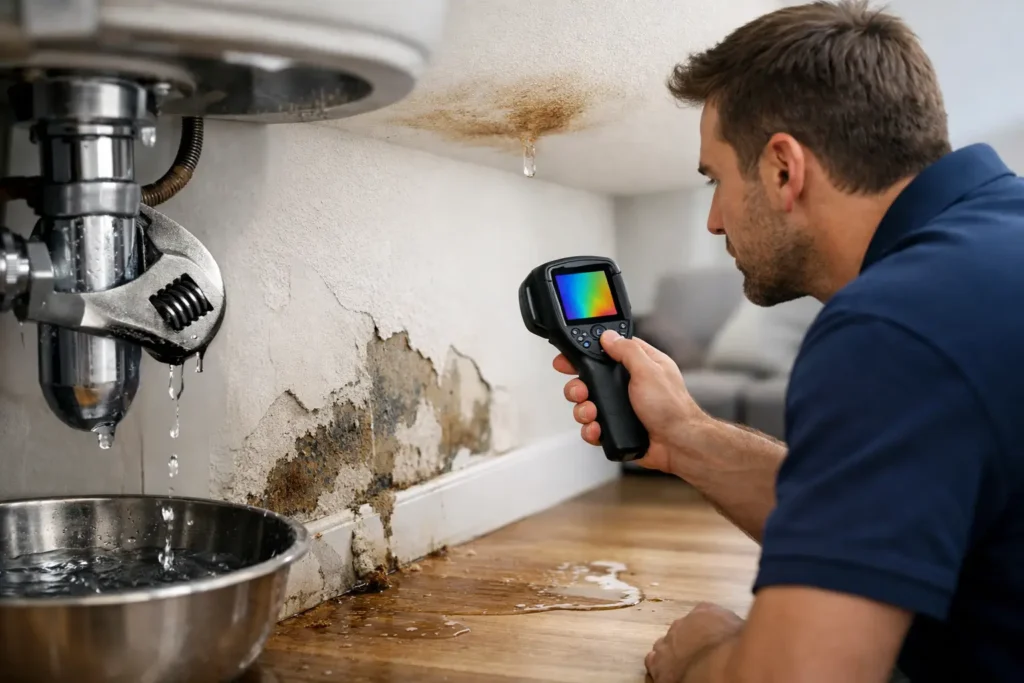
Look Closely at Fixtures and Appliances
Not every hidden leak is deep inside a wall. Some begin at connections that are out of sight behind a cabinet, appliance, or fixture. A slow drip from a supply valve or dishwasher line can soak cabinetry and subflooring without creating an obvious puddle in the room.
Inspect the area below kitchen and bathroom sinks for dampness, corrosion, water marks, swollen cabinet bottoms, and moisture around shutoff valves. Run the faucet while checking the drain pipes. A leak may only appear when water is flowing.
Pay attention to toilets as well. A toilet that runs intermittently may be wasting water through a failed flapper or fill valve. Put a few drops of food coloring in the tank and wait about 15 minutes without flushing. If color appears in the bowl, water is leaking from the tank into the bowl. It may seem minor, but a running toilet can waste a surprising amount of water over time.
Water heaters need regular attention, especially in basements, utility rooms, and commercial mechanical spaces. Check for moisture around the base, rust on fittings, a leaking temperature and pressure relief valve, or water pooled in the drain pan. If the tank itself is leaking, repair is often not the long-term answer. A failing tank can release a significant amount of water quickly.
Listen for Water When Nothing Is Running
A quiet house or closed business can reveal plumbing sounds you normally miss. Listen for hissing behind a wall, a faint dripping sound under a floor, or water movement near a pipe chase when no one is using water.
These sounds can indicate a pressurized supply-line leak. They can also come from a toilet refilling, a water softener cycle, or another appliance, so context matters. Still, if you hear water regularly and cannot identify a normal source, shut off unnecessary water use and schedule an inspection.
Low water pressure can be another clue. One weak faucet may have a clogged aerator or fixture issue. Low pressure affecting several fixtures, however, can point to a larger supply-line issue, mineral buildup, a failing pressure regulator, or a leak that is reducing available water pressure.
Check Outside for Underground Leak Signs
Hidden leaks are not limited to indoor pipes. Underground water lines can leak beneath lawns, driveways, sidewalks, and building slabs. Because the water never enters the building, the problem may go unnoticed until the bill rises or the ground changes.
Look for an unusually green or fast-growing patch of grass, soggy ground during dry weather, standing water near the foundation, or soil that feels soft near a water line path. A warm spot on a concrete slab can sometimes signal a hot-water line leak below it. Cracks or shifting in paved areas may have several causes, but persistent moisture beneath them should be investigated.
Outdoor faucet leaks are easier to see but can still cause trouble. Check hose bibs, irrigation valves, backflow devices, and sprinkler heads. If an irrigation zone runs poorly, has low pressure, or leaves one wet area after the system shuts off, a buried irrigation leak may be the cause.

Know When to Shut Off Water and Call for Help
If water is actively entering your home or business, shut off the main water supply if you can do so safely. The main shutoff is often near the water meter, in a basement, utility room, crawlspace, or exterior meter box. Property managers should make sure staff and tenants know where the shutoff is located before an emergency occurs.
Call for professional leak detection when the meter test indicates a leak, you see water damage with no obvious source, or you suspect a slab, underground, or in-wall pipe problem. These leaks require the right diagnostic approach. Cutting open walls based on guesswork can increase repair costs and still miss the actual failure.
A qualified plumber can use targeted diagnostic tools, moisture readings, pressure testing, and other methods to locate the source with minimal disruption. The right repair depends on the pipe material, leak location, accessibility, and extent of water damage. A pinhole leak in an exposed line may be a straightforward repair, while a damaged underground line or aging pipe system may require a more involved solution.
Kansas City Plumbers Today provides fast leak detection and plumbing repairs for homes, rental properties, and commercial buildings across the metro. You get a clear explanation of what was found, what repair options make sense, and what the work will cost before the repair moves forward.
A hidden leak rarely gets better on its own. If your meter moves when it should not, your walls feel damp, or your property suddenly smells musty, act while the evidence is still small and the damage is still contained.
Kansas City Plumbers Today offer fast, reliable home services for plumbing installation or repair, HVAC and professional electrical services.
With extensive experience in handling common and complex issues or emergency service, our team saves you time and money, ensuring your home services are conducted with the utmost professionalism and efficiency.