
How Kansas City Plumbers Handle Weekend Leaks
Weekend leaks rarely wait for a convenient moment. Whether water is pooling under a sink, dripping through a ceiling, or rising around a water heater, Kansas City Plumbers Today handle weekend leaks by first protecting your home, then pinpointing the source and making reliable repairs.
Knowing what counts as an emergency, and what you can safely do before help arrives, can limit damage and make a stressful Saturday or Sunday far more manageable.
⚡ Key takeaways
- Shut off the nearest fixture valve, or the main supply, if water cannot be contained safely.
- Call emergency plumbing for steady flow, ceiling leaks, sewage backups, water-heater leaks, or electrical hazards.
- Never enter standing water near outlets, appliances, power strips, or electrical panels.
- Move valuables, use towels or buckets for slow drips, and avoid forcing corroded shutoff valves.
- Photograph damage, note when it began, and document affected fixtures for plumbers and insurance claims.
- Ask weekend plumbers for itemized after-hours pricing, repair options, permits, insurance, and warranty details.
How Kansas City Plumbers Today Handle Weekend Leaks Safely
When a pipe lets go on a Saturday night or a ceiling stain begins spreading Sunday morning, the first priority is limiting damage, not attempting a hurried repair. The way Kansas City Plumbers Today handle weekend leaks safely starts with a calm assessment: identify whether the water is clean, locate the nearest shutoff valve, and keep everyone clear of wet electrical areas. Homeowners can usually turn off a fixture’s stop valve or the main supply, then open a faucet to relieve pressure while waiting for help.
Qualified plumbing professionals arrive prepared to trace the source rather than merely dry the visible symptom. In Kansas City, that may mean checking vulnerable supply lines, failed water-heater connections, aging pipe joints, and drain backups that can resemble a simple leak. They protect floors and finishes, document affected areas, make a durable repair when conditions allow, and explain any follow-up needed. For an active plumbing leak, avoid electrical appliances nearby, do not puncture a bulging ceiling, and call for emergency service if the water cannot be shut off. A prompt weekend response can prevent structural damage, mold conditions, and a far more disruptive restoration.
Weekend leak safety steps
- Stay calm, identify the water source, and keep people away from wet floors or electrical fixtures.
- Turn off the fixture stop valve or main water supply if the leak cannot be isolated.
- Open a nearby faucet after shutting off water to relieve pressure in the plumbing lines.
- Do not use electrical appliances near standing water or touch switches with wet hands.
- Never puncture a bulging ceiling; move belongings below it and contact emergency plumbing service.
- Professional plumbers trace the underlying failure, protect finishes, and repair damaged connections or pipes.
- Document affected areas and arrange follow-up for drying, restoration, or moisture-related concerns.
Is This Plumbing Leak an Emergency or Can It Wait?
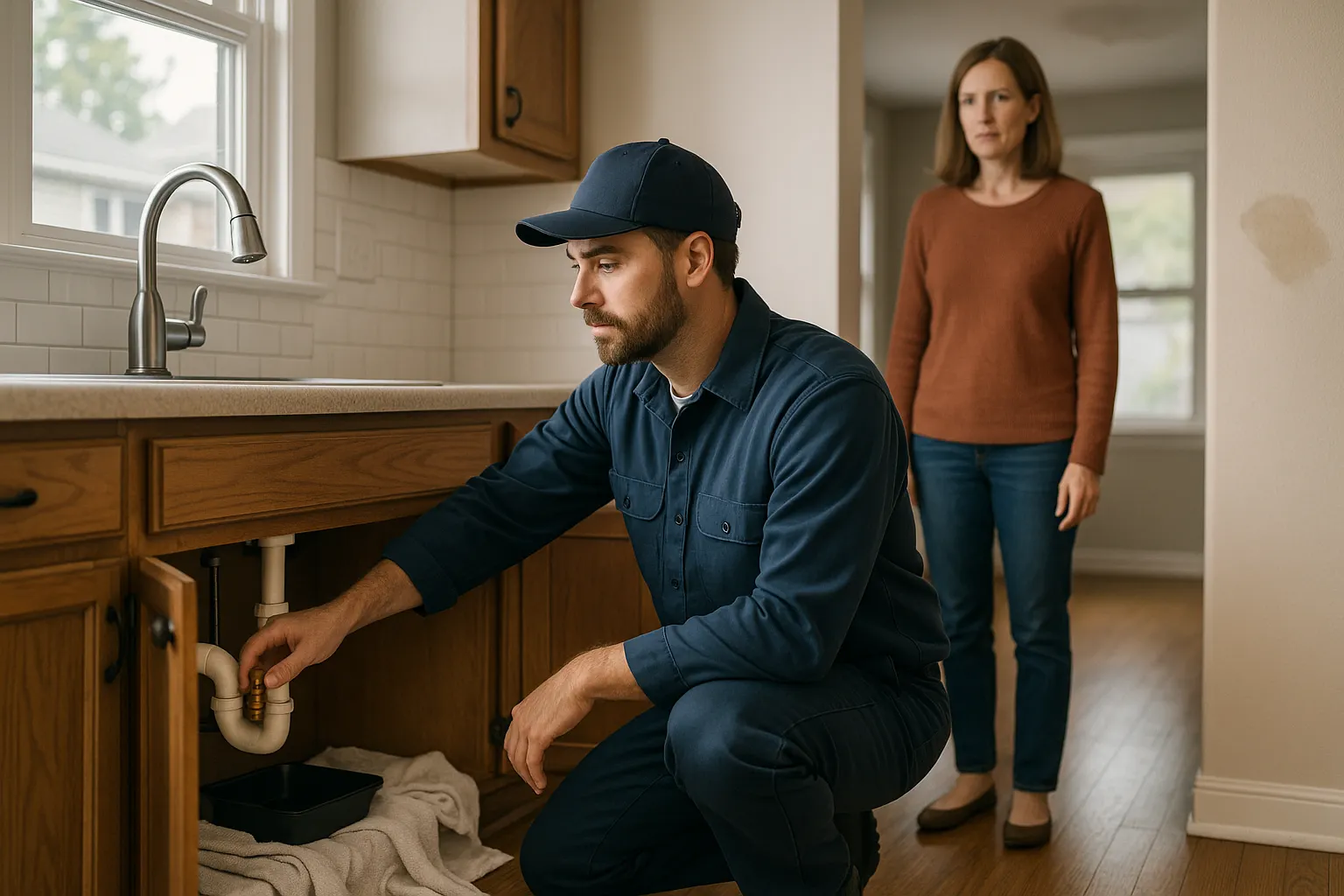
A plumbing leak deserves prompt attention, but not every drip requires an after-hours call. The key question is whether water is actively causing damage, creating a safety risk, or threatening to spread beyond one contained area. A slow leak beneath a sink, with a shutoff valve that works and a dry cabinet floor, can often wait for a scheduled plumber visit. Place a container underneath, avoid using that fixture, and check it periodically until help arrives.
Call emergency plumbers when water is flowing steadily, pooling on floors, staining ceilings, or reaching electrical outlets, appliances, or finished walls. Shut off the nearest fixture valve if possible; if you cannot stop the leak, turn off the home’s main water supply. Sewage backups, a burst pipe, no water throughout the house, and leaks around a water heater also warrant immediate action. Even small leaks can lead to mold, warped flooring, and hidden structural damage when ignored. Taking a clear photo, noting when the issues began, and identifying the affected fixture will help your plumber assess the situation quickly and arrive prepared.
Plumbing Leak: Emergency Call or Scheduled Repair?
| Situation or warning sign | Can it wait? | What to do now |
|---|---|---|
| Slow leak beneath a sink, with a working shutoff valve and dry cabinet floor | Yes, it can often wait for a scheduled plumber visit. | Place a container underneath, avoid using the fixture, and check it periodically. |
| Water flowing steadily or pooling on floors | No, call emergency plumbers. | Shut off the nearest fixture valve; turn off the home’s main water supply if the leak will not stop. |
| Water staining ceilings or reaching finished walls | No, call emergency plumbers. | Shut off the nearest fixture valve if possible, or turn off the main water supply. |
| Water reaching electrical outlets or appliances | No, call emergency plumbers. | Shut off the water supply immediately if possible. |
| Sewage backup | No, immediate action is needed. | Call emergency plumbers. |
| Burst pipe | No, immediate action is needed. | Turn off the home’s main water supply and call emergency plumbers. |
| No water throughout the house | No, immediate action is needed. | Call emergency plumbers. |
| Leak around a water heater | No, immediate action is needed. | Call emergency plumbers. |
Shut Off Water and Make the Area Safe Before You Call
Before a plumber arrives, the most important work is often simple: limit the water and remove immediate hazards. A homeowner should first locate the nearest shutoff valve, beneath a sink, behind a toilet, or at the appliance, and turn it clockwise. If the source cannot be isolated, use the main shutoff, typically near the meter, in a utility room, garage, or exterior wall box. Do not force a corroded valve; a small leak is preferable to a broken fitting.
Move rugs, electronics, paper goods, and furniture away from the leaking area, then place towels or a bucket beneath a slow drip. Keep clear of standing water near outlets, power strips, appliances, or a breaker panel. If water has reached electrical equipment, leave the area and contact emergency help as appropriate.
Take a few photos once the situation is safe; they can help explain the problem and support an insurance claim. Then call qualified plumbing services, describe where the leak is coming from and whether the water is off, and arrange the right service response.
Immediate Leak Safety Steps
- Locate the nearest fixture or appliance shutoff valve and turn it clockwise.
- Use the main water shutoff if the leak cannot be isolated locally.
- Do not force a corroded valve; breaking it can worsen the leak.
- Move electronics, rugs, paper goods, and furniture away from wet areas.
- Place towels or a bucket under slow drips to limit water damage.
- Avoid standing water near outlets, appliances, power strips, or breaker panels.
- Photograph the damage safely, then describe the leak and shutoff status when calling a plumber.
Weekend Leak Problems That Need Fast Plumbing Attention
A small weekend leak can become a costly Monday-morning surprise if it is left to spread behind walls, beneath floors, or around fixtures. While a slow drip from a tap may be manageable with a bucket and a prompt service booking, certain plumbing problems call for faster action. Water pooling near a water heater, seeping from a ceiling, or collecting around the base of a toilet can signal a failed connection, a cracked line, or a drain issue that is already affecting the home.

Start by shutting off the nearest supply valve when it is safe to do so. If the source is unclear or water continues to flow, use the main shutoff and contact a qualified plumber. Avoid opening walls or attempting major pipe repair without the right tools; an improvised repair can increase water damage and make the eventual fix more involved. Quick attention protects cabinetry, flooring, insulation, and electrical areas, and helps ensure a straightforward repair rather than a disruptive restoration project.
What a KC Metro Weekend Plumbing Service Visit May Include
When you request service on a Saturday or Sunday, a qualified plumbing pro should begin by listening closely to what changed, what you have already tried, and whether water, drainage, or gas safety is at risk.
Across the KC Metro, weekend plumbing services commonly include diagnostic work for active leaks, backed-up drains, failed water heaters, sump pump concerns, toilet overflows, and fixtures that have suddenly stopped working. The plumber may inspect accessible lines, test shutoffs and appliances, identify the likely source, and explain the repair options before proceeding. Depending on the issue, services can range from clearing a clog or replacing a worn component to stabilizing the problem until a larger repair can be scheduled. Ask whether parts, labor, travel, and after-hours charges are included in the estimate. Our reliable plumbers will also leave the work area orderly and tell you how to protect the system after the visit. Whether you need help in the city plumbing network or a surrounding community, clear communication matters: you should know what was repaired, what remains to be monitored, and when follow-up is recommended.
Questions to Ask About Weekend Pipe Repair, Pricing and Permits
Before authorizing weekend pipe repair, ask for a clear explanation of what is urgent, what can safely wait and what the repair is likely to involve. A reputable plumbing pro should separate the service-call charge, after-hours rate, labor, materials and any excavation or restoration costs rather than offering one vague total. Ask whether the quoted price covers diagnosis, how much approval is required before additional work begins and whether a temporary repair is appropriate until regular business hours. If the issue involves a water line, sewer connection or work beyond your home’s interior plumbing, ask who will handle permits and inspections. Requirements can vary by city, even within Kansas, and the contractor should know whether the planned repair needs municipal approval. It is also worth confirming licensing, insurance, warranty terms and the expected arrival window. Clear answers help you compare service options without delaying the action needed to protect your home from further water damage.
Prepare Your Home for a Leak Repair Visit
A little preparation helps a leak repair visit move quickly and protects your home while the work is underway. Before the plumber arrives, clear cabinets, shelves, or storage around the suspected problem, especially beneath sinks, near water heaters, and around appliances. Move rugs, electronics, and valuables away from any leaking area, and place a bucket and towels beneath an active drip if it is safe to do so. If you know where the main shutoff valve is, be ready to turn off the water should the leak worsen; otherwise, avoid adjusting unfamiliar valves or pipes. Take a few photos of visible moisture, stains, or pooling water, particularly if the issue comes and goes. They can help the plumber understand the pattern and check for hidden damage. Make sure pets are secured and provide clear access to the affected room, attic, crawlspace, or utility area. As a homeowner, note when you first noticed the issue and whether water use, weather, or a particular fixture seems connected. Those details can shorten diagnosis and lead to a more durable repair.
Document Water Damage and Know When Drying May Be Needed
After shutting off the water source, take clear photos and short videos before moving belongings or beginning cleanup. Capture the affected room from wide angles, then document stained ceilings, warped flooring, wet cabinetry, baseboards, and any personal property exposed to moisture. If a plumbing leak caused the damage, photograph the fixture, pipe, or appliance connection as well. This record can support an insurance claim and give a repair professional a more accurate picture of what occurred.
Visible water is only part of the concern. Moisture can travel beneath flooring, behind walls, and into insulation long after surfaces appear dry. A small leak contained quickly may only require targeted drying and minor repair. But water that sat for hours, spread across multiple materials, or came from a supply line, drain, or appliance may call for professional drying equipment and moisture testing. Prompt service helps limit swelling, staining, odors, and the risk of materials deteriorating behind finished surfaces. Keep receipts, note the time the leak was discovered, and avoid assuming that a dry-looking room is fully dry.
After Leak Repair, Prevent the Next Weekend Surprise
A completed leak repair should bring more than immediate relief; it should make the rest of your plumbing easier to manage. Once the obvious source is fixed, take a few minutes to check the nearby supply valves, cabinet floors, appliance connections, and ceiling areas below. Small stains, mineral buildup, musty odors, or a water meter that moves when every fixture is off can point to slower leaks that deserve attention before they become costly issues. Keep drains working well, too: use strainers where appropriate, avoid sending grease or fibrous food waste down the kitchen drain, and address recurring slow drainage rather than relying on repeated chemical treatments. Seasonal checks matter in homes with exposed pipes, outdoor faucets, or irrigation lines, especially before a busy holiday weekend or a change in weather. It also helps to know where your main shutoff is and make sure every adult in the household can use it. A little follow-through after a repair protects finishes, preserves water, and turns an unexpected plumbing call into a lasting improvement.
Kansas City Weekend Leak FAQ and Next Steps
A plumbing leak rarely arrives at a convenient time, and a Kansas City weekend is no exception. If water is actively flowing, start by shutting off the nearest fixture valve; if that does not stop it, turn off the home’s main water supply. Move rugs, electronics, and valuables out of the affected area, then photograph visible damage for your records. A slow drip beneath a sink may allow time for a scheduled visit, but water near electrical outlets, a ceiling stain that is spreading, sewage backup, or a burst pipe warrants an immediate call. Avoid opening walls, using chemical drain products, or attempting a temporary repair that could worsen the problem. Experienced plumbing professionals can identify whether the source is a supply line, drain, water heater, appliance connection, or hidden pipe, and make a repair that addresses the cause rather than simply the symptom. When requesting service, share where the leak began, when you noticed it, whether water has been shut off, and any recent changes in water pressure or plumbing work. That detail helps the technician arrive prepared and helps protect your home from avoidable weekend damage.
Frequently asked questions
When is a plumbing leak an emergency?
A leak is an emergency when water is flowing continuously, pooling on floors, coming through a ceiling, reaching outlets or appliances, or cannot be stopped at a fixture valve. Burst pipes, sewage backups, water-heater leaks, toilet overflows, and loss of water throughout the home also need prompt professional attention.

What should I do first when I find a weekend leak?
Turn off the nearest fixture shutoff valve if it is safe and accessible. If water continues to flow or the source is unclear, shut off the home’s main water supply. Move electronics, rugs, and valuables away from the area, use towels or a bucket for a slow drip, and avoid wet areas near electrical equipment.
Can a small leak wait until regular business hours?
A slow, contained drip may wait if the fixture can be isolated, the cabinet or floor remains dry, and there is no risk to electrical areas or finished materials. Avoid using the fixture, check it regularly, and schedule a plumber promptly. Do not wait if staining, pooling, or water spread increases.
Should I turn off the main water valve for a leaking pipe?
Use the main shutoff when the leak cannot be controlled at a local valve, the leaking pipe cannot be identified, or water is actively damaging the home. Do not force a corroded or stuck valve, since breaking it can worsen the situation. A plumber can help locate and assess problem valves.
What does a Kansas City weekend plumbing visit include?
A KC Metro plumber may inspect accessible pipes, fixture connections, water heaters, drains, shutoff valves, and affected areas to locate the source. Service may include stopping an active leak, replacing a failed component, clearing a backup, or stabilizing the issue until a larger repair can be completed.
What should I ask about emergency plumbing pricing?
Ask for the service-call fee, after-hours rate, diagnostic cost, labor, materials, and any possible restoration charges. Confirm whether approval is needed before additional work starts, whether a temporary repair is suitable, and if permits or inspections may be required for water-line or sewer work.
How should I document water damage from a leak?
After the area is safe, take photos and videos of the leak source, standing water, ceiling stains, wet cabinets, flooring, baseboards, and damaged belongings. Note when the leak was found, keep receipts for services, and contact your insurer if damage is significant. Dry-looking surfaces may still hold hidden moisture.
Kansas City Plumbers Today offer fast, reliable home services for plumbing installation or repair, HVAC and professional electrical services.
With extensive experience in handling common and complex issues or emergency service, our team saves you time and money, ensuring your home services are conducted with the utmost professionalism and efficiency.